AI & Art
AI Art vs Handmade Art: What Is the Difference, and Where Does the Value Lie?
An AI image is a file; a handmade work is an object. How they differ in uniqueness, material, labour, certificates and presence on the wall, and how the two can work together.
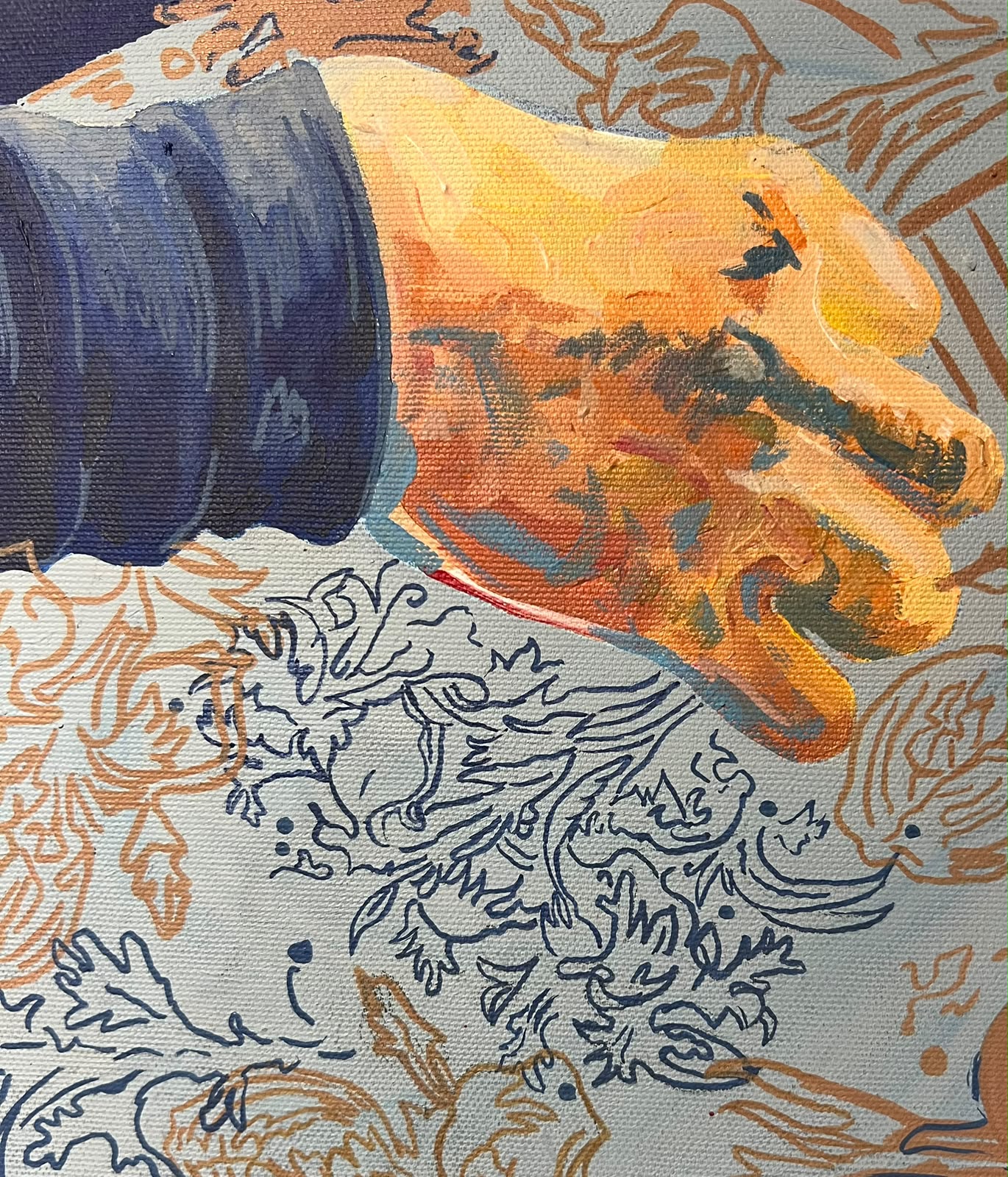
An AI image is a digital file, produced from a prompt in seconds and copied without limit. A handmade work is a physical object with its own material, texture and a single copy. Much of an AI image's value sits in the idea. A handmade work's value comes from the idea plus the labour, the material and the fact that it cannot be made again. They are not rivals: AI can be a good sketching tool, but what hangs on the wall is something else.
The question usually comes up at one particular moment. Someone has an AI image they love and cannot decide between printing it on canvas and having the same subject made by hand. Below is the difference, in terms you can measure.
What is the basic difference between AI art and a handmade work?#
One is a file and the other is an object. Everything else follows from that:
- Time to make: an AI image appears in seconds or minutes. A tufted wall piece or an acrylic painting takes days depending on size, and weeks for large work.
- Copies: an image can be copied endlessly, each copy identical. A handmade work exists once. Even if I made the same design twice, the loops and brush marks would fall differently.
- Material: an image is made of pixels. A handmade work is made of yarn, backing cloth, canvas and pigment.
- Size: an image can be printed at any size. A handmade work is designed for one; a composition built for 60x90 cm gets redrawn when it goes up to 150x220 cm.
- Changes: an image can be regenerated at any moment. Changing a colour on a handmade piece afterwards means pulling that area out and working it again.
- Records: an artist can issue a certificate of authenticity for a handmade work. For a file, the same certificate means little.
Where does the value of a handmade work come from?#
From three places: labour, material, and being one of a kind.
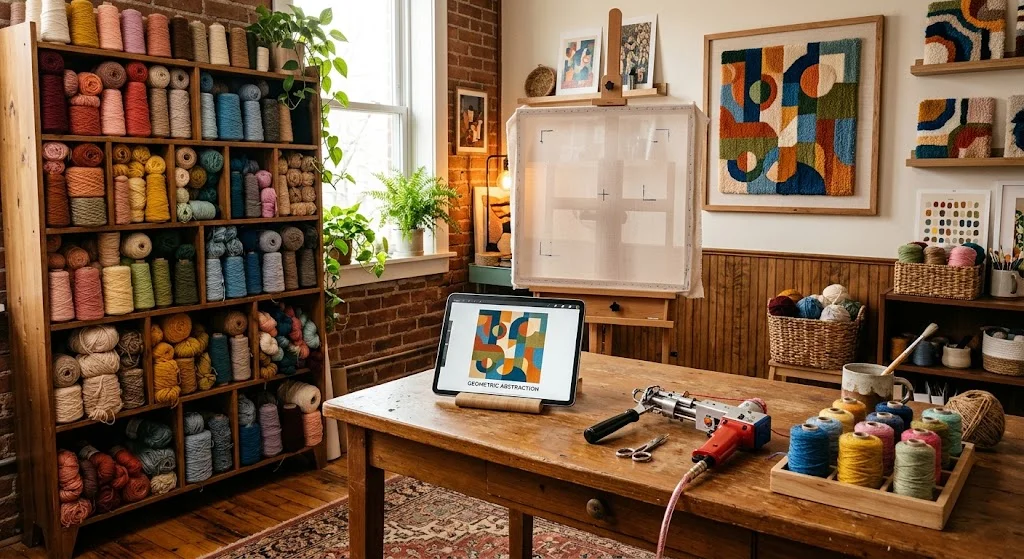
To make the labour concrete, take a tufted wall piece step by step. The design is transferred to tufting cloth at full size. The cloth is stretched on a wooden frame and each colour is worked separately with the gun. The surface is then shaped with scissors and a carving tool, adhesive goes on the back, and it has to dry. A second backing is added, the edges are finished, the hanging system is fitted. Every step involves a hand, a measurement and a decision. I describe the whole process in how a tufted rug is made.
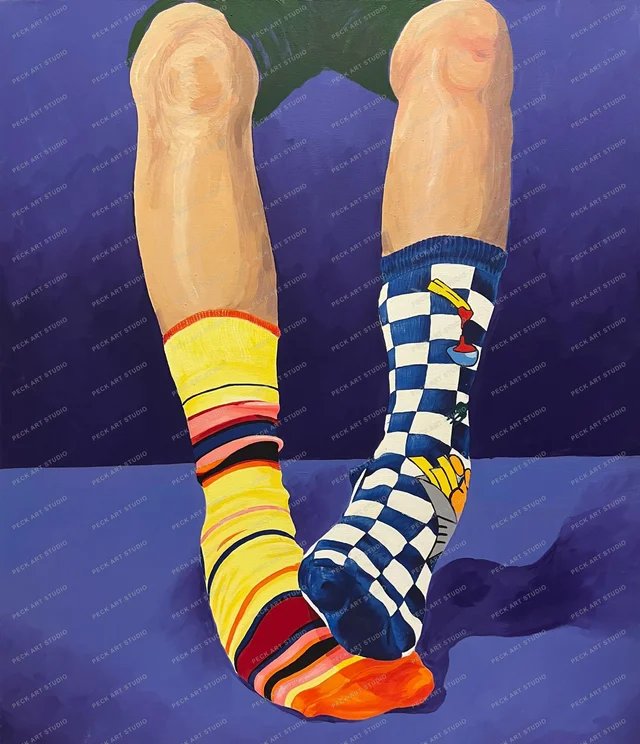
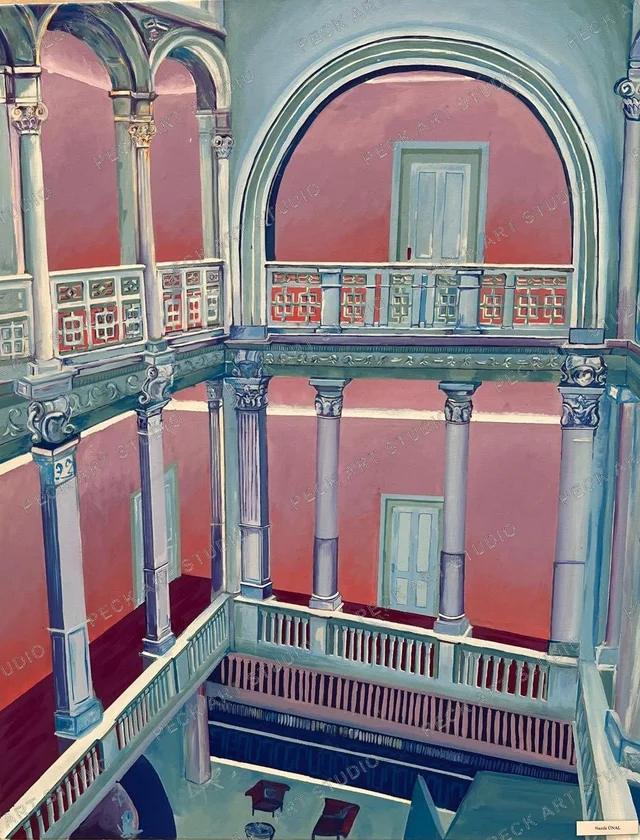
In an acrylic painting the labour shows differently. Paint goes on in layers, each layer needs time to dry, and the light is rebuilt with every pass. How the material behaves is covered in what acrylic paint is.
Material is part of the value too. In a tufted piece, the type of yarn, the pile height and the density decide how the work feels in the hand. None of these exist in a file.
Being one of a kind is the cornerstone of value in the art market. If a work cannot be made a second time, what its owner has is genuinely unique. I look at what that means for value over time, without exaggeration, in does an original painting gain value.
Does an AI image printed on canvas become an original work?#
No. An AI image printed on canvas is a print, however good the printing. The same file can produce as many identical prints as you like.
Prints have their place: they are quick, affordable and true to the file's colours. But the surface is flat. Up close you see an even digital surface, not brush marks or loops. I compare originals and prints on price and ownership in original or print.
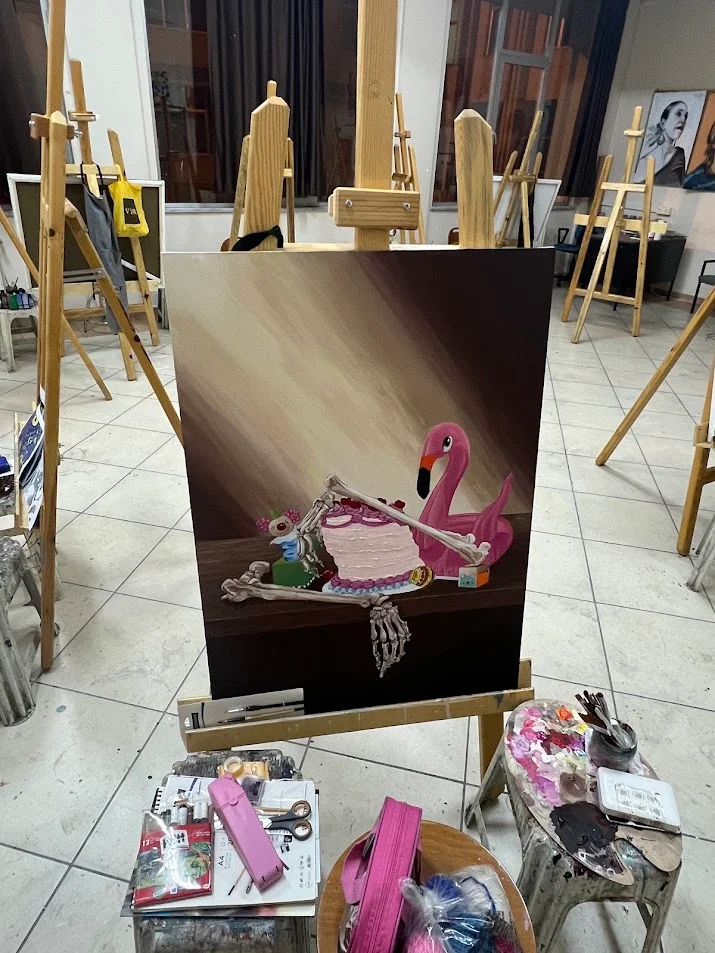
There is a middle case: a work made by hand using an AI image as the reference. Then the work is handmade and unique, and the image plays the role of a sketch. How that works is in turning an AI image into a rug or painting.
How do a handmade work and a print look different on the wall?#
The difference shows most inside a room, with light. A tufted wall piece stands about 1 to 2 cm proud of the wall. Side light from a window throws shadows between the loops, and the same piece looks different in the morning and the evening. On an acrylic painting, thick passages and brush marks catch light at different angles.
A print looks the same at every hour. If it is glossy, it may reflect the window or lamp opposite.
Texture has a side effect too: sound. A textile surface absorbs some of the sound a hard wall would bounce back. A large wall piece noticeably softens a bare, echoing room; a print does nothing of the kind. How to light a work is in how to light paintings and wall rugs.
Can an AI image come with a certificate of authenticity?#
For a handmade work, the certificate records who made the object, when, with what materials, and that it is unique. It is hard to say the same about a file, because a file cannot be claimed to be unique.
When limited prints come with a certificate, it carries an edition number such as 1/20. That openly states the work is not unique, and it is an honest practice. What a certificate should contain is listed in certificates of authenticity.
Do artists use AI?#
Some do, some will not touch it. Those who use it mostly treat it as a sketchbook: trying out compositions, seeing five colour schemes for a scene in a minute, building a shared language with a client.
For me the last use is the valuable one. When someone brings an image they made with AI, I do not have to guess what they want; I can see it.
But the image is not the finished work. Which yarn answers which colour, how many millimetres the pile should be, how the edge closes, which canvas texture to use: none of those decisions are in the file. They are made in the studio. I describe how I work in from the studio: the creative process.
Which should I choose?#
It depends on what you need:
- If you want to fill a wall quickly on a small budget and expect to change it in a few years, a print makes sense.
- If you want the same image in several rooms or several copies, a print.
- If you want an object with texture, warmth and physical presence, handmade.
- If you are looking for a gift that will be kept for years, handmade.
- If your idea is clear but you cannot draw it, both: a draft with AI, the work in the studio.
That last route comes up more and more, and I think it brings out the best of both.
Ready handmade works are in the gallery: tufted pieces on the tufting page, paintings on the painting page. If you have an image in mind, choose a size and technique on the custom order page and attach it as a reference.
Frequently Asked Questions
Does an AI-generated image count as an artwork?
It is a debated question without a single answer. In practical terms, an AI image is a file that can be copied without limit, while a handmade work is a physical object that exists once. That difference is usually what decides collecting and gift value.
Is an AI image printed on canvas an original painting?
No, it is a print. Any number of identical copies can be made from the same file, and the surface is flat, with no brush marks or texture. A painting or tufted piece made by hand from that image, however, is handmade and unique.
Why does a handmade work cost more than a print?
Because the price includes days of hand labour, materials and the fact that it cannot be repeated. A tufted piece goes through drawing, stretching, tufting, carving, gluing and backing. A print reproduces the same file in minutes.
Can I have my AI image made into a handmade work?
Yes. The image is used as a reference and adapted into a tufted rug, wall piece or acrylic painting, and the result is handmade and unique. Start on the custom order page by choosing a technique and size and attaching the image.