Inspiration
What Is Acrylic Paint? Properties, Techniques and Uses
Why does acrylic dry so fast, which surfaces does it work on, and which techniques does it carry? Acrylic explained from materials to application.
Updated:
Acrylic paint is pigment dispersed in an acrylic polymer emulsion. That is the plain definition, but what matters is the practical consequence: it works with water, dries fast, and forms a water-resistant film once dry.
Those three make acrylic attractive to beginners and professionals for quite different reasons. This article covers what it is, how it behaves, and where it is the right choice.
How it dries#
We have to start here, because acrylic's whole character follows from how it dries.
Oil paint dries by oxidation, reacting with air, over weeks. Acrylic dries by the evaporation of water. Once the water leaves, acrylic polymer particles remain, locking together into a flexible film.
The practical consequences:
- A thin layer is touch-dry within minutes
- Layers can be built on the same day
- Once dry it is water-resistant, so working over it does not disturb what is underneath
- Once dry there is no solvent for it; leave a brush unwashed and it is gone
That last point surprises people most. A palette that stays open for hours in oil paint skins over in ten minutes in acrylic.
Colour shift: the one thing to know#
This is the first surprise everyone working in acrylic meets.
Acrylic darkens slightly as it dries. The reason is that the emulsion looks whitish while wet; once the water evaporates that whiteness lifts and the colour settles into its true tone.
The difference is small but becomes obvious in pale tones and in work requiring colour matching. So colour decisions in acrylic are made from a dry sample; judging from a wet palette misleads.
I compared the differences between oil and acrylic separately.
Which surfaces it works on#
This is acrylic's broadest advantage. Unlike oil, it adheres to almost any porous surface:
- Canvas, the most common
- Wood and MDF
- Paper and card, provided it is heavy enough
- Walls and concrete
- Fabric, with the right medium
Where it does not adhere is greasy, smooth surfaces: glass, metal, plastic. Those need a dedicated primer.
Even on canvas, priming is not skipped. A surface primed with gesso absorbs less paint and keeps colour saturated.
Basic techniques#
Acrylic works across a wide range; how much it is thinned decides the technique.
Heavily thinned with water it behaves like watercolour: transparent, fluid, deepening layer by layer. This approach is called a wash and is used to establish grounds.
Used straight from the tube it gives flat, opaque fields of colour. Ideal for graphic work, sharp edges and flat grounds.
Thickened with a medium it carries brushwork and relief. This is where acrylic comes closest to oil.
Working wet into wet (alla prima) is difficult in acrylic because drying is fast. A retarding medium extends the window but never gives the freedom oil does.
What mediums do#
Much of acrylic's flexibility comes from mediums. The main ones:
- Retarder: extends drying time, allowing time to blend
- Thickening gel: carries texture and brushwork
- Gloss or matte medium: changes the surface finish
- Flow improver: thins the paint without diluting it, so pigment density holds
That last distinction matters: thinning with water dilutes pigment, thinning with medium does not.
Advantages and limits#
Reasons to choose acrylic:
- Fast. A piece can be finished the same day
- Clean. Water is enough; no white spirit or turpentine
- Effectively odourless. It can be used in enclosed, poorly ventilated spaces
- A flexible film. More resistant to cracking than oil once dry
- Broad surface compatibility
Its limits:
- The drying speed makes soft colour transitions difficult
- It darkens as it dries
- Paint dried in a brush does not come back
- In very thick applications it does not quite give oil's depth
Where it is the right choice#
A practical pairing:
- Graphic work with sharp forms: acrylic
- Soft, graded portrait transitions: oil
- Work needing quick delivery: acrylic
- Large-scale work on a limited budget: acrylic, lower cost per square metre
- Beginners: acrylic, easy to correct and safe to handle
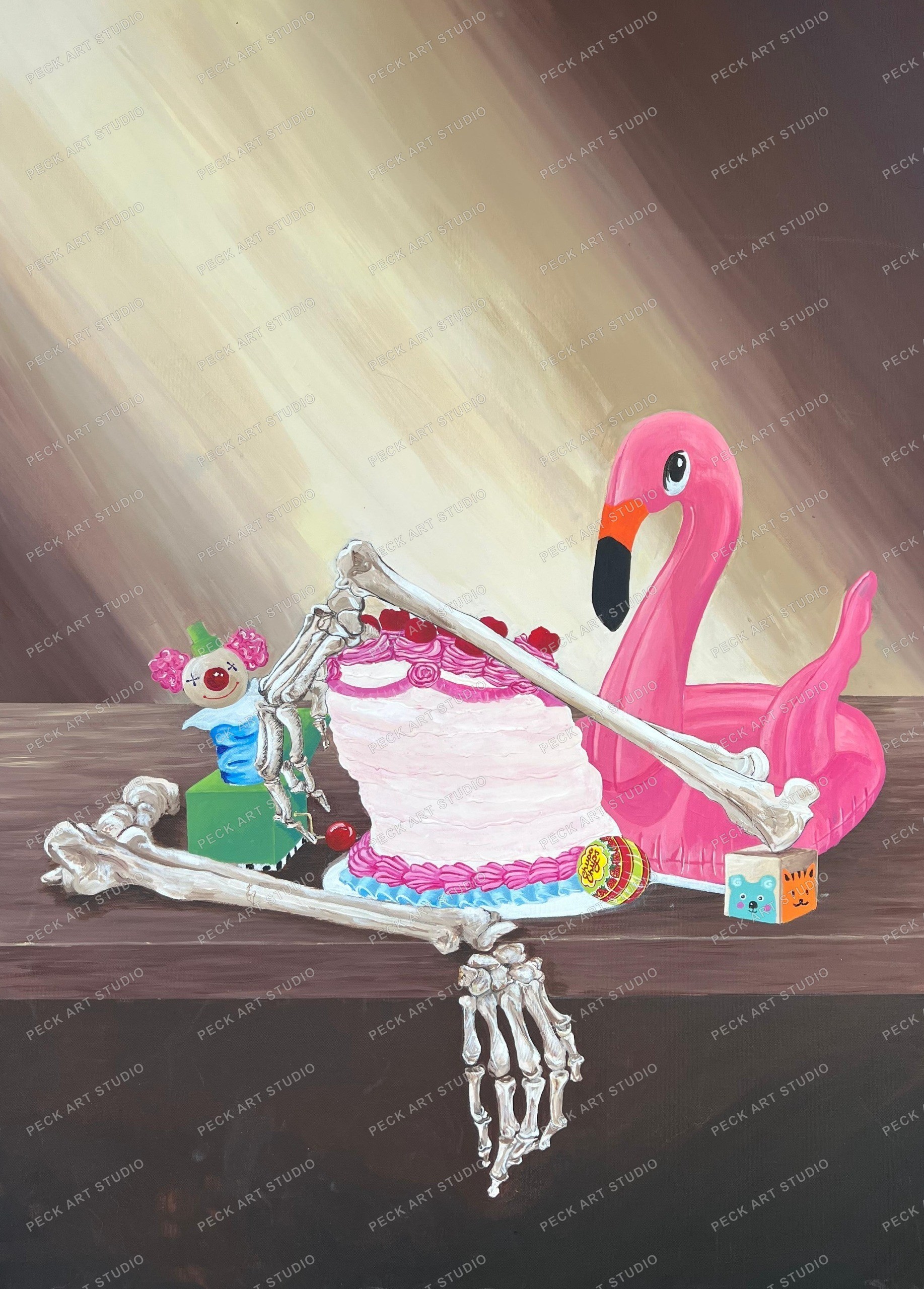
At Peck Art Studio the canvas paintings offered through custom orders are made in acrylic, starting at 7,000 TL per square metre. I set out the full pricing separately.
Care#
An acrylic surface needs less care than oil, but not none.
The basics: keep it out of direct sun, do not hang it on a damp wall, dust it with a soft dry brush, and never use chemical cleaners.
One difference: because the acrylic film stays flexible, it stiffens in cold and softens in heat. So avoid hanging it where temperature swings sharply, above a radiator or in a direct flow from an air conditioner is not good.
I gathered oil painting care separately; for transport and storage see packing and shipping.
If you want to try it#
Starting in acrylic needs no expensive materials. A few basic colours, one medium brush, a small gesso-primed canvas and a water pot are enough.
My only advice: never leave a brush to dry. In acrylic, the number of brushes lost usually exceeds the number of techniques learned.
You can see work made in acrylic in the gallery; I also described how oil paint works separately.
Frequently Asked Questions
What is acrylic paint?
A water-based paint made by dispersing pigment in an acrylic polymer emulsion. It dries by evaporation of water and forms a flexible, water-resistant film. A thin layer is touch-dry within minutes.
Does acrylic change colour as it dries?
Yes, it darkens slightly. While wet the emulsion looks whitish; as the water evaporates that lifts and the colour settles into its true tone. The shift is small but obvious in pale tones, so colour decisions should be made from a dry sample rather than a wet palette.
Which surfaces does acrylic work on?
Almost any porous surface: canvas, wood and MDF, heavy paper and card, walls and concrete, and fabric with the right medium. It does not adhere to greasy, smooth surfaces such as glass, metal and plastic, which need a dedicated primer.
Is acrylic or oil easier?
Acrylic, for beginners. It cleans with water, needs no solvents, is effectively odourless, and mistakes are easy to correct since a new layer does not disturb what is underneath. In exchange the fast drying makes soft colour transitions difficult, where oil is freer.
How do you care for an acrylic painting?
Keep it out of direct sun, do not hang it on a damp wall, dust it with a soft dry brush and never use chemical cleaners. Because the acrylic film stays flexible it stiffens in cold and softens in heat, so avoid places with sharp temperature swings such as above a radiator or in an air conditioner's direct flow.