Decor
How to Light a Painting or a Wall Rug
Angle, colour and intensity change how a piece reads. The 30 degree rule, glare, colour temperature, CRI and drill free options for rented flats, with real numbers.
Updated:
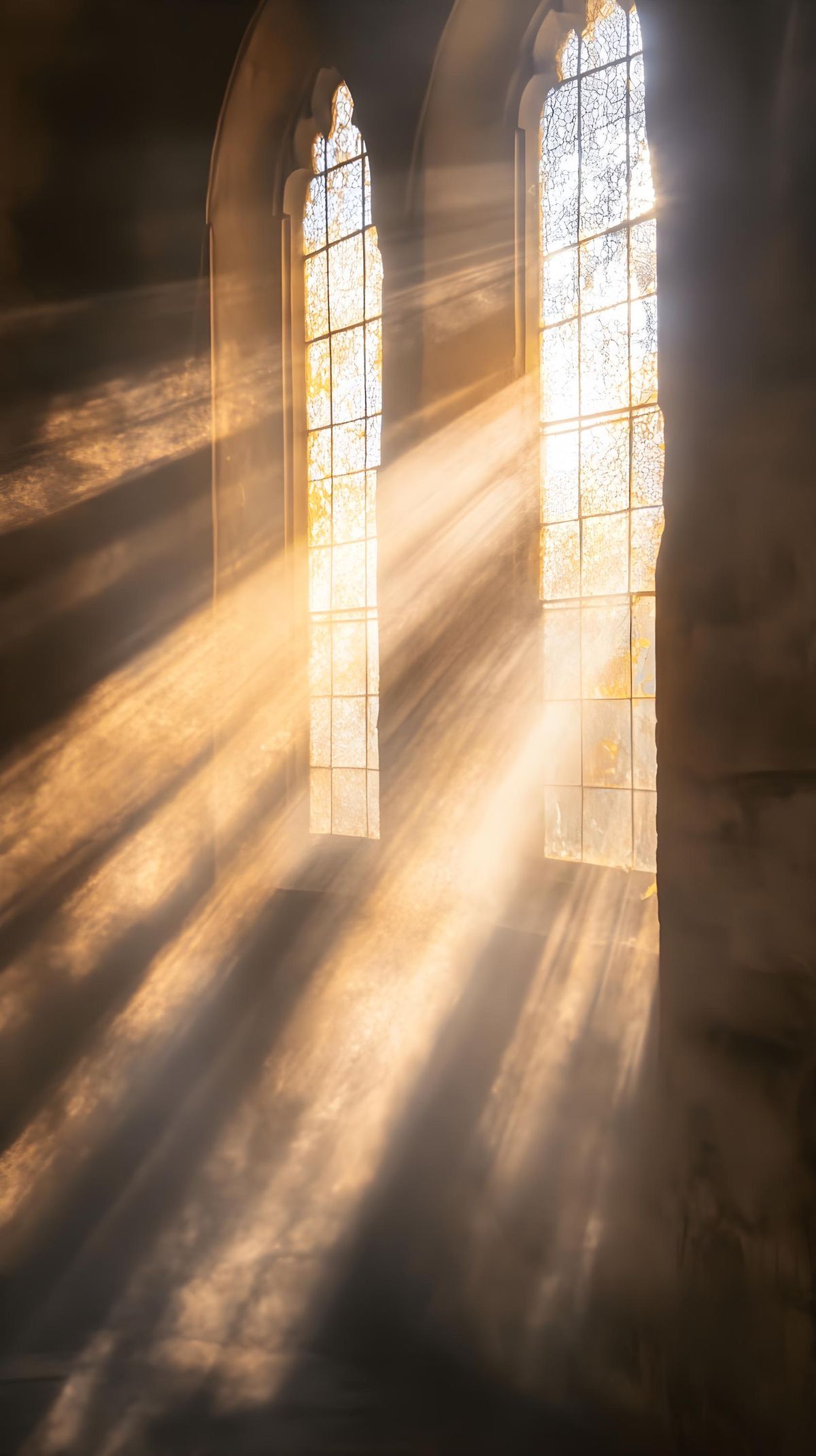
The same piece looks like two different works under two different lights. A tufted panel that falls flat under a single white ceiling spot swells and regains its colour when warm light hits it from the right angle. Lighting is the cheapest improvement you can make after buying a work. Every section below carries a number you can act on.
The 30 degree rule and why it exists#
The accepted starting point is light striking the centre of the work at roughly 30 degrees from the ceiling side.
Go below that angle, meaning steeper light, and glare rises while the top edge of the frame casts a shadow onto the picture. Go past 45 degrees and the viewer's own head starts throwing a shadow on the wall. Thirty degrees sits between those two problems.
The maths is easy. To find how far the spot should sit from the wall, subtract the height of the centre of the work from the ceiling height, then multiply by 0.58. With a 260 cm ceiling and the centre of the work at 152 cm, the difference is 108 cm and the result is 63 cm. Place the spot 60 to 65 cm out from the wall.
For deep box frames or mouldings thicker than 6 cm, raise the angle to about 35 degrees or the frame will shadow the top band of the picture. Textured work wants the opposite, which has its own section below.
Glare and reflections#
Glazed frames are the hard part. Ordinary float glass bounces back around 8 percent of the light that hits it; anti reflective museum glass drops that under 1 percent. The price gap is real, but for a work on paper or a watercolour it is the only genuine fix.
When you judge glare, do not stand up to do it. Sit where you normally sit and look from there. The source of a reflection is often not the fixture at all but a window on the opposite wall or a switched on television.
Stretched canvas and tufted panels carry no glass, so the problem mostly disappears. The one risk on canvas is a glossy varnish; a matt varnished surface reads far more comfortably under the same light.
Colour temperature: 2700K or 4000K?#
Colour temperature tells you whether the light leans yellow or blue. 2700K is warm yellow, 3000K warm white, 4000K neutral white.
A piece built on earth tones, terracotta, mustard and browns comes alive under 2700 to 3000K. A work dominated by blue, grey, white and cool green turns yellow under the same lamp and does better at 3500 to 4000K.
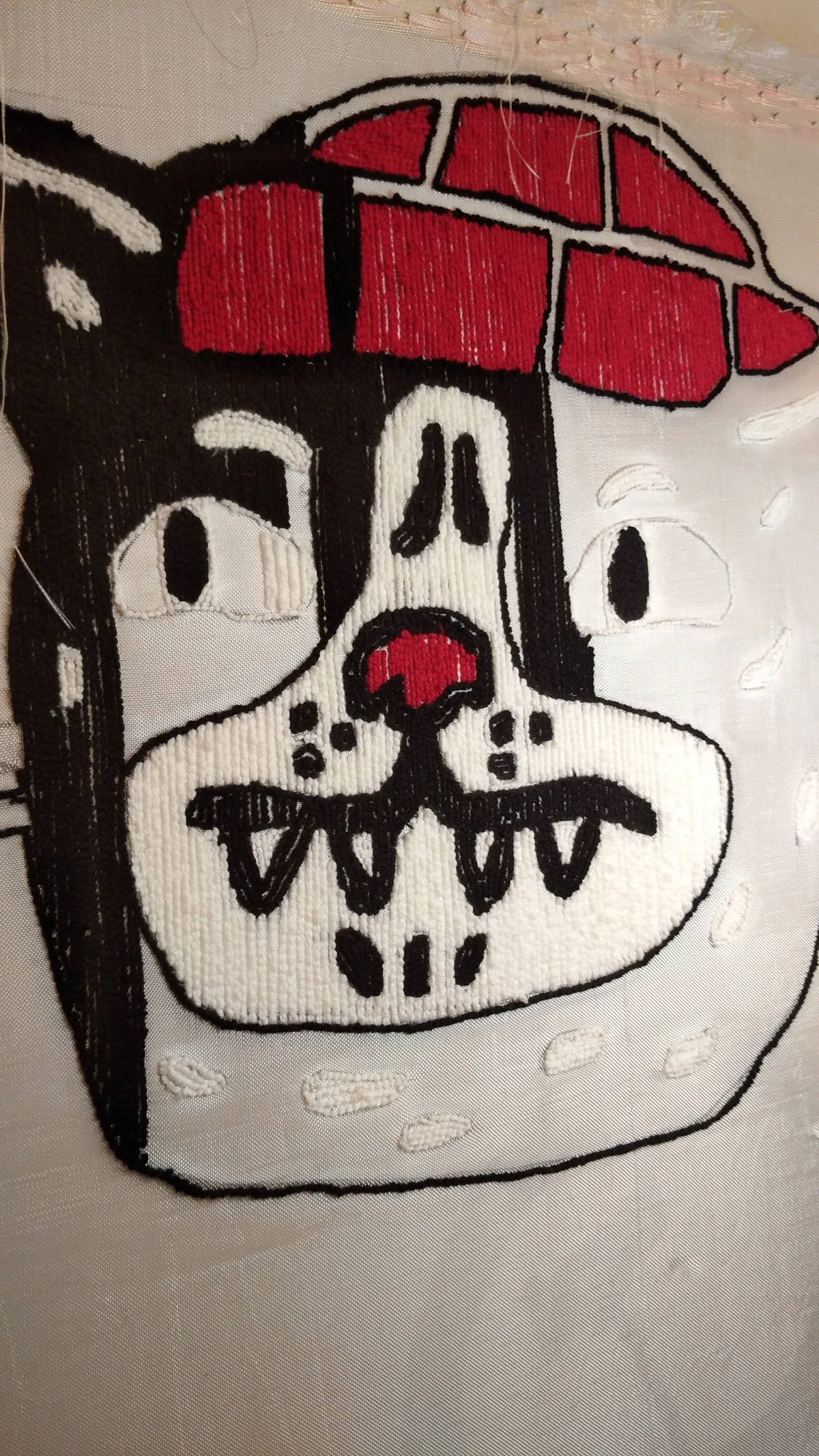
I see this in the studio constantly. A panel tufted in brick red and mustard looks cold and greyish under my 4000K work lamp, then recovers its warmth in the evening under a 2700K room light. The photographs have to be taken under the second one.
One warning: keep the fixture over the artwork at the same colour temperature as the other bulbs in the room. A 2700K and a 4000K source side by side make each other look dirty.
Why CRI 90 and above matters#
CRI scores, out of 100, how accurately a light shows colour compared to daylight. Cheap LED fittings sit around 80. For artwork the threshold worth paying for is 90 and up.
The difference shows up most in the reds. Under a CRI 80 LED reds go dull, burgundy and brown start to converge, and skin tones lose life. If the box also lists an R9 value, check it; above 50 is good. On a piece heavy in red and orange this single specification is visible to the naked eye.
Does light damage the work?#
It does, the damage accumulates, and it does not reverse.
Ultraviolet is the main culprit: direct sun and older fluorescent tubes. Most LEDs emit no meaningful UV, which is part of why they are preferred for art.
Visible light fades things too. Museums work to around 50 lux for paper and textiles and 150 to 200 lux for oil paintings. Nobody lives at that light level, but simply not hanging work on a wall that takes direct sun already makes a large difference.
On the tufting side, acrylic yarn holds colour better than wool or cotton. Reds and purples shift first. On a wall facing a south window in a room whose curtains are never drawn, visible fading starts within a few months. Oil paintings have a separate issue: varnish yellows over time regardless of the light.
Heat is worth a thought as well. If a fixture sits closer than a meter to the surface, remember that the LED may run cool while its driver does not.
Fixtures, five options#
- Picture light: mounted above the work, on the frame or the wall. Make it at least half the width of the piece or both side edges stay dark.
- Track spots: the most flexible answer, since the aim changes when the artwork does. Run the track 60 to 90 cm out from the wall.
- Recessed downlights: a decision to make while the ceiling is being built. Choose gimbal heads; a fixed downlight cannot wash a wall, it only looks at the floor.
- Rechargeable or battery LED bars: no drilling, the answer for rented flats. Output is limited but adequate up to about 60x80 cm.
- Floor uplight: grazing a textured piece from below gives an unusual effect, though the shadows are hard and can catch your eye from a seated position.
Tufted panels want light from the side#
This is where textured work parts company with everything else, and it is the thing I test most in the studio.
Frontal light flattens texture. The surface reads as a single block of colour and all the relief disappears. Light raking across at 15 to 25 degrees leaves a short shadow behind every loop, and the surface suddenly lifts.
On a cut pile surface the direction of the fibres reads light or dark depending on where the light comes from. Turning a finished panel 180 degrees makes the same area noticeably darker even though nothing about the colour changed. On loop pile, raking light picks out the rows of loops as fine lines. The two surfaces are compared side by side in cut pile and loop pile.
Practical suggestion: light a tufted panel with two sources rather than one. A narrow beam from the side delivers the texture, a soft light from above balances the colour. Do not overdo it, though; very raking light flatters the texture and exposes every irregularity in the loops at the same time.
Lighting a rented flat without drilling#
- Rechargeable magnetic LED bar: it grips the top rail of a frame with magnets. Makers quote 4 to 8 hours of continuous use per charge, so three hours an evening means charging once a week.
- Clamp spot: clipped to the edge of a nearby shelf or bookcase, aimed freely.
- Floor lamp: placed 60 to 70 cm from the wall with the head turned upward, it bounces off the ceiling and lights the work indirectly. This gives the softest result.
- Cable trunking: running the lead in a channel painted close to the wall colour tidies the whole thing up and leaves no marks when you move out.
Before you hang anything, take a desk lamp and try three or four angles on the wall. That twenty minute experiment usually tells you which fixture to buy. It is also a good way to guess how a piece from the gallery will behave in your own room.
Frequently Asked Questions
Which colour temperature should I choose for artwork lighting?
Warm work in earth tones, red and mustard reads best at 2700 to 3000K, while blue and grey heavy pieces prefer 3500 to 4000K. Keep the fixture at the same temperature as the other bulbs in the room; mixing makes both look wrong.
Does LED light damage a painting?
Most LEDs emit no meaningful ultraviolet, so they are far safer than sunlight or fluorescent tubes. Visible light still fades work over the long run, and the single most effective precaution is not hanging a piece on a wall that takes direct sun.
How far from the wall should the spot go?
Subtract the height of the centre of the work from the ceiling height and multiply by 0.58. With a 260 cm ceiling and a centre at 152 cm that gives about 63 cm, so the spot belongs 60 to 65 cm out from the wall.
How should a tufted wall panel be lit?
Texture only appears under raking light. A spot at roughly 15 to 25 degrees leaves a shadow behind every loop and lifts the surface. Add a second, softer source from above to keep the colour balanced.