Painting Techniques
Oil Painting Techniques: Alla Prima, Glazing, Impasto and Layering
Oil painting has two basic routes: working wet into wet in one sitting (alla prima) or building dried layers one on top of another. What glazing, scumbling, impasto, sgraffito and dry brush do, and where to start.
Short answer: oil painting has two main routes. Alla prima means finishing the painting in one sitting, while the paint is wet. The layered (indirect) method builds the painting step by step with dried layers: first a coloured ground and a single-colour underpainting, then colour, and finally transparent glazes. Glazing, scumbling, impasto, sgraffito and dry brush are techniques used within these two routes.
What sets oil apart from other paints is that it dries slowly. A thin layer is touch-dry in 2-7 days; a thick one needs weeks. Every technique either uses this slowness (alla prima) or waits for it patiently (layered painting). I describe the paint itself in what is oil painting.
Alla prima (wet into wet)
Italian for "at the first attempt". The painting is finished in one sitting, before the paint underneath dries. Colours blend on the canvas and brushmarks stay lively.
- The advantage: fast, fresh, direct. Ideal for landscapes, still lifes and sketch portraits.
- The difficulty: laying paint over wet paint without muddying the colours. Wipe the brush often, and set the paint down rather than pressing it in.
- Tip: start with the dark, shadowed areas and leave the light until last. Putting a light colour over a dark one is easier than the reverse.
Many Impressionists, and masters such as Sargent and Sorolla, worked this way.
The layered (indirect) method
The painting is built in several stages, each layer as the one below dries. The classic order:
- Imprimatura: covering the white of the canvas with a thin, transparent coloured layer (usually burnt sienna or ochre). A white canvas makes every colour look darker than it is; a coloured ground makes tones easier to judge.
- Underpainting (grisaille or dead colouring): building the light and shadow in a single colour, in greys or browns. Volume is solved before colour is considered.
- Colour layers: once the underpainting is dry, the colours, in opaque layers.
- Glazes: last, deepening the colour with thin, transparent layers.
The golden rule of this route is "fat over lean": lower layers are lean and thin, upper layers progressively oilier. Done the other way round, the upper layers dry before the lower ones and crack over the years. What to use when thinning each layer is in how to thin oil paint.
Glazing
Brushing a transparent colour, heavily thinned with medium, over a dried layer. The colour underneath is not erased; it changes as if seen through coloured glass. A thin blue glaze over a yellow area does not simply turn it green but into a deep, luminous greenish tone.
- Use transparent pigments: alizarin, ultramarine, phthalo colours, burnt sienna.
- The layer below must be completely dry, or the glaze lifts the paint underneath.
- Little paint, plenty of medium. A glaze is coloured glass, not a wall of paint.
The light that seems to come from within in Vermeer's and Rembrandt's paintings is the result of this technique.
Scumbling
The opposite of glazing: dragging a light, semi-opaque colour thinly over a dark layer with a dry brush. The colour underneath shows through in places. Mist, dust, the haze of distant mountains and the surface of an old wall are made this way.
Impasto
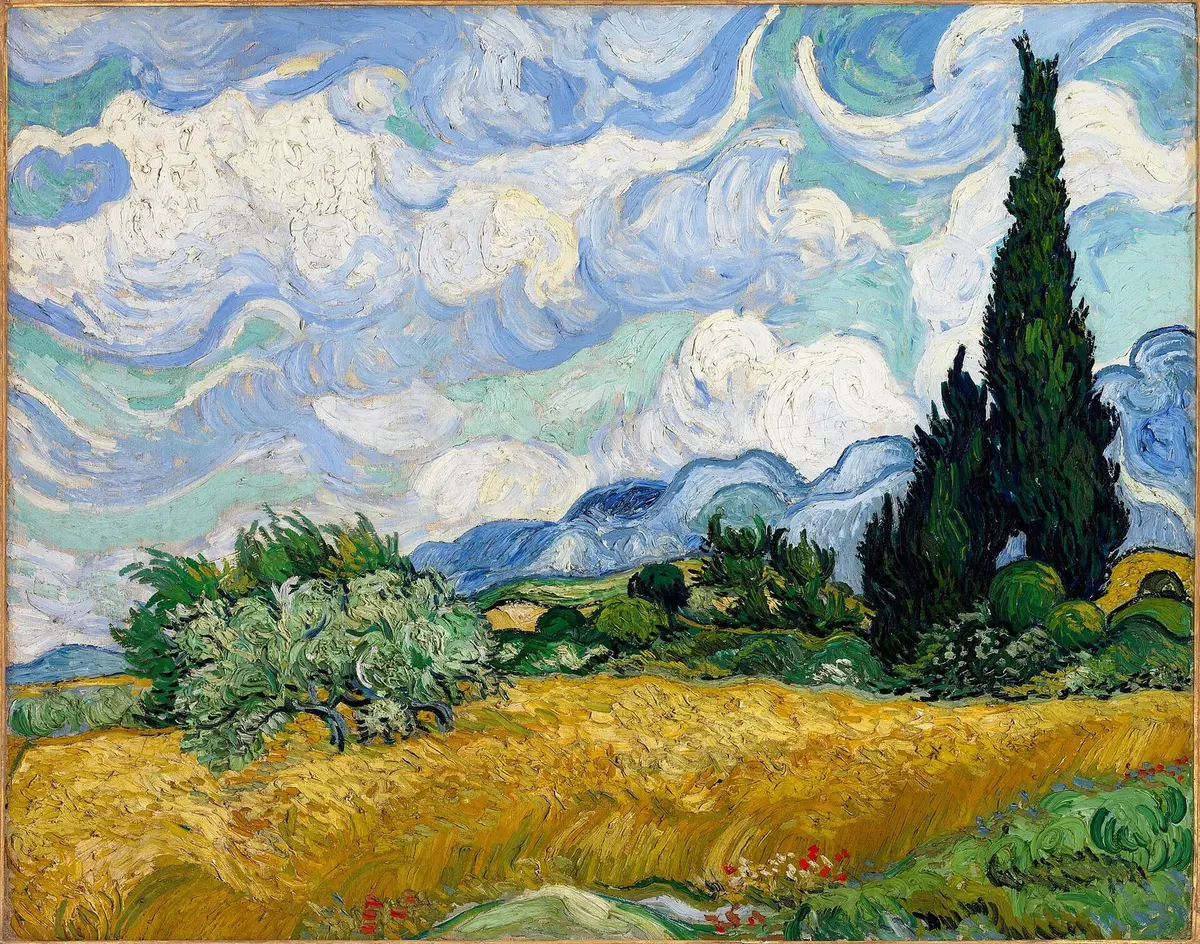
Laying paint on thickly, in relief. The mark of the brush or palette knife stays on the surface, and light hitting the relief produces its own shadow. Van Gogh's stars and sunflowers are the best-known examples.
- Thick paint dries very slowly; impasto is usually used at the final stage, on the points that catch the light.
- Do not dilute the paint with medium; use it as it comes from the tube, or with a thickening medium.
- Impasto with a palette knife is a world of its own; details in painting with a palette knife.
Sgraffito
Scratching into wet paint with the end of a brush handle, a toothpick or the edge of a knife. The top layer lifts and the colour underneath, or the canvas, shows as a line. Used for strands of hair, grass, wood grain and texture in abstract work.
Dry brush
Taking very little paint on the brush, wiping off the excess with a rag, then lightly dragging it across the surface. The paint catches only the peaks of the canvas weave. Perfect for rough surfaces such as fabric, stone and bark.
Soft transitions (sfumato and blending)
This is where oil's slowness helps most. Two tones laid side by side are gently blended at their border with a clean, dry, soft brush. Leonardo's sfumato is the name for transitions that melt like smoke without leaving a hard line. In portraits, the volume of the face is largely built with these transitions.
Which technique should you start with?
If you are new, start alla prima on a small canvas: a still life, in one sitting, with four or five colours at most. Finishing quickly keeps you motivated and speeds up getting to know the colours. The layered method takes patience; it is more productive to move to it once colour and brush feel natural in alla prima. The supply list is in how to start oil painting.
Once the painting is finished and the last layers have dried, varnish comes next; depending on thickness, this can take several months.
How to read the techniques in a finished work
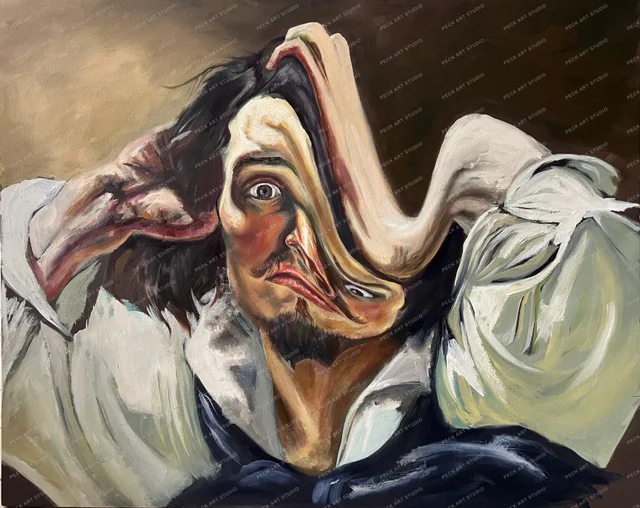
Look closely at an oil painting and you see the traces of these techniques: thick impasto where light falls, thin, transparent layers in the shadows, the broken texture of dry brush at the edges. In the gallery, ANOMALY (70x100 cm) reinterprets Courbet's self-portrait in oil and carries the depth of layered work. For an oil painting made for you, see the custom order page.
Frequently Asked Questions
What is the alla prima technique?
Finishing a painting in one sitting, before the paint underneath dries; also called wet into wet. Colours blend on the canvas and brushmarks stay lively. It suits landscapes, still lifes and sketch portraits and is a good start for beginners.
How is glazing done?
A transparent colour, heavily thinned with medium, is brushed over a completely dry layer. The colour underneath is not erased; it deepens as if seen through coloured glass. Transparent pigments such as alizarin, ultramarine and burnt sienna are used.
Is impasto the same as alla prima?
No. Alla prima is about when the painting is finished (in one sitting); impasto is about how the paint is applied (thick, in relief). Impasto can be used in an alla prima painting, and also at the final stage of a layered one.
What is the fat over lean rule?
In layered oil painting, lower layers are lean and thin and upper layers progressively oilier. Done the other way round, the upper layers dry before the lower ones and crack over the years.