Inspiration
v
Oil paint can sometimes be too thick for fine details or smooth application. In this guide, we explain how to thin oil paint with turpentine, linseed oil, and painting mediums, as well as how much to use and what to consider during different stages of a painting.
How to Thin Oil Paint: An Oil Paint Thinning Guide
If you are new to working with oil paint, you may have noticed that it can sometimes feel quite thick and heavy. When you want to create fine details, apply the first layer more easily, or spread the paint more smoothly across the surface, you may need to thin it slightly.
So, what can you use to thin oil paint, and how much should you use?
The important thing is not only knowing how to thin the paint, but also knowing which material to use, when to use it, and how much to add.
What Can Be Used to Thin Oil Paint?
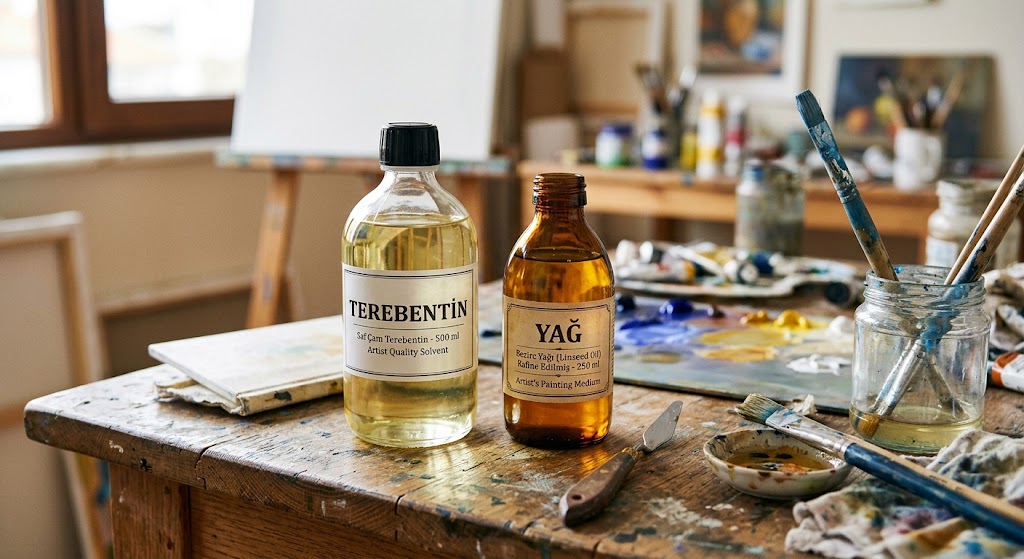
One of the most commonly used materials for thinning oil paint is turpentine. Linseed oil and specially formulated oil painting mediums can also be used.
However, they do not all serve the same purpose.
Turpentine is often preferred during the early stages of a painting to make the paint more fluid. It helps the paint spread more easily across the surface and allows you to create thinner layers.
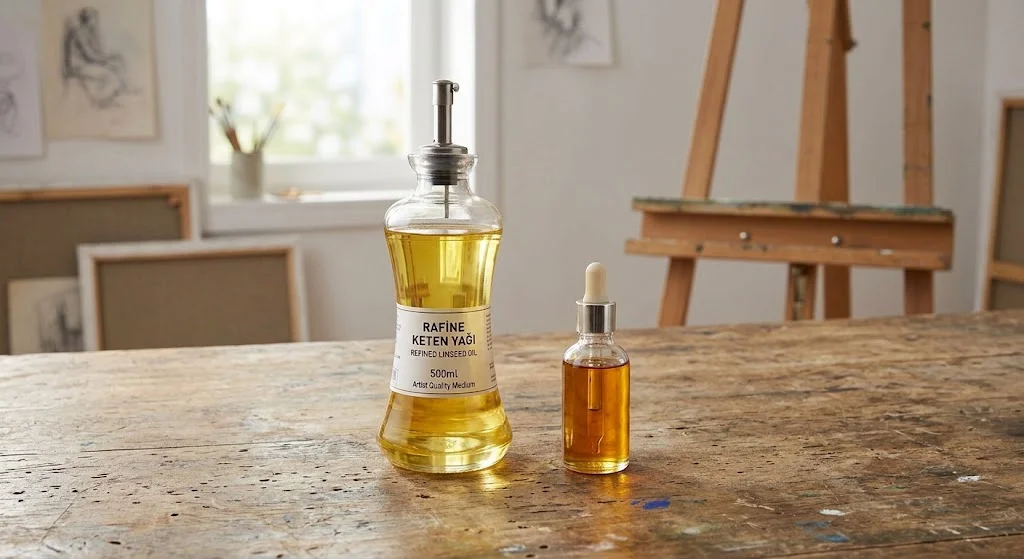
Linseed oil, on the other hand, makes the paint more fluid while also increasing its oil content. For this reason, it is used somewhat differently from turpentine.
Oil painting mediums can also be used to change the paint's flow, gloss, drying time, or handling properties. The choice of medium depends on the effect you want to achieve.
How to Thin Oil Paint with Turpentine
When using turpentine, it is important not to add too much at once.
Start by adding a few drops of turpentine to the oil paint on your palette. Mix it with your brush and check the consistency. If you want the paint to flow more easily, continue adding small amounts of turpentine gradually.
Using thinner, more fluid paint during the first layers can make the process easier. However, thinning the paint too much can result in a very weak and overly transparent layer on the surface.
So, it is important not to think “the more turpentine, the better.”
Can Oil Paint Be Thinned with Linseed Oil?
Yes, linseed oil can also be used to make oil paint more fluid. However, its purpose is somewhat different from turpentine.
Because linseed oil adds more oil to the paint, it can change the paint's gloss and handling properties. It makes the paint smoother and more fluid and can also affect its drying time.
For this reason, it can be useful during the later stages of a painting when you want to work more comfortably while maintaining the character of the paint.
Linseed oil should also be used sparingly. Adding too much oil can make the paint excessively glossy or cause it to take longer to dry.
Can Oil Paint Be Thinned with Water?
No. Oil paint is not water-based, so it cannot be thinned with water.
Water is also not enough to remove oil paint from brushes. The materials used for thinning oil paint and cleaning brushes serve different purposes.
Instead of trying to thin oil paint with water, use a material that is appropriate for the type of work you are doing.
What Happens If Oil Paint Is Thinned Too Much?
Over-thinning oil paint can reduce its coverage and create a very thin layer on the surface. The colors may appear lighter or more transparent than expected.
Using too much turpentine can also reduce the amount of binder in the paint more than necessary. For this reason, especially when creating a permanent artwork, it is important not to over-thin the paint.
The best approach is to add only a small amount at a time and continuously check the consistency of the paint.
At What Stage Should Oil Paint Be Thinned?
Oil paint can generally be used more thinly during the early stages of a painting. Using more fluid paint for the initial sketch or first layer can make it easier to establish the composition and larger areas of color.
As the painting progresses, the paint can be applied more richly. The “fat over lean” principle commonly used in oil painting is also important here. This means that later layers should generally contain more oil than the layers underneath them.
For this reason, rather than using the same amount of turpentine at every stage of the painting, it is better to consider the properties of the materials you are using.
What Should You Keep in Mind When Thinning Oil Paint?
A few simple points can make a difference to both the way the paint behaves and the quality of your painting.
Add turpentine gradually. Do not thin the paint more than necessary. Avoid using too much linseed oil. Do not use water to thin oil paint. Using thinner paint for the first layers can make your work easier. Pay attention to the oil content of the paint as the painting progresses. Make sure the workspace is well ventilated when using turpentine. Follow the usage and safety instructions on the products you use.
Thinning oil paint is also about getting to know how the paint behaves. Even a few drops of turpentine can make a noticeable difference in how the paint moves on your brush and canvas. Instead of looking for one “perfect” consistency, it is better to adjust the paint gradually according to the type of work you are creating.