Painting Techniques
How to Mix Skin Tones in Acrylic and Oil Paint
Skin tone starts from white, yellow ochre and a little red; to darken it, use burnt sienna and umber rather than black. Ratios for light, medium and deep skin, plus shadows and highlights.
Short answer: for skin tone, mix titanium white, yellow ochre and a very small amount of red. Light skin is a mix dominated by white, deep skin a mix dominated by burnt sienna and burnt umber. Do not darken with black; black pulls skin towards a grey, lifeless tone.
The ratios below are a starting point. Every skin is different, and even one face carries three or four tones depending on the light. The goal is not to find a single "skin colour" but to build three related tones for the lit, middle and shadowed parts of the face.
Which colours do you need for skin tones?
Have these on your palette:
- Titanium white: lightness and opacity.
- Yellow ochre: the warm, earthy base of skin. Cadmium yellow stays too bright.
- Cadmium red or alizarin crimson: for cheeks, around the lips, ears, wherever blood shows.
- Burnt sienna: a warm, reddish brown; the main colour of medium and deep skin.
- Burnt umber: a cooler, darker brown; for shadows.
- Ultramarine blue: in tiny amounts, to cool shadows and areas such as a beard line.
If your school gouache or hobby acrylic set has no ochre or sienna, white, yellow, red and a ready-made brown will give an approximate skin tone. If you want to mix the brown yourself, the method is in how to mix brown.
How do you mix a light skin tone?
Approximate ratio: 8 parts white, 1 part yellow ochre, less than half a part red.
Put the white on the palette and add the ochre little by little. Add the red with the tip of the brush, like a single drop. Red takes over very quickly and turns the mix pink. If it has gone too pink, add a touch more ochre.
How do you mix a medium (olive or tan) skin tone?
Approximate ratio: 4 parts white, 2 parts yellow ochre, 1 part burnt sienna, a touch of red.
Medium skin is not just darker than light skin; it is yellower and warmer. So reducing the white is not enough: ochre and sienna both need to go up. If the mix turns too orange, a very little ultramarine balances it.
How do you mix a deep skin tone?
Approximate ratio: 2 parts burnt sienna, 1 part burnt umber, 1 part white, a touch of red.
Deep skin is usually richer in colour than people expect: it carries red, violet and even blue reflections. Changing the ratio of sienna to umber gives you a warm or a cool deep tone. Where light falls, add ochre and a little white rather than white alone; pure white makes deep skin look ashy.
Shadow and highlight tones
Painting a face in one flat tone makes it look like a mask. Once you have mixed the main skin tone, derive two sibling tones from it:
- Shadow tone: the main tone plus burnt umber and a very little ultramarine. The blue disappears into the brown but cools the shadow.
- Highlight tone: the main tone plus white and a little ochre. Adding white alone makes the light chalky.
- Warm transition: a touch of red between shadow and light, on the cheek and the tip of the nose.
This warm and cool shift works on the complementary logic of the colour wheel. Adding a little green or blue to the shadow of a reddish skin darkens it without making it muddy. I explain how light travels across a face in light and shadow in painting.
The most common mistakes
- Darkening with black. The skin goes grey and the face looks ill.
- Painting the whole face in one tone. The volume disappears.
- Adding red by the spoonful. Skin tones balance on very little red; too much cannot be taken back and the whole mix has to be started again.
- Judging the colour while wet. Acrylic dries a shade darker. Brush out a small test and let it dry.
- Not mixing enough. Hitting the same tone twice is hard; for a large area, mix plenty from the start.
Is there a difference between acrylic and oil?
The ratios are the same, the behaviour is not. Acrylic dries fast; for soft transitions on a face you have to lay the tones side by side and blend quickly, or use a wet palette. Oil stays wet for hours, so transitions merge easily on the canvas; that is one reason portrait painters love oil.
Skin tone in a portrait commission
In portraits commissioned from a photo, we do not copy the skin tone straight from the photo. Phone cameras usually show skin too yellow or too pink. The painter builds the tone by thinking about the light in the photo and the person's real skin together.
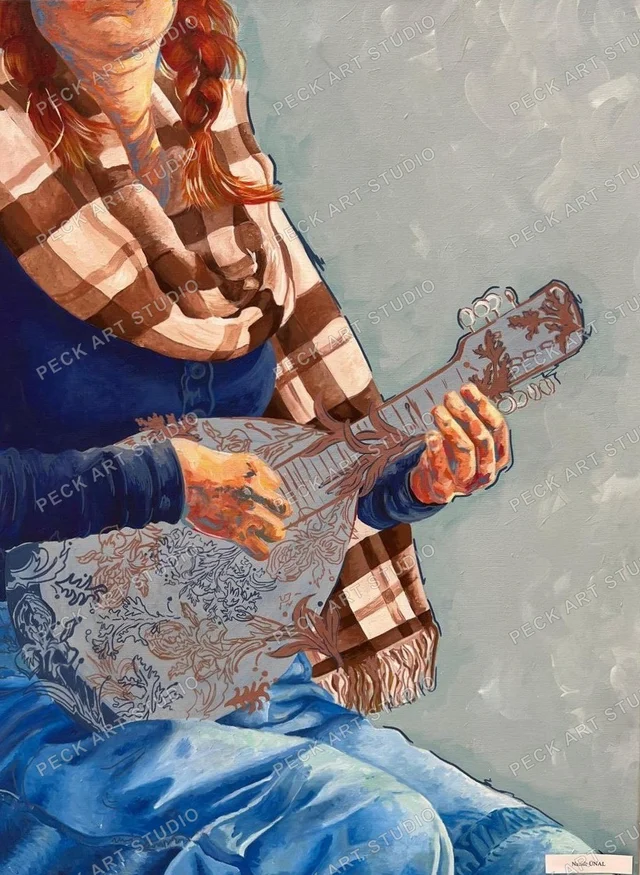
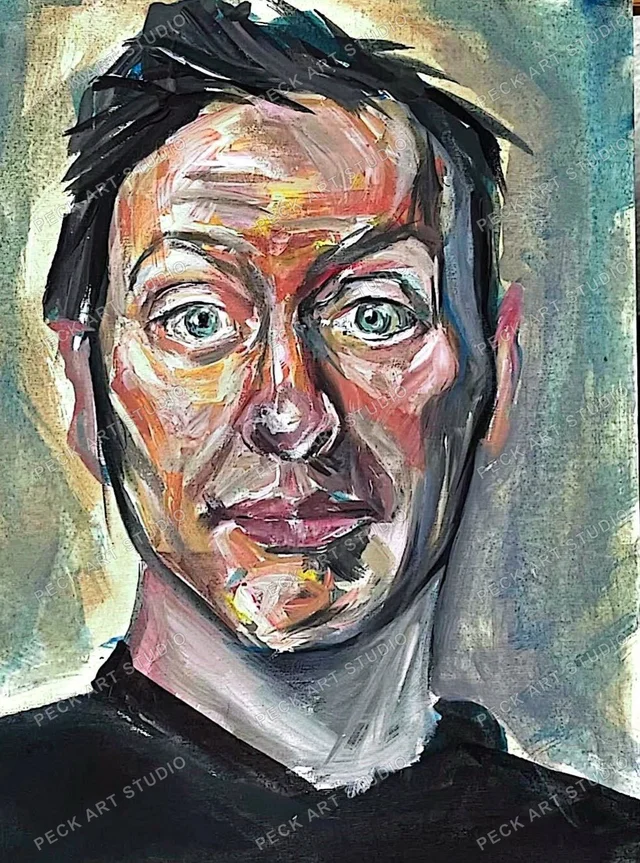
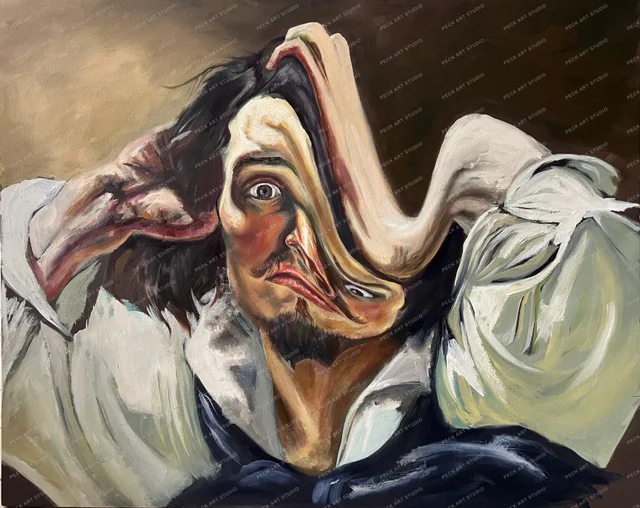
In the gallery, Mama (50x50 cm, acrylic) and Portrait Study (25x35 cm, acrylic) are two examples of Nilüfer Nur Ardagül building skin with warm and cool transitions. ANOMALY (70x100 cm) does the same in oil. For a portrait from your own photo, the starting point is the custom order page.
Frequently Asked Questions
Which colours make skin tone?
The basic mix is titanium white, yellow ochre and a very little red. For medium and deep skin, burnt sienna and burnt umber are added. Without ochre, white, yellow, red and a little brown give an approximate skin tone.
How do you darken skin tone?
Add burnt sienna and burnt umber instead of black, and a very little ultramarine to cool the shadow. Black turns skin grey and lifeless.
My skin tone is too pink. What do I do?
Add a little yellow ochre. If it is still pink, a very little green or burnt sienna balances it. Always add red with the tip of the brush, drop by drop; skin tones balance on very little red.