Care & Cleaning
Can You Have a Handmade Rug in a Home with Cats and Dogs? Claws, Hair and Accidents
Choosing a tufted rug for a home with cats and dogs: cut pile versus loop pile, removing pet hair, first aid for urine and vomit accidents, the case for a wall piece, and where to put the rug.
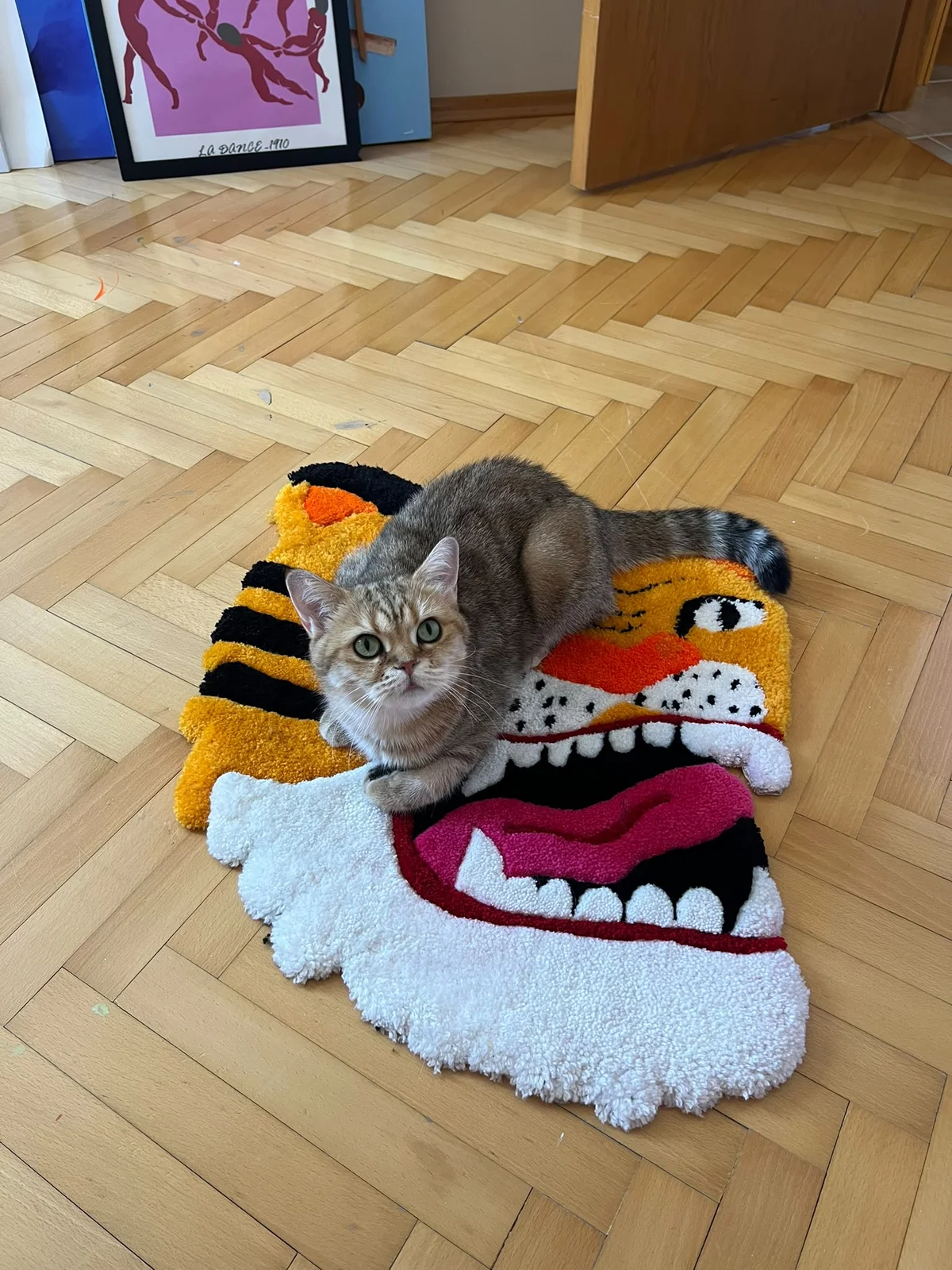
You can have a handmade tufted rug in a home with cats and dogs, but the surface has to be chosen carefully. A cut pile surface does not catch claws. On a loop pile surface, a cat's claw can slip into a loop and pull the yarn out. For hair, a vacuum on low suction with the rotating brush switched off, once or twice a week, is enough. With a urine accident the first minutes count: blot without rubbing, use cold water, and keep away from hot water and steam.
People with pets buying a handmade rug tend to go to one of two extremes. Either they decide it will never work in their home, or they lay the rug down with no precautions and regret it after the first accident. There is a sensible middle way, and that is what this article is about.
Will a cat scratch a tufted rug?
It might, but the real risk is less scratching than claws catching in the loops. The surface type decides everything here.
On loop pile, the yarn stays as closed loops. When a cat walks, stretches or kneads on the rug, a claw slips into one of those loops. As the cat pulls its foot back, the loop lengthens and sometimes drags its neighbours with it. The result is loops of yarn standing out of the surface. A cat that panics and pulls when caught can hurt both the rug and itself.
On cut pile, the tops of the loops have been cut. There is no closed loop for a claw to catch in; the claw passes between the yarns and out again. This is the surface I recommend for homes with cats.
Practical suggestions:
- Have floor rugs made entirely in cut pile and keep loop pile details for wall pieces.
- Keep the pile height moderate. Very long, loose cut pile becomes uneven over time with a cat's kneading.
- Put a scratching post near the rug. Cats prefer vertical, rough surfaces, and the right alternative leaves the rug alone.
- Trim your cat's claws regularly. Short claws catch far less.
A detailed comparison of the two surfaces is in cut pile vs loop pile.
Which rug suits a home with a dog?
With dogs the issue is less catching and more wear, digging and slipping. My suggestions change a little with the size of the dog:
- Small and medium dogs: a short, dense cut pile is enough. With nails kept short, the surface stays neat for a long time.
- Large dogs: do not put the rug where the dog always lies. A heavy dog lying in the same spot for hours every day crushes the pile there.
- Diggers: dogs that dig at the floor before lying down wear one spot quickly. Giving such a dog its own bed on top of the rug is the easiest way to protect it.
- Runners: on parquet or tiles, a rug slides when a dog runs across it. A non-slip backing or a pad underneath protects both rug and dog. Options are in rug pads and non-slip underlays.
How do you get pet hair out of a rug?
Once or twice a week, with a vacuum on low suction and the rotating brush switched off. A rotating brush picks up hair well, but on a tufted rug it can also pull loops out. If you cannot turn the brush off, use a flat head.
Where hair is stubborn, these help:
- A rubber brush or rubber glove: stroked across the surface in one direction, it gathers hair into clumps. Use it before vacuuming.
- A lint roller: for small areas and edges.
- A monthly shake: turning a small rug over outdoors and shaking it gently brings out hair and grit buried between the loops.
A new tufted rug also sheds its own fibres for the first weeks, which can be mistaken for pet hair. What is normal is covered in does a tufted rug shed. For general cleaning, see how to clean a tufted rug.
A design tip: if the rug's main colours are mid-tones close to your pet's coat, hair shows far less between cleans. White cat hair on a black rug, or black dog hair on a white one, stands out immediately.
What should you do after a urine or vomit accident?
First aid should be quick and gentle. The general principles:
- Blot first. Press paper towels or a clean cloth onto the stain; do not rub. Rubbing pushes the liquid down to the base of the pile and into the backing.
- Remove solids first. With vomit, scoop from the outside inwards with a spoon or a card.
- Use cold water. Dampen with a little cold water and blot again. Do not soak the rug; the adhesive layer at the back does not like too much water.
- No hot water or steam. Heat can set organic stains and odour into the fibres.
- Avoid ammonia-based cleaners. Ammonia smells like urine and can lead the animal to go in the same place again.
- If an odour remains, use an enzyme-based pet stain cleaner. Test it on a hidden corner of the rug first.
- Let it dry flat, somewhere airy, not in direct sun or on a radiator.
These are general principles. Step-by-step instructions by stain type are in how to remove stains from a tufted rug. If accidents keep happening in one spot, taking the rug up for a while makes things easier for both the rug and the training.
Why is a wall piece a good idea in a home with pets?
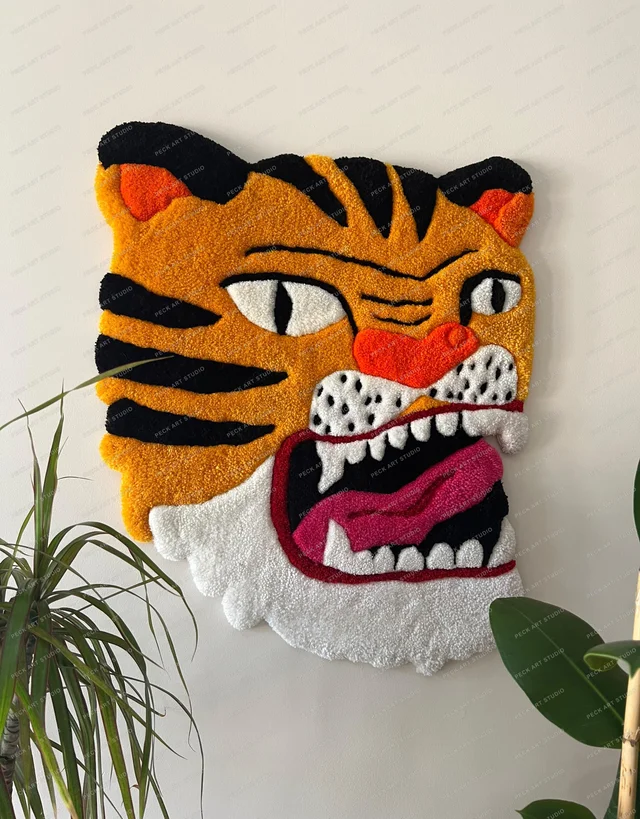
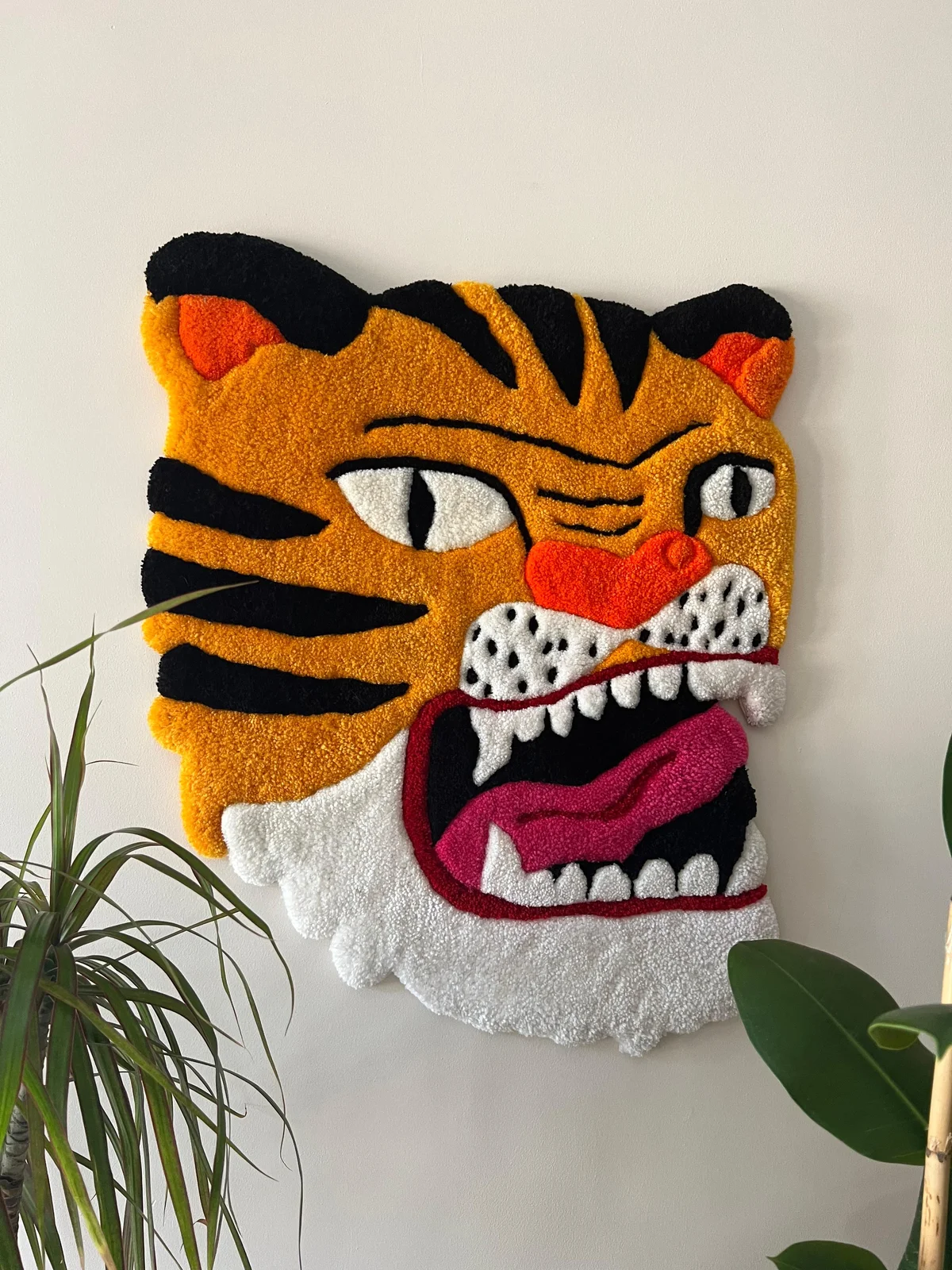
Because most of the claws, hair and accidents happen on the floor. A tufted wall piece gives you the texture and colour, but stays out of the animal's daily life. That also means long pile and loop pile details, risky on the floor, are fine on the wall.
What to watch with a wall piece:
- Height: cats jump high. Keep the bottom edge at least 60 cm above the top of any furniture the cat can climb; the back of a sofa and the top of a bookcase are both launch pads.
- No fringe: dangling fringes and tassels are toys to a cat. In a home with pets I do not recommend the fringed edge.
- Firm fixing: fix the piece at two points so a swipe of a paw does not knock it sideways. Methods are in how to hang a wall rug.
Where should the rug go in a home with pets?
Where the rug sits matters as much as which rug you choose. Places to avoid:
- In front of food and water bowls: water splashes and food scatters. Put a wipeable mat there.
- On the route to the litter tray: cats carry litter on their paws and it buries itself in the pile.
- Inside the front door: a dog comes in from a walk with muddy paws here. That is a doormat's job.
- The one spot where the animal always lies: its own bed makes more sense there.
Good places are the areas people use most: the middle of the seating area, under the coffee table, beside the bed. The animal uses the rug there too, but does not spend all day on it.
Which yarn suits a home with cats and dogs?
There are two main options. Wool, thanks to its natural fibre structure, resists dirt to some degree and tends to recover after being crushed. Acrylic dries faster and is less sensitive to washing and stain treatment. In homes with frequent accidents acrylic comes out ahead; where the long life of the surface is the priority, wool does. The differences are explained in detail in types of tufting yarn.
If you would like your pet itself to become the artwork, have a look at commissioning a pet portrait.
Finished tufted work is on the tufting page. For a rug or wall piece made for your home, choose a size and technique in the calculator on the custom order page, and mention in your message that you have a cat or dog so I can suggest the surface and colours to match.
Frequently Asked Questions
Which rug works in a home with cats?
A cut pile rug with moderate pile height. On loop pile, a cat's claw can catch in a loop and pull the yarn out. A scratching post near the rug and short claws reduce the risk further.
How do you remove cat and dog hair from a rug?
First stroke the surface in one direction with a rubber brush or glove to gather the hair, then vacuum on low suction with the rotating brush switched off, since it can pull loops on a tufted rug. Once or twice a week is enough for most homes.
What should you do when a cat pees on a rug?
Blot with paper towels without rubbing, dampen with a little cold water and blot again. Avoid hot water, steam and ammonia cleaners; ammonia can draw the animal back to the same spot. If an odour remains, use an enzyme cleaner after testing it on a hidden corner.
Does a wall rug make sense in a home with pets?
Yes, often more relaxed than a floor rug, since claws, hair and accidents mostly happen on the floor. Keep the bottom edge at least 60 cm above furniture the cat can climb, skip the fringed edge, and fix it at two points.