Tufting
Does a Tufted Rug Shed? What Is Normal in the First Weeks and What Is Not
A new tufted rug sheds in its first weeks, and that is normal. Here is how to tell trimmed fiber from an unraveling loop, how to vacuum it, and when shedding is a real problem.
Updated:
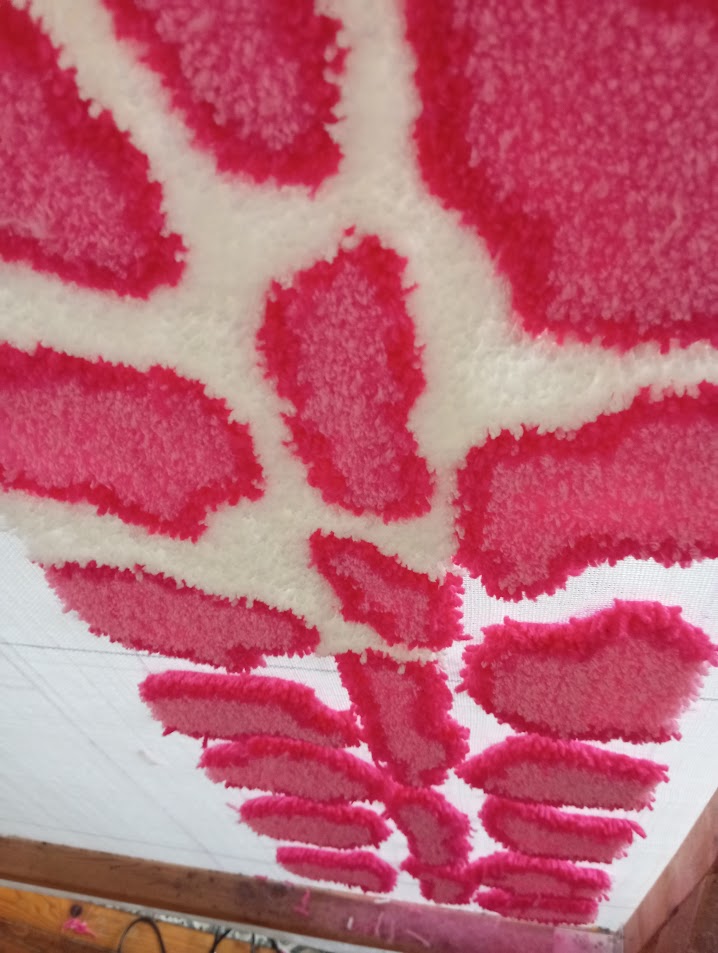
Yes, a tufted rug sheds. A new cut pile rug releases short fibers during its first weeks, and that is a natural result of how it is made. There is no cut pile rug that never sheds; anyone promising that is either describing a looped surface or not telling you the truth. What matters is what is coming out. Trimmed fiber and an unraveling loop are not the same thing, and telling them apart is easy.
What is actually coming out in the first weeks#
In cut pile, every loop is cut the moment it forms. After that I shear the surface by hand with scissors, which takes 1 to 2 millimeters off the top. The short fiber pieces this creates settle down into the pile. In the studio I brush the rug, vacuum it with a shop vacuum, then brush it again. Even so, not everything comes out; whatever sits deep in the pile works its way up later, once people start walking on it.
These pieces are 2 to 8 millimeters long, dusty and short. Pick one up and it looks like a clipping, not like a strand of yarn. It leaves no gap anywhere in the rug.
How long it lasts#
On an 80x120 centimeter cut pile rug, the first three vacuum passes can each pull out a palmful of short fiber. After the fourth it drops noticeably. Under normal use it falls to a level you stop noticing within 3 to 6 weeks.
That timeline depends on traffic. A rug in a hallway clears in two weeks; a rug in a guest room vacuumed once a month reaches the same point in six. The total amount of loose fiber does not change, only the speed at which it leaves.
Looped surfaces barely go through this cycle at all, because the loops were never cut and there are no free ends. I covered the difference between the two surfaces in cut pile vs loop pile.
When shedding is a warning sign#
In these three cases what is coming out is not trimmed fiber:
- Yarn that comes away in one piece, longer than 3 centimeters. Trim waste is never that long. A long strand means the loop at that point has come free of the backing.
- Yarn coming from the same spot again and again, with a visible dip forming there.
- Yarn hanging out from under the edge tape, or the tape starting to lift off the fabric.
If any of those is happening, turn the rug over. The glue layer on the back should be hard, flat and free of cracks. If it crumbles like chalk under your thumb or the backing has bubbled, the problem is behind the rug, not on its face. If you see this on a piece you bought from us, write to us and we will look at photos and talk through the repair.
One more thing: if a single loop has sprung up above the surface, never pull it. Pulling loosens its neighbors too. Cut it level with the rest of the pile and the spot will not be visible.
How to vacuum it#
Most of the damage I see comes from the wrong vacuum.
For the first month keep the rotating beater bar off, or use a flat floor head. A spinning brush does clear short fiber, but the same motion also lifts loops that have only just settled. Do not run the suction at maximum either; a middle setting is enough.
On the first few passes, do not fight the direction of the pile. Move with the way it lies. Along the edges, do not run the head over the edge tape; start just inside it.
Robot vacuums get stuck on long pile and wear down the edges. On any piece with a pile over 15 millimeters I would keep the robot off it. The full care routine is collected in how to clean a tufted rug.
A floor rug and a wall panel do not behave the same#
There is one more thing that gets confused with shedding.
On a floor rug, foot traffic presses the pile in one direction. Pile lying flat reflects light differently, so the same color looks lighter in some areas and darker in others. This is called shading, and it is not fiber loss, only a change in pile direction. It shows up more on cut pile surfaces and becomes easier to notice once the pile passes 15 millimeters. Brushing the pile one way with a soft rug brush usually settles it, though in some areas the mark stays.
None of this happens on a panel hung on a wall, because the pile is never crushed. On a panel the only issue is dust.
Wool and acrylic behave differently#
Wool is spun by twisting short staple fibers together. Those short fibers work their way to the surface over time, so a wool rug sheds more and for longer. In exchange, wool holds up better underfoot and recovers its pile after being pressed.
Acrylic yarn is made from long, even filaments, so it sheds noticeably less. It does not bounce back the way wool does, though; the spot under a sofa leg can leave a more permanent mark.
A blend of the two usually gives the most balanced result. Which yarn goes into which piece is covered in types of tufting yarn.
What the backing glue and edge tape decide#
The mechanism that really holds the loops is the glue on the back. In tufting the yarn is not knotted into the fabric, it is wedged into the weave; once the glue cures, that grip becomes permanent. A thin or uneven glue coat goes unnoticed for months, and then loops start coming out one by one a year later.
In the studio I apply the glue in two coats, and a full cure takes 24 hours. Nothing leaves the studio before that time is up. I run woven tape along the edges, because the cut line is the weakest part of any rug and it is where the vacuum and people's feet do the most work.
Turning a tufted rug over and looking is a good habit. A flat, hard, fully covered back and a cleanly applied edge tape tell you more about how long the piece will last than its surface does. One loop coming loose once does not mean the rug is failing. Loops coming from the same spot over and over does.
Frequently Asked Questions
How long does a new tufted rug shed?
On a cut pile rug, shedding usually drops to a level you stop noticing within 3 to 6 weeks. A palmful of short fiber on each of the first three vacuum passes is normal. The more the rug is walked on and vacuumed, the sooner it settles down.
Does shedding mean the rug is getting thinner?
If what comes out is trim waste, no, since those are 2 to 8 millimeter pieces that were never anchored to begin with. Strands longer than 3 centimeters that come away whole, together with a dip forming at the same spot, do mean a loop has pulled free, and that thins the rug.
Can I vacuum a tufted rug?
Yes, but keep the rotating brush head switched off for the first month, or use a flat head. A spinning brush can lift loops that have only just bedded in. Run the suction at a middle setting and start just inside the edge tape instead of passing over it.
Does a wool rug shed more than an acrylic one?
Yes. Wool is spun by twisting short staple fibers together, and those fibers work their way to the surface over time. Acrylic is made from longer, more even filaments, so it sheds noticeably less. Wool does recover its pile better after being crushed.
What should I do about a single loop sticking up?
Never pull it, because pulling loosens the loops around it as well. Cut it level with the surrounding pile using scissors. Trimmed properly, the spot is not visible from above.