Decor
How to Clean an Acrylic Painting? Acrylic Painting Care Guide
Proper care is important for keeping acrylic paintings looking beautiful for years. A soft brush can be used to remove dust, while paintings should not be washed with water or exposed to strong cleaning chemicals. Protecting them from direct sunlight and high humidity also helps preserve their colors and surface. For stubborn stains or surface damage, seeking professional advice is the safest option.
How to Clean an Acrylic Painting? Acrylic Painting Care Guide
Acrylic paintings are widely used by both professional artists and hobby painters because of their vibrant colors and versatility on different surfaces. However, creating a painting is not the end of the process.
Over time, dust can accumulate on the surface, the colors may start to look less vibrant, or the painting can be affected by humidity and sunlight.
So, how do you clean an acrylic painting? Can acrylic paint be wiped? Can you use water on an acrylic painting?
The most important thing when cleaning an acrylic painting is to be gentle and avoid damaging the painted surface.
How to Remove Dust from an Acrylic Painting?
One of the most important parts of regular acrylic painting care is removing dust.
Dust that accumulates on the surface over time can make a painting look dull or dirty. For this reason, gently removing dust at regular intervals is a good maintenance habit.
A soft, clean brush can be used for this purpose.
The brush should be used gently without pressing against the surface. This is particularly important for textured or impasto acrylic paintings, where excessive pressure can damage the paint.
Avoid using rough cloths, sponges, or anything that could scratch the surface.
Can You Wipe an Acrylic Painting with a Damp Cloth?
This requires some caution.
Once acrylic paint has dried, it can form a relatively durable surface. However, this does not mean that every acrylic painting can safely be wiped with a damp cloth.
If the painting contains varnish, mixed materials, collage elements, or textured surfaces, water or cleaning products may damage the surface.
For general maintenance, using a dry and soft brush is therefore the safer option.
If the artist or manufacturer has provided specific cleaning instructions, those instructions should always be followed first.
Can You Clean an Acrylic Painting with Water?
Although dried acrylic paint has a certain level of water resistance, directly washing an acrylic painting is not an appropriate cleaning method.
Applying large amounts of water to the surface can damage the canvas and its backing. It is also difficult to control where and how much moisture reaches the painting.
For this reason, an acrylic painting should never be washed under running water or cleaned with large amounts of water.
If cleaning is necessary, use a controlled method that is appropriate for the surface.
How to Remove Stains from an Acrylic Painting?
If a liquid or another substance is accidentally spilled on a painting, acting quickly can be helpful.
However, instead of rubbing the stain aggressively, gently blotting the area with a clean, soft cloth may be a better approach.
Do not use alcohol, bleach, household cleaners, or strong chemicals.
These products can damage the acrylic paint, varnish, or other materials used in the artwork.
If the stain does not come out easily, it is safer to consult a professional art conservator or artwork-care specialist rather than experimenting with strong cleaning products at home.
Do Acrylic Paintings Fade in Sunlight?
Yes. Paintings exposed to direct sunlight for long periods can experience color changes over time.
The lightfastness of acrylic paint can vary depending on the pigments used. Therefore, it would not be accurate to say that acrylic paint never fades.
This is particularly important for artworks with bright and highly saturated colors.
Protecting an acrylic painting from direct sunlight is a good way to help preserve its colors for longer.
You can display your painting in a bright room, but whenever possible, choose a location with indirect light rather than a wall that receives strong, direct sunlight throughout the day.
Are Acrylic Paintings Affected by Humidity?
It is important to consider not only the paint surface but also the canvas and other materials used in the artwork.
Very humid environments can affect canvas over time. For this reason, it is generally better to avoid displaying paintings in areas with consistently high humidity, such as bathrooms, or on walls with moisture problems.
Mold, dampness, or condensation on the back of a painting can damage both the canvas and the paint layers.
Ideally, paintings should be stored or displayed in a dry, well-ventilated environment with relatively stable temperatures.
How Should You Store an Acrylic Painting?
If you are going to store a painting for a long period, you should consider more than just protecting its surface.
Keep the painting in a clean, dry environment rather than placing it directly on the floor or in a damp area.
It is also important to prevent paintings from rubbing against each other or having their painted surfaces come into direct contact.
If you need to store multiple paintings together, placing appropriate protective material between them can help prevent surface damage.
Avoid placing heavy objects on top of paintings or putting pressure on their surfaces.
Can the Varnish on an Acrylic Painting Be Cleaned?
Some acrylic paintings are varnished to help protect the surface.
Depending on the product used, a varnish layer can provide additional protection against dust, dirt, and environmental factors.
However, varnished paintings still require careful cleaning.
If a varnished surface becomes cloudy, yellowed, or develops stubborn dirt, trying to remove the problem at home with various chemicals can cause permanent damage.
For this reason, if there is a serious problem with the varnish, professional assistance is the safest option.
What Should You Avoid When Caring for an Acrylic Painting?
To extend the life of an acrylic painting, there are several cleaning habits you should avoid.
Do not rinse the painting with water. Washing an acrylic painting under running water or using large amounts of water is not recommended.
Do not use rough cloths or sponges. They can scratch the surface or damage the paint layer.
Do not use strong chemicals. Bleach, alcohol, and household cleaning products can damage the paint or varnish layer.
Do not leave the painting in direct sunlight. Long-term exposure to UV light can cause colors to change over time.
Do not press down on the painted surface while cleaning. This is particularly important for textured and impasto artworks.
Do not try to force stubborn stains away. An incorrect cleaning method can cause more damage than the stain itself.
How Often Should You Clean an Acrylic Painting?
There is no fixed rule that says an acrylic painting must be cleaned once a month or once a year.
The ideal maintenance schedule depends on the environment, the amount of dust, and the texture of the painting.
In most cases, gently removing dust from the surface from time to time is enough.
If the painting already looks clean, unnecessary wiping or repeated use of cleaning products may do more harm than good.
When caring for artwork, sometimes the best maintenance is simply avoiding unnecessary intervention.
Acrylic Paintings at Peck Art Studio
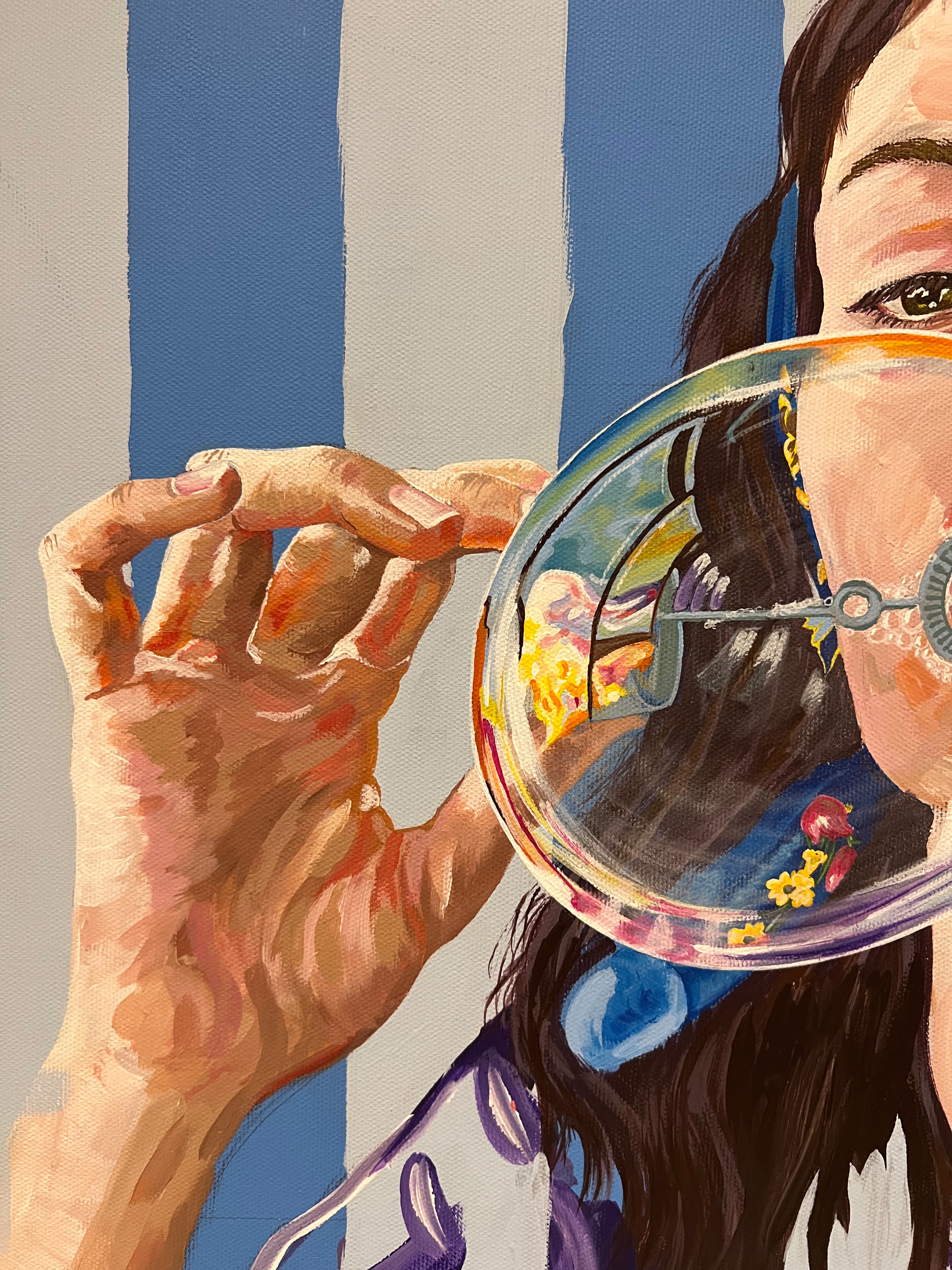
At Peck Art Studio, the relationship between color, surface, and materials is an important part of our acrylic artworks.
It is important to think not only about how a painting is created, but also about how it will look years later.
When you purchase an acrylic painting or want to preserve your own artwork for a long time, the environment in which it is displayed and the way it is cared for are just as important as the creative process itself.
An acrylic painting that is displayed under suitable conditions and protected from unnecessary intervention can preserve its colors and surface character for many years.
Conclusion
Caring for an acrylic painting is based on a relatively simple principle:
Be gentle, avoid unnecessary water and chemicals, protect the painting from direct sunlight, and display it in a suitable environment.
For everyday maintenance, gently removing dust with a soft brush is often enough.
However, if the painting has a serious stain, surface damage, varnish problem, or other signs of deterioration, it is better to seek professional help rather than experimenting with different cleaning methods at home.
Because when cleaning an artwork, the goal is not simply to remove dirt. The goal is to protect the artwork without damaging the artwork itself.