Tufting
How to Hang a Wall Rug? A Guide to Hanging and Securing Wall Rugs
Wall rugs are a great way to add color, texture, and character to a space. When hanging one, it is important to consider the weight, size, backing, and wall type. Adhesive hanging systems may work for small and lightweight pieces, while larger and heavier tufted rugs require stronger mounting solutions. The hanging method is only part of the process. Height, lighting, and placement also affect how the artwork looks in a room. For tufted wall rugs especially, a secure hanging system helps protect the piece while allowing it to be displayed beautifully.
How to Hang a Wall Rug? A Guide to Hanging and Securing Wall Rugs
Wall rugs can do more than simply add color or pattern to a space. Their texture can change the appearance of a wall, give an empty area more character, and sometimes become the focal point of a room, much like a painting.
As handmade textile pieces and tufted wall rugs have become increasingly popular in interior decoration, many people find themselves asking the same question:
How do you hang a wall rug?
The truth is, there isn't just one answer. The best method can depend on the weight and size of the rug, its backing, and the type of wall where it will be displayed.
A method suitable for a small and lightweight textile piece may not be strong enough for a large or heavy textile artwork. Before hanging a wall rug, it is therefore important to consider both the characteristics of the piece and the structure of the wall.
In this guide, we look at different ways to hang a wall rug, which methods may work best in different situations, and what to consider when displaying tufted wall rugs.
What Should You Consider Before Hanging a Wall Rug?
Before choosing a nail, hook, or hanging system, it is helpful to consider a few important details.
First, think about the weight of the rug.
A small and lightweight textile piece should not necessarily be hung in the same way as a large, densely textured tufted artwork. As the weight of the piece increases, a stronger and more secure hanging method may be required.
Another important consideration is the backing of the rug.
Some wall rugs may already have a ring, cord, or hanging attachment designed for display. Others may require a hanging system to be added later.
The type of wall also matters. Concrete, drywall, wood, and other surfaces may require different methods of installation.
For this reason, the best hanging method should not be chosen based only on the rug or only on the wall, but by considering both together.
How to Hang a Wall Rug Using a Nail or Screw
Using a nail or screw can be one of the most reliable options, especially for heavier wall rugs.
If the back of the rug has a hanging ring or a secure mounting attachment, it can be hung using an appropriate nail or screw.
For larger pieces, distributing the weight across two or more points rather than hanging the entire piece from a single point can create a more balanced display.
This can also help prevent the rug from tilting over time or placing too much pressure on one area.
However, it is important to make sure that the nail or screw you choose is suitable for both the wall structure and the weight of the rug.
Hanging a heavy wall rug from a small or weak nail may not be safe.
Hanging a Wall Rug with Hooks
Hooks can be a practical option, especially for wall rugs that have rings or cords attached to the back.
Decorative wall hooks may be suitable for smaller and lighter pieces.
However, as the weight of the rug increases, it becomes important to check the hook's weight capacity.
Some decorative hooks may look attractive but may not be strong enough to safely support a heavy textile artwork.
When choosing a hook, don't only consider its appearance. Make sure to check how much weight it is designed to hold.
Can You Hang a Wall Rug Without Damaging the Wall?
Yes, some lightweight wall rugs can be displayed without drilling into the wall.
Adhesive hooks, hanging strips, and other removable mounting systems can be used for this purpose.
This option can be especially useful for renters or anyone who does not want to create holes in their walls.
However, the most important consideration here is the weight of the rug.
Adhesive systems may not perform equally well on every type of wall or with every weight. If the rug is too heavy, there may be a risk of it falling over time.
The surface of the wall also matters. Rough, damp, or dusty surfaces may prevent adhesive systems from attaching securely.
If you want to hang a wall rug without drilling, always check the product's weight limit and consider the actual weight of the textile piece.
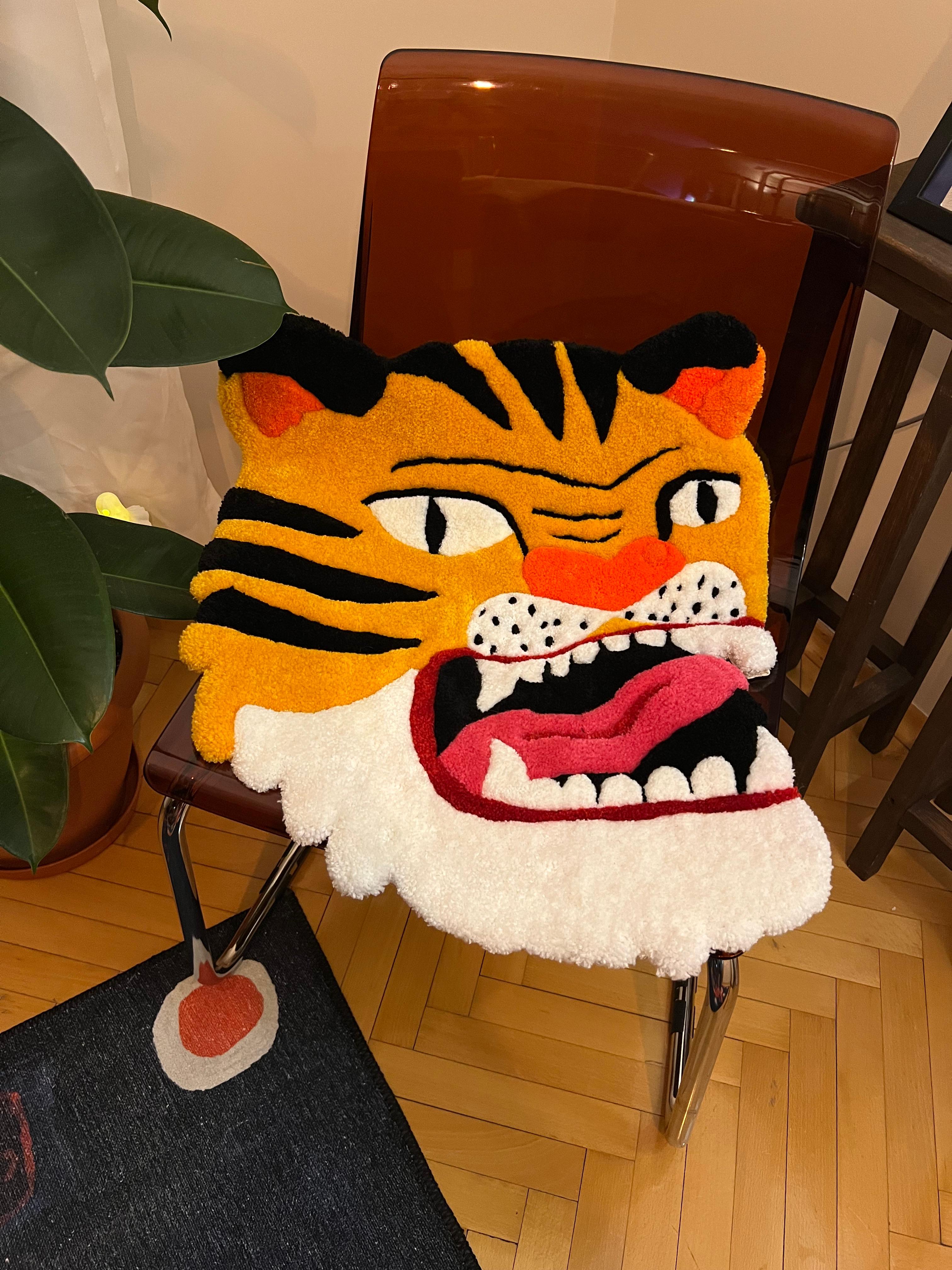
How to Hang a Tufted Wall Rug
Tufted wall rugs can be heavier than some other textile pieces because of the amount of yarn and the materials used on the backing.
For this reason, it is especially important to choose a secure hanging system when displaying a tufted wall rug.
Depending on the size and weight of the piece, you may use:
Hanging rings Strong cords Wooden supports Metal mounting hardware
A single hanging point may be sufficient for smaller tufted pieces, while distributing the weight across two points can provide a more balanced solution for larger works.
If your piece was specifically made to be displayed on a wall, following the hanging recommendations provided by the maker is usually the safest option.
How to Hang a Wall Rug Straight and Evenly
One of the most common problems when hanging a wall rug is finding that the piece looks crooked once it is on the wall.
To avoid this, take measurements before marking the hanging points.
For wall rugs that will be supported from two points, make sure both points are positioned at the same height.
Using a level can help ensure that the piece is properly aligned.
The hanging system itself should also distribute the weight evenly. If too much weight is concentrated on one point, the rug may gradually tilt to one side.
After hanging the piece, step back and look at it from a distance.
Sometimes a wall rug can be technically level but still appear slightly off because of the furniture or decorative objects surrounding it.
How to Secure a Heavy Wall Rug
When hanging a heavy wall rug, safety should always come first.
If the piece is large, dense, or heavy, a simple adhesive hook may not provide enough support.
For heavier pieces, consider using appropriate wall anchors and screws, strong mounting hardware, or a system that distributes the weight across multiple points.
Instead of hanging a large piece from a single point, dividing the weight between two secure points can provide a more balanced solution.
If the wall rug is particularly heavy and you are unsure about the best installation method, asking a professional for help may be the safest choice.
After all, it is important not only for the wall rug to look beautiful but also for it to remain safely displayed on the wall over time.
How to Choose the Best Place for a Wall Rug
Where you place a wall rug can be just as important as how you hang it.
Start by considering the size of the wall.
A very small textile piece may get lost on a large and completely empty wall. Likewise, a large wall rug can make a narrow space feel visually crowded.
Leaving some empty space around the wall rug can help the piece stand out and make it easier to appreciate.
Lighting is also important.
Direct and prolonged sunlight can cause the colors of textile pieces to fade over time. If possible, avoid displaying your wall rug in areas that receive intense and continuous sunlight.
It is also a good idea to keep textile artworks away from radiators, stoves, and other strong heat sources.
How High Should a Wall Rug Be Hung?
There is no single measurement that works for every wall rug.
The size of the piece, the room where it will be displayed, and the furniture around it can all affect the ideal hanging height.
However, positioning the artwork at a comfortable viewing height, close to eye level, can be a good starting point.
If the wall rug will be displayed above a sofa or bed, leave enough space between the furniture and the piece.
Hanging the artwork too high can make it feel disconnected from the rest of the space, while placing it too low may make the area feel crowded.
Before installing the final hanging hardware, it can be helpful to hold the piece at different heights and observe how it looks from a distance.
What Should You Avoid When Hanging a Wall Rug?
A few common mistakes can affect both the appearance and safety of a wall rug.
Don't ignore the weight of the rug. A hanging system designed for lightweight pieces may not be strong enough to support a heavy textile artwork.
Don't place too much weight on a single hanging point. Whenever possible, distribute the weight of larger pieces evenly.
Don't unnecessarily damage the surface of the rug. Try to place hanging hardware on the backing or other suitable support areas rather than piercing the visible textile surface.
Don't overlook direct sunlight. Textile pieces displayed in intense sunlight for long periods may gradually fade.
Avoid damp environments. Constantly humid spaces may not be suitable for textile artworks.
Can You Use a Frame to Display a Wall Rug?
Yes.
Smaller textile pieces can be displayed inside an appropriate frame.
However, it is important that the frame does not compress the texture of the rug.
A thick and three-dimensional tufted piece may not fit properly inside a standard picture frame.
For some works, shadow box frames or deeper framing systems may be a better option.
Using a frame can be a good choice for anyone who wants to display a textile piece in a slightly more protected way.
How Can Peck Art Studio Wall Rugs Be Displayed?
At Peck Art Studio, we design some of our tufted pieces not only as floor rugs but also as textile artworks that can be displayed on the wall.
For this reason, it is important to choose a hanging method based on the size, weight, and intended use of each individual piece.
Smaller works may be displayed using simpler hanging systems, while larger and heavier tufted pieces may require stronger methods that can safely support their weight.
For us, it is important not only that a wall rug is securely mounted but also that it works visually within the space through its color, texture, and design.
A tufted wall rug does not have to be simply a decorative object placed on a wall.
When displayed in the right way, it can become the focal point of an entire space.
Conclusion
There is no single correct way to hang a wall rug.
The best method depends on the weight, size, backing, and the type of wall where it will be displayed.
Adhesive hooks or simple hanging systems may be enough for small and lightweight pieces, while larger and heavier tufted wall rugs require stronger and more secure mounting methods.
The location of the wall rug is just as important as the hanging method. The right height, suitable lighting conditions, and enough empty space around the piece can make it much more effective within a room.
Most importantly:
A wall rug should not only be hung safely. It should also be displayed in a way that allows it to be fully appreciated.
Sometimes transforming a wall does not require a major renovation.
Sometimes, a textile artwork hung on the right wall in the right way can completely change the atmosphere of a space.