Tufting
Cut Pile or Loop Pile? The Difference Between Tufted Surfaces
Tufting has two basic surfaces: cut loops and uncut loops. Durability, appearance, upkeep, and which one suits which room.
Updated:
Tufted surfaces come in two basic types: loop pile, where the yarn is left as a loop, and cut pile, where those loops are cut. The difference looks like a single operation but produces two completely different surfaces.
When choosing or commissioning a piece, this is the most decisive choice after colour. This article puts the two side by side.
What happens technically#
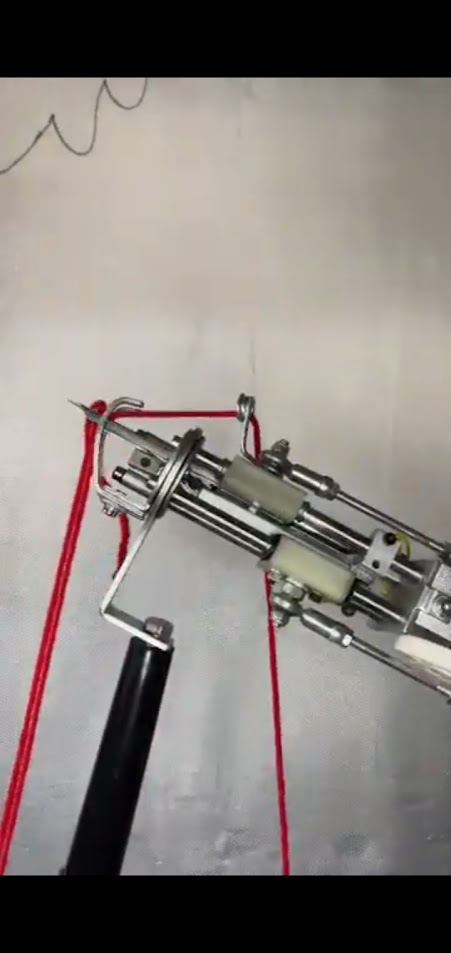
There are two types of tufting gun, and that is where the difference begins.
A loop pile gun pushes yarn through the backing and leaves it as a loop. The loop stays closed, both ends attached to the cloth. The surface is made of small rings sitting side by side.
A cut pile gun cuts the loop as it forms it. Two free yarn ends remain. The surface is made of upright yarn ends, the logic of velvet.
In both cases what holds the loops in place is the adhesive and backing applied from behind. We described the production steps separately.
The difference in appearance#
This is the fastest way to tell them apart.
Loop pile reads flatter, tighter and more graphic. The surface reflects light evenly and pattern edges come out crisp. It is the right choice for geometric designs, lettering and anything needing clean colour boundaries.
Cut pile reads velvety and deeper. Because the yarn ends scatter light, colour looks richer. Colour transitions are far softer; if you want a gradual shift between two colours, cut pile does that naturally.
There is also a directional effect: on a cut pile surface, colour lightens and darkens according to which way the yarn lies. The same rug looks a different tone seen head on and from the side. On loop pile that effect is almost absent.
The difference in durability#
If you are choosing something for the floor, this is the real criterion.
Loop pile is more durable. Because the loop is closed, the yarn ends are not exposed to abrasion; it keeps its original state longer in heavily used areas. For hallways, entrances and busy routes, this is the right answer.
Cut pile flattens faster underfoot. Over time the yarn ends crush and that area reads a different tone. It does not fail, but it looks lived-in, some people like that, some do not.
One warning: if there is an animal in the house with claws, loop pile is risky. A closed loop is a ring a claw can catch. In homes with cats and dogs I recommend cut pile on the floor.
The difference in upkeep#
Neither is difficult, but there are small differences.
On loop pile, dust settles between the loops and regular vacuuming matters more. In exchange, the flat surface is easy to wipe.
On cut pile, dust goes deeper but the yarn ends show it less. Combing the surface by hand tidies it up.
The rule is the same for both: deal with spills promptly, never pour chemicals on it, and keep it out of direct sun. We gathered the whole care routine separately.
Which one for which job#
A practical pairing:
- Floor rug, heavy use: loop pile
- Floor rug, cats or dogs in the house: cut pile
- Wall panel, geometric or lettered design: loop pile
- Wall panel, portrait or graded colour: cut pile
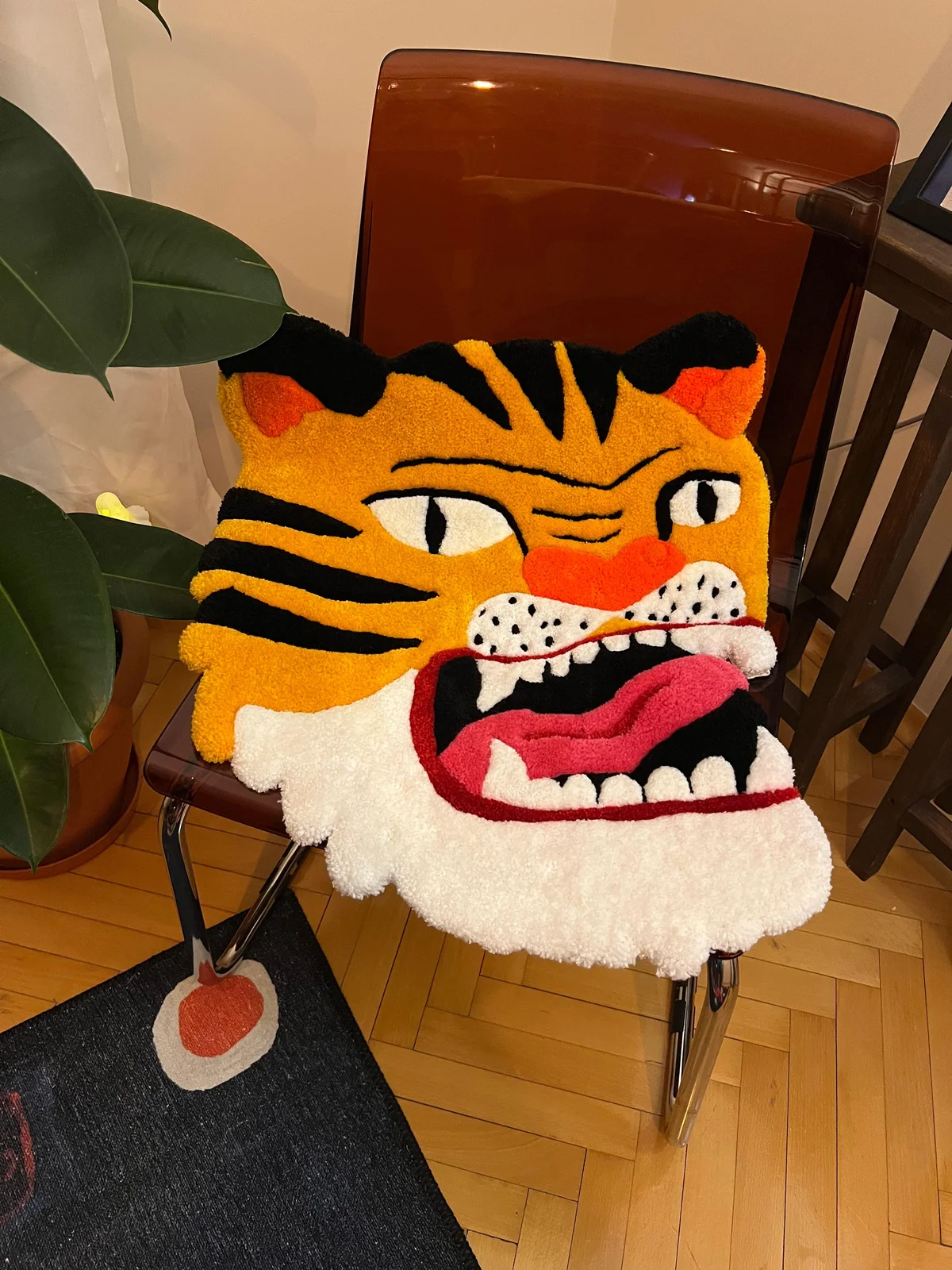
- Pet portrait: cut pile, the surface closest to fur
- Logos and corporate work: loop pile, for crisp edges
For pieces that hang, durability drops out of the equation, so the choice there is purely about appearance.
Combining the two#
This is my favourite part. Within one piece, one area can be left looped and another cut.
What it gains you is depth, even in a single colour. When a ground of one tone is looped and the form above it is cut, a difference in light appears between them. It barely shows in a photograph but is obvious to the hand and as you move through a room.
A height difference can be added too, leaving one area taller than another creates a relief effect on the surface. This is what machine production cannot do, and where handmade tufting really wins.
The effect on price#
There is no direct price difference; both are calculated at the same rate per square metre, starting at 9,000 TL for a wall panel and 11,000 TL for a floor rug.
The indirect effect is this: combining both types and asking for graded transitions generally raises the detail density, which raises the multiplier. We set out the pricing with figures.
How to decide#
The most practical route: tell us where it will live and we will work out the rest together.
"By the entrance, a busy spot" points to loop pile; "in the bedroom, walked on barefoot" points to cut pile. For a wall, seeing the design is enough.
Choose size and technique on the custom order page and send a photo of the space; we settle the surface type together at that stage. For the wider picture, what tufting is gives the general frame.
Frequently Asked Questions
What is the difference between cut pile and loop pile?
Loop pile leaves the yarn as a closed loop: the surface is flatter, tighter and pattern edges are crisp. Cut pile cuts the loops leaving free yarn ends: the surface is velvety, colour looks richer and transitions are far softer.
Which is more durable?
Loop pile. Because the loop is closed the yarn ends are not exposed to abrasion, so it holds its original state longer in busy areas. Cut pile flattens underfoot over time and that area reads a different tone.
Which surface suits a home with cats or dogs?
Cut pile. The closed loop in loop pile forms a ring a claw can catch. A cut pile surface, made of free yarn ends, carries no such risk.
Can both surface types be used in one piece?
Yes, and it is one of the strongest aspects of handmade tufting. Leaving one area looped and another cut creates depth even within a single colour; adding a height difference produces a relief effect on the surface.
Does the surface type change the price?
Not directly; both are calculated at the same rate per square metre. The indirect effect is that combining the two and asking for graded colour transitions raises the detail density, which raises the price multiplier.