Painting Techniques
What Is Mixed Media Painting? Materials and Methods
What mixed media means: ways to combine acrylic, transfer printing, collage and texture in one work, with tips on material compatibility and permanence.
Mixed media means using two or more materials or techniques together in a single work: transfer printing over acrylic, paint with collage, ink with watercolour, thread stitched into canvas. The one rule is that the layers hold on to each other and do not come apart over time. Knowing which material can go on top of which is the technical foundation of good mixed media work.
You see the phrase often on museum labels and exhibition captions. Sometimes it describes a genuinely layered surface, sometimes it just means "more than one thing was used". Below I explain what the term means, the most common combinations, and how to bring materials together without setting them against each other.
What is mixed media, and how does it differ from collage?#
Mixed media is an umbrella term. It is used when paint meets print, paint meets paper, or drawing meets textile in one work. A work's caption sometimes lists them ("acrylic and transfer print on canvas"), sometimes gathers them under "mixed media".
Collage is one method under that umbrella: cutting ready-made materials such as paper, fabric, photographs or newspaper and fixing them to a surface. A work made only of cut magazine pages is a collage but not mixed media, because a single method was used. Paint over the same collage with acrylic and it becomes mixed media.
I covered collage itself in detail in what collage is and how to make one.
Common combinations#
- Acrylic and transfer print. A toner photocopy of a photograph or drawing is transferred to canvas with acrylic medium, then painted over and around. The most common way to bring a photographic image and a hand-painted surface onto the same plane.
- Acrylic and collage. Pieces of paper are glued down with acrylic medium and partly covered with paint. The medium works as both adhesive and protective coat.
- Ink and watercolour. Crisp ink lines over the uncontrolled blooms of watercolour. Both are water-based and get along well on paper.
- Paint and thread. Adding yarn to canvas or paper by embroidery, stitching or tufting. The surface gains a three-dimensional texture.
- Paint and texture materials. Sand, marble dust or modelling paste mixed into acrylic medium creates relief on the surface.
- Soft or oil pastel with acrylic. Pastel lines over an acrylic ground; this needs fixing and glazed framing.
Material compatibility: which layer goes on top of what?#
The most common mistake in mixed media is layering without thinking about the order. Paper lifting after a few months, cracking paint, a yellowing surface: most of the time it comes down to the wrong order.
The basic rule comes from oil painting and is known as "fat over lean": each upper layer should be more flexible, or oilier, than the one beneath. Put a rigid layer on top of a flexible one and the top cracks as the bottom moves.
In mixed media, the practical version is this:
- Oil over acrylic works. Once dry, acrylic provides a surface oil paint can grip.
- Acrylic over oil does not. Acrylic is water-based and will not bond to an oily surface; over time it peels.
- Paper and collage material, glued to an acrylic ground with acrylic medium and sealed with another coat of medium, becomes a layer that is compatible with paint.
- Powdery materials such as pastel and charcoal should stay on the top layer. Paint over them gets muddy, and without fixative they shed.
Ground preparation matters too. Acrylic gesso is a suitable ground for both acrylic and oil, and the safest start for a mixed media piece. I explained how to apply it in what gesso is.
Think about weight as well. Thick collage, texture paste and thread change a canvas's weight and tension. For heavy mixed media work, a wooden panel is a sturdier support than thin canvas.
How is a transfer print made?#
The method used most in studios is toner transfer with gel medium. The general sequence:
- Print the image on a laser printer or photocopier (toner-based). Inkjet prints do not work well with this method.
- The image will be reversed when transferred, so if it contains text or has a direction that matters, print it as a mirror image.
- Brush an even, thin coat of acrylic gel medium onto the area of canvas where the image will go.
- Lay the print face down on the medium and press from the centre outwards so no air bubbles remain.
- Wait for the medium to dry completely. Overnight is safest.
- Wet the back of the paper and rub gently with your fingertips to lift the paper fibres away. The toner stays in the medium, the paper goes.
- If a white paper haze shows once it dries, wet and rub once more.
A transferred image never comes out as flawless as a photograph; there are breaks and worn patches at the edges. Most artists use that wear as part of the technique's language rather than treating it as a flaw.
Permanence and varnish#
A mixed media work lasts as long as its weakest material. Some risks:
- Newspaper and magazine paper are acidic. They yellow and become brittle over time. Sealing both sides with acrylic medium slows this down but does not stop it.
- Photocopies and some printing inks may not be lightfast. A wall in direct sun will fade such work.
- Different materials dry at different speeds and expand at different rates. Paint over a thick layer of texture paste before it has fully cured and the surface may crack.
Varnish is the final layer that protects a mixed media surface as a whole. An isolation coat of acrylic medium over the entire surface, then varnish, protects the layers beneath if the varnish ever needs removing. Works with pastel or other powdery materials are not varnished; they are protected with glazed framing. I covered varnish types and application in how to varnish a painting.
How light and shadow behave on a mixed media surface is a subject of its own: a textured layer throws its own shadow in side light, and that reads together with any painted shadow. The basics of painted light and shadow are in light and shadow in painting.
From the studio: Parsel Dokuma#
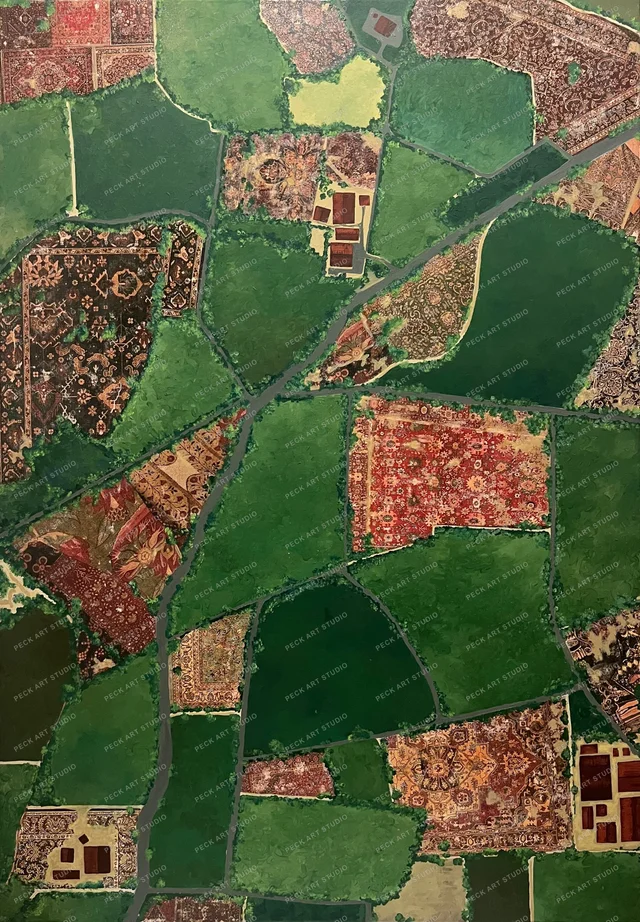
Parsel Dokuma (Parcel Weave) in the gallery is a mixed media work in acrylic and transfer print on canvas, 100x70 cm.
Its starting point is the idea of carpet fields: carpets multiplying like a crop growing out of the soil. Field parcels seen from above are reshaped with the colours and motifs of traditional carpet and kilim weaving. Weaving takes the place of soil, motifs the place of crops.
The work is a good example of why mixed media gets chosen. The subject lays two worlds over each other: an aerial view of farmland and the motifs of a hand-woven surface. In the materials, too, two languages sit side by side: the mechanical trace of the transfer and the hand-painted surface of the acrylic.
At the time of publication (29 October 2026) the work was priced at 13,000 TL and available. If you are wondering how to care for a mixed media work, what I wrote about acrylic surfaces is in how to clean an acrylic painting; keep water away from areas with transfer or paper.
Other paintings in the gallery are on the painting page. If you have a particular subject or combination of materials in mind for a commission, start on the custom order page.
Frequently Asked Questions
Does a mixed media work count as an original?
Yes. A unique mixed media piece made by the artist is an original work, even if it contains a transferred image or collage material. The ready-made image is one of the work's materials; the work itself is the artist's combination of them.
Can you paint oil over acrylic?
Yes. Dry acrylic gives oil paint a surface to grip. The reverse does not work: acrylic over oil cannot bond to the oily surface and peels off over time.
How do you clean a mixed media work?
The safest way is to dust it with a soft, dry brush. Keep water and cleaning products away from areas with paper, transfer or pastel. Varnished acrylic areas can be wiped with a slightly damp cloth; if in doubt, ask the artist first.
Which surfaces besides canvas can be used?
Wooden panel, heavy drawing paper, card and fabric are common. For work with heavy collage, texture paste or thread, a wooden panel is a sturdier support than canvas. On paper, water-based materials (ink, watercolour, acrylic medium) work best.