Inspiration
What Is an Etching? Techniques, Editions and How It Differs From a Reproduction
How is an etching made, what does an edition number mean, and how do you tell an original print from a reproduction? A practical guide to printmaking.
Updated:
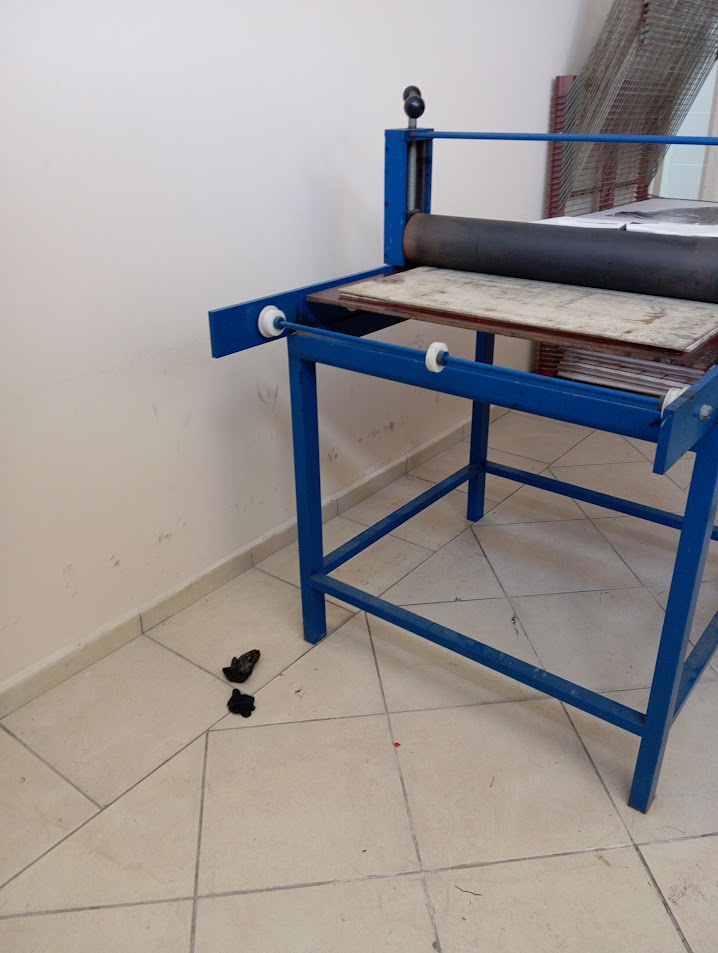
An etching is a printed image made by cutting into a plate, inking it and pressing it onto paper. The definition is simple, but the important part is this: here printing is not a means of reproduction but the technique itself. The artist cuts the plate, chooses the ink and pulls each impression by hand.
That distinction separates an etching entirely from a reproduction produced by photographic means. This article covers the technique, the edition system, and what to look for when buying.
How it works#
The basic logic is the same in every printmaking technique: creating areas that hold ink and areas that do not.
In etching the plate is usually a metal sheet. The artist cuts into the surface or bites it with acid; ink fills the resulting recesses. Excess ink is wiped from the surface, leaving only what sits in the grooves.
Dampened paper is then laid on the plate and run through a press. The pressure pushes the paper into the recesses and lifts the ink.
That last step has a side effect which is the easiest way to recognise an etching: the plate mark. The edge of the plate leaves a slightly raised rectangle in the paper. If a print has that mark, it has been through a real press.
The main techniques#
Printmaking is not one technique but several families.
Intaglio (the etching family): ink sits in recesses. Acid etching, drypoint and aquatint all belong here. It can carry fine line and rich tonal gradation.
Relief (woodcut and linocut): the logic is inverted, what is cut away stays blank and the remaining surface takes the ink. The result is more graphic, with stronger contrast.
Planographic (lithography): the plate is not cut at all. It works on the principle that oil and water repel; the drawing is made with a greasy material, and when the surface is wetted the ink adheres only to the drawing. It gives a free, painterly effect.
Stencil (screenprinting): ink is pushed through a stretched mesh onto the paper. Ideal for flat, saturated fields of colour.
The Peck Art Studio collection includes both paintings and etchings; the technique is listed on each work's page in the gallery.
How to read an edition number#
Beneath a print you will usually find something like 12/50.
It means this is the twelfth impression of an edition of fifty. The left number is this copy's position, the right the total.
Things worth knowing:
- The number is not a quality ranking. It is a common belief that 3/50 differs in quality from 47/50; on modern presses the plate does not wear meaningfully over fifty impressions
- Edition size affects price directly. An edition of 20 costs more than one of 200
- The plate is usually cancelled once the edition is complete. That is what guarantees the stated number was honoured
Alongside standard numbering you will see some abbreviations. A.P. (artist's proof) are impressions the artist keeps, usually no more than ten per cent of the edition. E.A. is the French equivalent. B.A.T. is the approved reference impression.
Original print versus reproduction#
This is the real confusion, and the most expensive misunderstanding for a buyer.
In an original print the artist makes the plate themselves. Printing is how the work exists; there is no "original painting" preceding it. Every impression is pulled by hand, and small differences in inking mean no two are exactly alike.
In a reproduction, a photograph of an existing work is printed. The artist plays no part in production, a machine multiplies an image, and it can be made in unlimited quantities.
Practical ways to tell them apart:
- Look for the plate mark. Intaglio prints leave a raised rectangle in the paper
- Look at the paper. Original prints are usually on thick, textured, acid-free stock
- Look through a magnifier. Digital printing shows a regular dot grid; a hand-pulled etching has continuous line and tone
- Look at the signature and numbering. Original prints are signed in pencil along the bottom edge
I compared originals, original prints and reproductions from a buying perspective separately.
Why buy a print#
A print is the most sensible way into collecting, and not only because of price.
The same budget buys work by a better artist. It is a genuine artwork rather than a reproduction. And the technique carries value of its own: the surface of an etching is an entirely different aesthetic from a painting on canvas.
Most collections begin with prints. That is not a stopgap but a field in its own right.
Care and storage#
Works on paper are more fragile than works on canvas.
The critical points:
- Light is the main enemy. Direct sun yellows paper and fades ink. Anti-reflective glass and a wall out of the sun are essential
- Damp causes mould and staining. Bathrooms, kitchens and the inner face of external walls are unsuitable
- It must not touch the glass. This is why a mount is a requirement rather than a preference: paper stuck to glass suffers irreversible damage
- Do not use acidic board. Cheap mounts yellow the paper over time; acid-free is essential
- Do not touch the surface. Skin oils leave permanent marks on paper
Store between acid-free sheets, flat and dry. I covered transport and packing separately.
Five questions to ask when buying#
When buying a print, these are enough:
- Is this an original print or a reproduction?
- Which technique was used?
- How large is the edition and which impression is this?
- Is it signed and numbered?
- What paper is it on, and is it acid-free?
Do not buy from a seller who cannot answer all five. I gathered how to vet a studio or seller separately.
Starting a collection#
If you are buying your first print, my advice is to choose a work whose technique interests you. Much of an etching's appeal comes from knowing how it was made; when your finger finds the plate mark, that press is still there.
You can see the paintings and prints in the collection in the gallery, and look at notable paintings from the collection in a separate article.
Frequently Asked Questions
What is an etching?
A printed image made by cutting into a plate, inking it and pressing it onto paper. Printing here is not a means of reproduction but the technique itself: the artist cuts the plate, chooses the ink and pulls each impression by hand.
What does 12/50 under a print mean?
It is the twelfth impression of an edition of fifty. The left number is this copy's position, the right the total. The number is not a quality ranking; on modern presses the plate does not wear meaningfully over fifty impressions. Edition size, however, directly affects price.
How do you tell an original print from a reproduction?
Four practical ways: intaglio prints carry a raised plate mark in the paper; original prints are on thick, textured, acid-free stock; under a magnifier digital printing shows a regular dot grid while a hand-pulled etching has continuous line and tone; and original prints are signed in pencil along the bottom edge and numbered.
What do A.P. and E.A. mean?
A.P. (artist's proof) are impressions the artist keeps, usually no more than ten per cent of the edition. E.A. is the French equivalent. B.A.T. denotes the approved reference impression used for the print run.
How do you protect a work on paper?
Light is the main enemy: direct sun yellows paper and fades ink. Damp causes mould and staining. The work must not touch the glass, which makes a mount a requirement. The mount must be acid-free, since cheap board yellows the paper over time. Do not touch the surface, as skin oils leave permanent marks.