Inspiration
What Is Gesso? Why and How to Prime a Canvas
Ready-made canvases come primed, but another coat of gesso changes the surface entirely. What gesso does and how to apply it properly.
Updated:
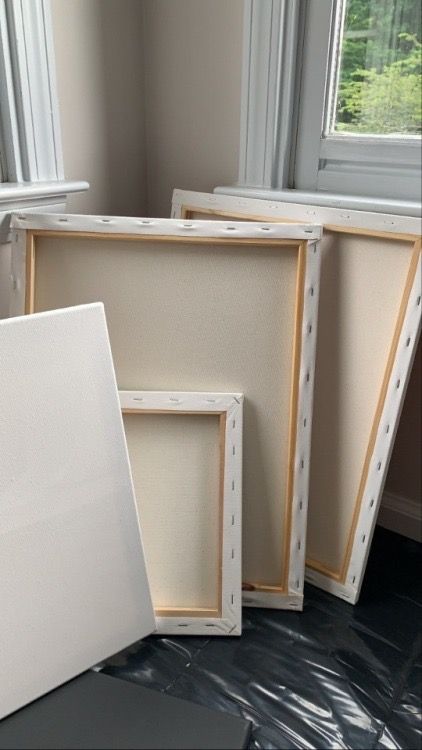
Gesso is the white primer that goes between canvas and paint. Its job is both to prepare the surface and to protect the cloth from the paint.
What it does#
Three things at once.
It cuts absorbency. Unprimed cloth soaks up paint like a sponge; colour goes dull and the brush will not travel. Gesso brings that absorbency under control.
It protects the cloth. In oil painting especially, oil in direct contact with fabric rots the fibres over time. Gesso puts a barrier in between.
It gives grip. It leaves a slightly toothy surface for paint to hold onto. On a slick ground, acrylic can lift over time.
Is a ready-made canvas enough#
Stretched canvases sold in shops usually carry one or two coats of factory priming. That is fine for studies and practice. It is not enough for work that will be sold or is meant to last.
Factory priming goes on thin and the weave stays pronounced. One or two more coats of gesso soften that texture and noticeably improve how the paint grips.
Applying it#
You need gesso, a wide flat brush or roller, fine sandpaper and a jar of water.
Do not over-thin it. If it is the consistency of yoghurt it can go on straight; thicker than that, open it with about ten per cent water. Too much water destroys its protective value.
Lay the first coat horizontally, edge to edge in unbroken strokes. Do not go back over the same spot; it leaves ridges.
Let it dry. Acrylic gesso is touch dry in twenty to thirty minutes but takes a few hours to harden fully.
Lay the second coat vertically. Crossing directions closes the weave and flattens the surface.
Between coats, pass lightly with fine sandpaper. Use no pressure, just take off the raised fibres. Wipe the dust with a cloth.
Two coats suit most work. For a smooth surface go to three or four, sanding after each.
Coloured gesso#
Gesso does not have to stay white. Mix a little acrylic into it and you have a toned ground.
A toned ground does two things. It stops white from fooling your eye; against white, every colour looks darker than it is. And the ground colour showing through in places ties the painting together. Earth tones, grey and a muted red are common choices.
Which paints need it#
With acrylic gesso is not compulsory, but it is advisable; paint will stick to the cloth on its own, yet colour goes dull if absorbency is not controlled.
With oil it is compulsory. Oil on unprimed cloth makes the fibres brittle over the years and the work tears.
Gouache and watercolour do not use gesso; those are paper media and gesso would kill the paper's absorbency.
Common mistakes#
One thick coat. Thick gesso cracks as it dries. Two thin coats always beat one heavy one.
Recoating too early. If the first coat is not fully dry, the second leaves a gritty surface.
Sanding hard. Break through the primer to the cloth and there is no protection at that spot.
Once the canvas is prepared, the differences in the canvas types piece make more sense; linen and cotton take primer differently.
Frequently Asked Questions
Does a ready-made canvas need extra gesso?
Not for studies. Yes for work that will be sold or is meant to last. Factory priming is thin; two more coats soften the weave and improve how the paint grips.
How many coats of gesso?
Two thin coats suit most work, one horizontal and one vertical. For a smooth surface go to three or four, sanding lightly between each. One thick coat is a mistake; it cracks as it dries.
Can white acrylic replace gesso?
No. White acrylic has no filler, leaves the surface slick and gives the paint no tooth to hold. It also does not regulate absorbency the way gesso does. The chalk-like filler in gesso exists for exactly this job.
What is a toned ground for?
Against white, every colour reads darker than it is and tones are harder to judge. Mixing a little acrylic into the gesso removes that. The ground showing through between marks also ties the painting together.