Decor
Entryway and Hallway Wall Decor: Size and Choice
Paintings, wall hangings and gallery walls for entryways and narrow hallways: sizing, hanging height, light and what to watch for in a passageway.
Updated:
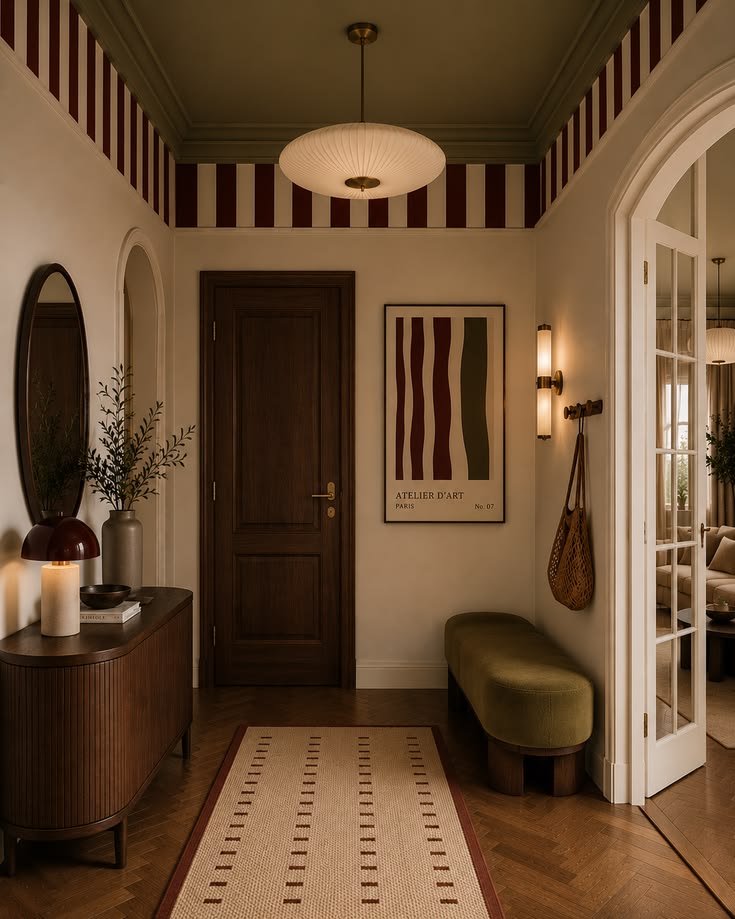
The formula that works on an entryway or hallway wall: either a horizontal series or a single vertical piece on a long, narrow wall, a flat surface that does not stick out into the walkway, and good light. Hang the centre of the work 145 to 155 cm from the floor, avoid thick surfaces at shoulder height where people brush past, and size the work to the part of the wall you can actually see, not the whole wall.
Hallways are the most walked and least looked at part of a home. Bedrooms and living rooms get a lot of thought; the hallway gets whatever is left over. Yet a passageway has its own constraints: a narrow floor, a long wall, little light and constant movement.
Why is the entryway the first impression?#
Whoever opens the front door sees the entryway first. For a guest it is the first sentence the home says; for you it is the first thing you see every time you come back.
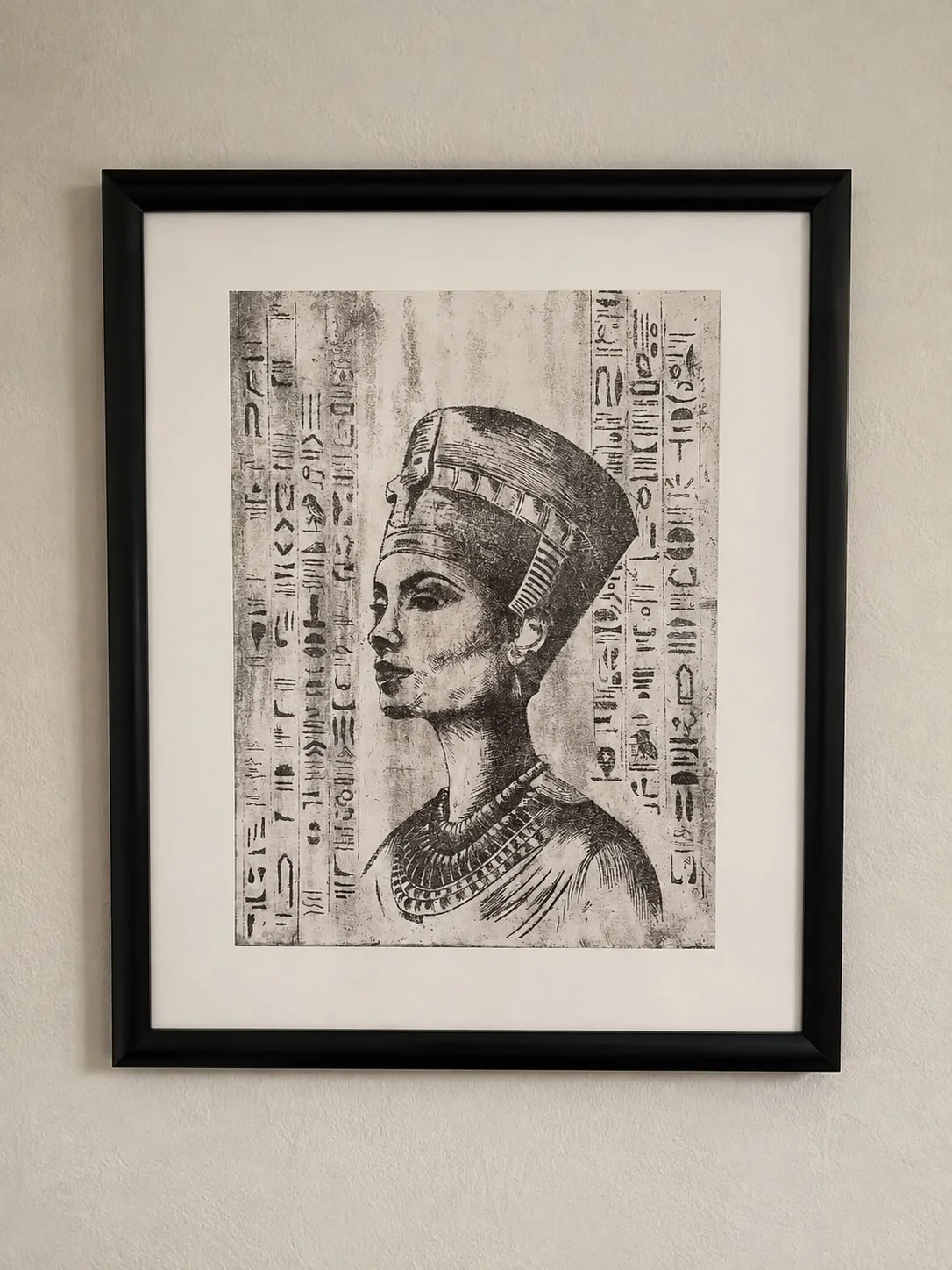
The entryway has another quality: nobody sits there. A work is hung not to be studied at length, as in a living room, but to be read in a few seconds. That is why a strong silhouette, a clear field of colour or a distinct texture works better there than finely detailed pieces you need to look at closely.
Size: what fits a narrow, long wall?#
On a hallway wall, size is set not by the length of the wall but by how far back you can stand. In a 110 cm wide corridor you cannot step back to look at a 100x80 cm canvas; you only ever see it too close. Entryways usually allow a little more distance between the door and the facing wall.
Two layouts work well in narrow hallways.
A horizontal series
Two or more works of the same size, side by side at the same height. As you walk, they appear one after another and the length of the corridor stops being a drawback. Prints on paper and small canvases suit this layout. A gap of 5 to 10 cm between works looks balanced in most arrangements.
A single vertical piece
For the short wall at the end of a corridor or a narrow strip between two doors. A vertical work (say 50x70 cm, long side upright) claims a narrow surface without crowding it and gives the end of the corridor a destination; you feel you are walking towards something.
A practical ratio for width: the work or group should be 60 to 75 percent of the width of the wall section it hangs on, or of the console beneath it. Standard sizes and which ones suit where are listed in standard canvas sizes. If you are struggling to fill a wall at all, see how to fill an empty wall.
Gallery wall or a single piece in the hallway?#
The decision depends on the width of the corridor and its light.
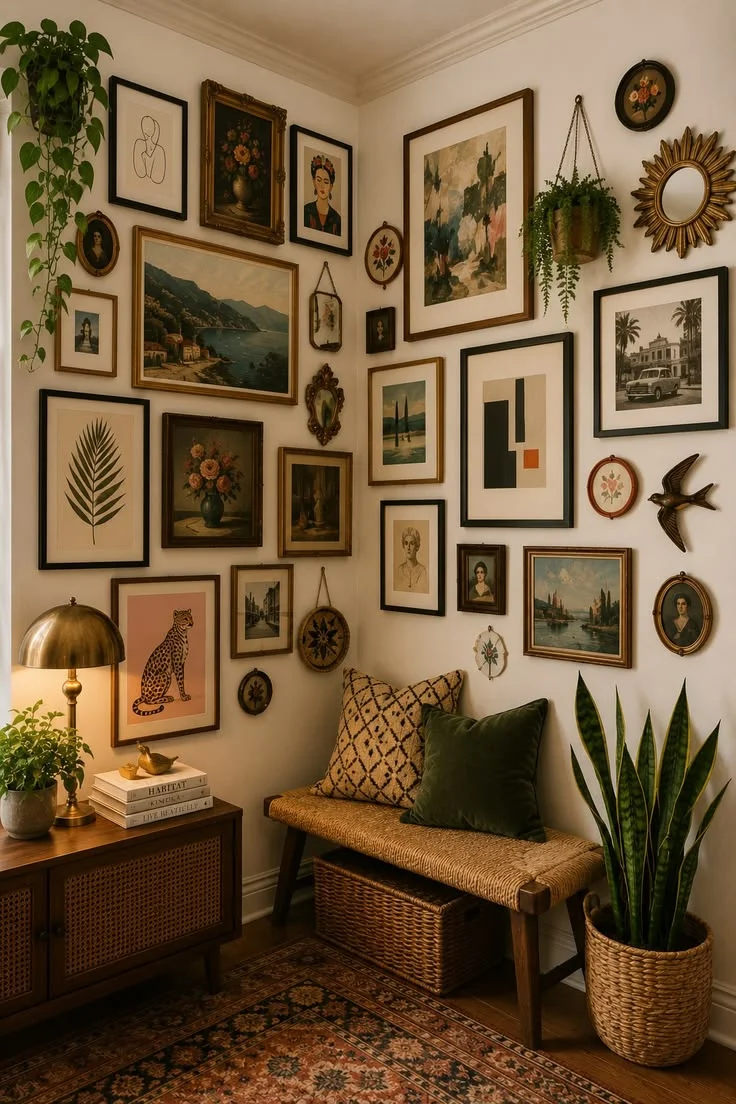
A gallery wall (many frames of different sizes hung together) looks good in a wide, well-lit hallway. In a narrow, dim one it looks crowded, because the eye can never see any single work from far enough away and they all run together. If you want a gallery wall in a narrow corridor, keep the frames one colour, the works similar in size, and align them all on one horizontal line.
A single piece works in any hallway, with one condition: it has to be clear why it is on that wall. A single small work in the middle of a long wall looks lost. Either its size should answer the wall, or it should sit opposite a console, a door or the end of the corridor.
My preference is a horizontal series in narrow corridors and a single piece in the entryway. One work in the entryway, a rhythm along the hallway.
A wall hanging in a passageway: benefits and cautions#
A wall hanging does two things in a hallway. First, it reduces the echo between hard walls; in long, bare corridors footsteps become noticeably softer. Second, it stays visible in low light thanks to its texture; a painted surface flattens in dimness, while a looped surface throws shadows in side light.
A passageway has its own risks, though:
- Shoulder and bag height. In a narrow corridor, the band between 90 and 150 cm from the floor is where shoulders, bags and coats brush the wall. A thick, deep pile surface in that band will show wear from rubbing over time. If the corridor is narrower than 100 cm, either hang the wall hanging above that band or move it to a wider wall.
- The door swing. Hang nothing on the section of wall the front door opens against; the spot the handle hits becomes the most worn point of any work.
- Fixing. In a passageway a work meets vibration and draughts every day. The bottom edge of a wall hanging should be fixed too, otherwise it ripples slightly every time the door opens.
I covered hanging methods, battens and fixings in detail in how to hang a wall hanging. The wall hangings in the gallery are on the tufting page.
Light and hanging height#
Hallways tend to be the darkest part of a home; many have no window at all. Before hanging a work in a corridor, look at it in evening light.
Hanging height follows the same rule as the rest of the home: the centre of the work about 145 to 155 cm from the floor. In a corridor the rule matters even more, because works are seen standing, while walking. In a series it looks tidier to align the top or bottom edges rather than the centres. Detailed measurements and screws by wall type are in how to hang a painting.
On light:
- A single ceiling spot falling straight down onto a work casts the frame's shadow across its top. Light from in front, at an angle, is better.
- A low, warm light used as a night light in the corridor also flatters the work.
- Do not hang a glazed work directly opposite a window; with the reflection, you will not see the work.
The angle and colour details of lighting art are in lighting artwork.
How do a console, a mirror and a work go together?#
The most common entryway setup is a console with a mirror or a work above it. A few rules keep the combination balanced.
The bottom edge of a work above a console should sit 15 to 30 cm above it. Higher, and the work looks disconnected from the console; lower, and it clashes with what sits on top (a key bowl, a lamp).
Do not let the mirror and the work compete on the same wall. If you use both, put the mirror above the console and the work on the side wall or directly opposite. Opposite is the interesting option: the work appears in the mirror and the entryway suddenly gains depth, a good trick for narrow entries.
Clear the top of the console. Keys, post and glasses piling up in the entryway compete visually with the work on the wall. A lidded box or a single bowl gathers that clutter.
If you like changing the entryway with the seasons, the reversible ideas in autumn home decor suit it as well.
If you are looking for a piece for an entryway or hallway, every work with its size and price is in the gallery. For a piece made to fit your wall, enter the dimensions on the custom order page to see a price range.
Frequently Asked Questions
How high should a painting hang in a hallway?
The centre of the work should be about 145 to 155 cm from the floor, which is average eye level. If you hang several works as a series, aligning their top or bottom edges looks tidier than aligning their centres.
Can a large painting work in a narrow hallway?
Usually not, because there is no room to step back and the work is always seen too close. A horizontal series or a single vertical piece on the short end wall works better. The best place for a large work is an entryway wall with a few metres in front of it.
Will a wall hanging get dirty in an entryway?
It depends where it hangs. In the shoulder and bag band between 90 and 150 cm, especially in corridors narrower than 100 cm, it will pick up rubbing and dirt. Hung above that band or on a wider wall, away from the door swing, it stays clean for a long time.
How many paintings should go in a hallway?
There is no fixed number; the length of the wall and the light decide. In a narrow, dim corridor a horizontal series of two to four works of the same size, 5 to 10 cm apart, works well. A wide, bright corridor can carry a fuller gallery wall.