Decor
Standard Canvas Sizes and Choosing the Right Size for Your Wall
The wrong size loses a good painting on the wall. Standard canvas sizes, how to scale to furniture, and a simple tape trick so you never guess.
Updated:
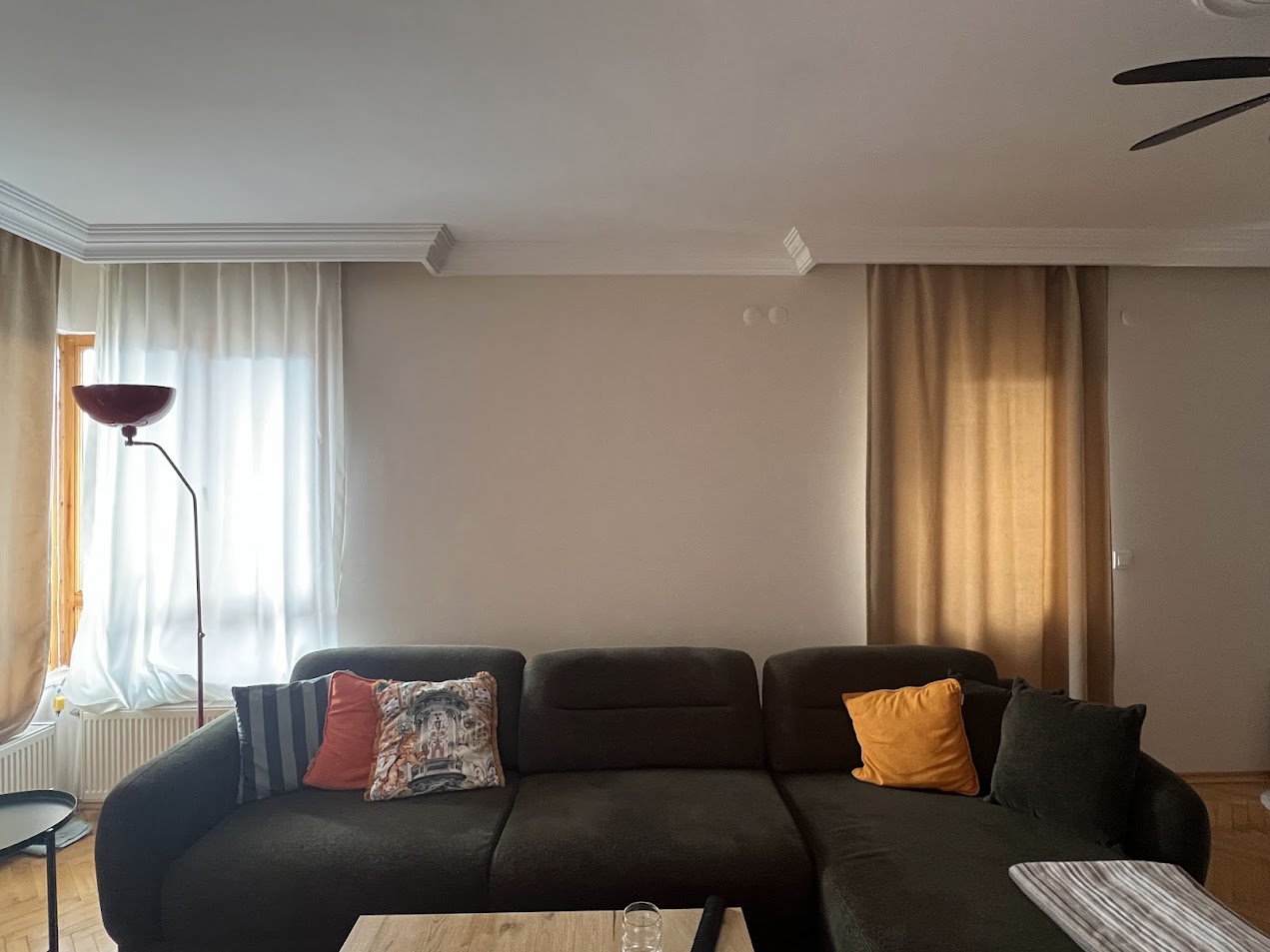
Whether a painting works on a wall is usually a question of size, not of the painting. Too small and it disappears on a broad wall; too large and it crowds the room. Both are common mistakes.
Common canvas sizes#
Ready-made canvases are usually sold in these sizes, in centimetres, width by height:
- Small: 20×20, 25×35, 30×40
- Medium: 40×50, 50×70, 60×80
- Large: 70×100, 80×120, 100×140
- Square: 50×50, 70×70, 100×100
These are convention, not rule. Some studio works fall outside them; if you are looking for an off-the-shelf frame, standard sizes make life easier.
Scaling to furniture#
The most useful rule: a work hung above furniture should be 60 to 75 per cent of that furniture's width.
So a 180 cm sofa takes a piece between 110 and 135 cm wide. If no single work covers that, hang two or three together to reach the total width, leaving 5 to 8 cm between them.
Leave 15 to 25 cm between the bottom edge of the work and the top of the furniture. More than that and the two read as unrelated.
For an empty wall#
With no furniture beneath it, the wall itself is the reference. The work should not exceed half the wall's width, and it sits at eye level rather than the wall's centre. Hang it so its midpoint is 145 to 152 cm off the floor; that is the museum range. More detail in the hanging guide.
The paper tape trick#
Sizes are hard to picture. The easy way: cut the size you are unsure about out of newspaper, or mark it on the wall with masking tape, and leave it. Walk past it for a day. By the next morning you will know without hesitating whether it is too big or too small.
It is the best test money cannot buy, and it usually pushes people one size up. Most first guesses are too small.
Landscape or portrait#
The wall decides. A wide, low wall takes a landscape work; a tall, narrow one takes a portrait. Square pieces sit between the two and are the easiest to place.
In stairwells and corridors, portrait works read better, because passing by, the eye cannot take in a wide surface at once.
Hanging more than one#
When you hang two or three works together, treat them as one large piece. The rectangle their total makes should obey the same rules a single work would.
Keep the gap between them constant, 5 to 8 cm. Wider and the works come apart; narrower and they look cramped.
If the works differ in size, align them along the top or the bottom rather than the centre. Centre alignment makes mixed heights look scattered.
What ceiling height changes#
In a standard room with a 240 cm ceiling the rules above hold as written. Above 300 cm, eye level alone is not enough; the upper wall stays empty and the room looks unbalanced.
In tall spaces you either go for one larger work or stack two vertically. The midpoint still sits around 150 cm, and the upper piece fills the empty space.
The frame makes it bigger#
The thing people forget when choosing a size is the frame. A 50×70 work with a 6 cm frame and a 5 cm mount occupies 72×92 cm on the wall. That is nearly a size up.
If you are buying framed, do your wall arithmetic with the frame included. The piece on choosing a frame covers which width suits which work.
If the size is not there#
If the size you need is not in the collection, the work can be commissioned. Share your wall measurements and a calculator shows the price range up front.
Every work in the collection lists its size on the card, so once you have measured your wall you can filter the list by size.
Frequently Asked Questions
What size painting goes above a sofa?
Sixty to seventy-five per cent of the sofa width. For a 180 cm sofa that is 110 to 135 cm. If one work will not cover it, hang several with 5 to 8 cm gaps to make up the width.
How high should a painting hang?
The midpoint of the work should sit 145 to 152 cm off the floor, the eye-level range museums use. Above furniture, leave 15 to 25 cm between the bottom edge and the furniture.
Can a large painting go on a small wall?
It can, but the work should not exceed half the wall width or the wall looks crowded. On a narrow wall, a portrait format gives more impact than a landscape one.
How can I test a size before choosing?
Mark the size on the wall with masking tape, or cut it from newspaper and stick it up, and leave it for a day. Walking past it, you will see whether it is too big or small. Most people move one size up after this test.