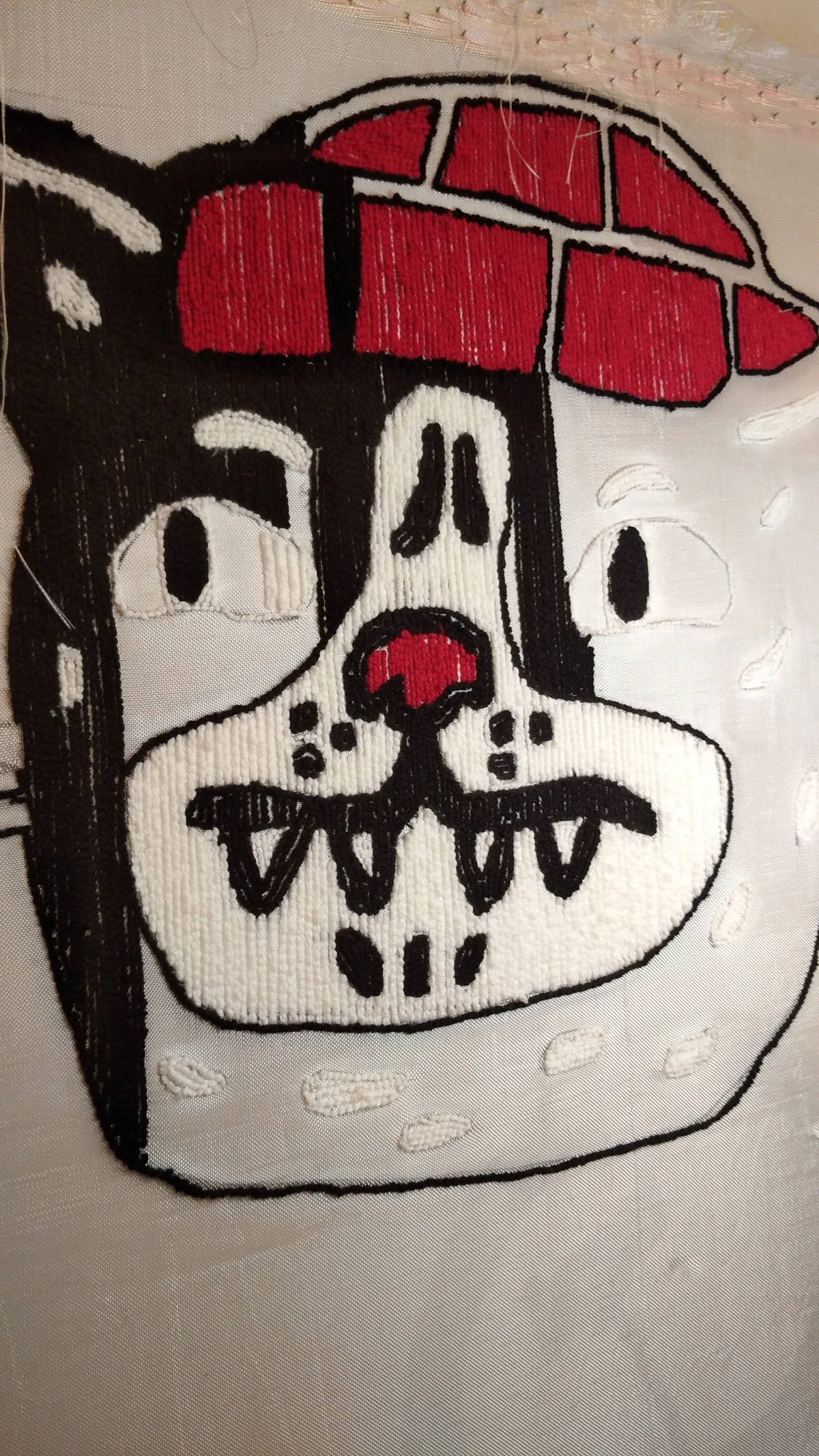
Decor
What to Check When Buying a Tufted Rug: A Buyer's Checklist
What should you check when buying a ready-made tufted rug? A checklist covering backing, pile, size and price, plus the questions to ask the seller.
Updated:
Buying a finished tufted rug is a different decision from commissioning one. The piece is in front of you, there is no wait, but your choice is limited to what exists. This article is a checklist for getting that choice right.
If you are commissioning, the complete guide is a separate article; this one is for buying ready-made.
1. Look at the backing first#
Turn the rug over. It is the single most informative thing you can do.
What you want to see: a backing cloth properly adhered, not bubbling, not lifting at the edges. If the backing ripples or peels at the corners, the adhesive did not cure properly, and that rug will start shedding loops within a few years.
The backing is the single most important factor in a tufted rug's lifespan. The yarn may be good and the design lovely, but weak backing undoes all of it. I explained why that stage requires waiting in the production steps.
2. Test how firmly the loops sit#
Press your hand on the surface and pull gently. The loops should stay put.
One or two strands coming away may be leftover from production and is normal. If you come away with a tuft, put the rug down.
Also press a finger into the pile and lift: a good surface springs back. If the dent stays, either the loops are sparse or the yarn is poor.
3. Match the surface type to the use#
There are two basic surfaces, and where you will put it decides:
- Busy areas, hallways, entrances: loop pile. Closed loops resist abrasion better
- Bedrooms, anywhere walked on barefoot: cut pile. Velvety and comfortable
- Homes with cats or dogs: cut pile. A closed loop is a ring a claw can catch
- Going on a wall: purely aesthetic, durability does not apply
I opened up the difference separately.
4. Think about size with the room#
Sizing is the most expensive mistake. You get used to a colour you did not love; a size you got wrong never settles.
The rule: rug size is calculated from the seating group, not the walls. In a mid-size living room with a three-seater and an armchair, 120x180 or 140x200 is the most common choice, and the coffee table should sit entirely on the rug.
Before ordering, mark the size on the floor with masking tape and live with it for a few days. Five minutes of this removes almost all the risk. I set it out with numbers in the sizing guide.
5. See the colour in your own light#
Screens are bright; rooms are not. The same rug reads cold and matte in a north-facing room and warm in a south-facing one.
See it in real light if you can; if not, ask the seller for photographs under different lighting. I explained how to read your room's palette in the colour guide.
6. Ask for the logic behind the price#
If two rugs of the same size differ sharply in price, there should be a reason: yarn type, loop density, detail, handmade or machine-made.
The real question to ask: is this machine-made or handmade? Telling them apart is simple, in machine production the pattern repeats perfectly and the same item exists in multiples. Handmade, every piece is singular.
The vast majority of what is sold as a "tufted rug" is industrial. The technique is the same but the work is not; I explained the difference separately.
Five questions for the seller#
The short list:
- Is this handmade or machine-made?
- Which yarn was used, and how was the backing applied?
- Is the surface cut pile or loop pile?
- What are the exact dimensions?
- How is it shipped?
The last looks trivial but is not: floor rugs should travel rolled with the surface facing inwards. A rug shipped folded can carry a permanent fold mark. I covered packing and shipping separately.
Do not buy from a seller who cannot answer all five. I gathered how to vet a studio in a detailed article.
Ready-made or commissioned#
Ready-made makes more sense when: you are in a hurry, the budget is limited, the size fits, and you genuinely like the piece.
Commissioning makes sense when: a specific size is required, a personal image is involved, or you want an exact colour match with the room. It takes about 21 days.
Finished pieces are in the gallery, with dimensions, technique and price on each page. If the size you need is not there, write through the custom order page.
After it arrives#
The first day is short: lay it out, leave it a few days without anything heavy on it (the roll curl settles on its own), put a non-slip pad underneath and choose a spot out of direct sun.
For everything after that, I gathered the care routine separately.
Frequently Asked Questions
What should you check first when buying a tufted rug?
Turn it over and look at the backing. It should be properly adhered, not bubbling, not lifting at the edges. Rippling or peeling corners mean the adhesive did not cure properly and the rug will start shedding loops within a few years. The backing is the single most important factor in its lifespan.
How do you tell handmade from machine-made tufting?
In machine production the pattern repeats perfectly and the same item exists in multiples; handmade, every piece is singular. The vast majority sold as "tufted rugs" is industrial — the technique is the same but the work is not.
How can you tell if the loops are secure?
Press your hand on the surface and pull gently; the loops should stay put. One or two strands may be production leftovers and is normal, but if you come away with a tuft, do not buy it. Also press a finger in and lift: a good surface springs back.
Which surface type suits which room?
Loop pile for busy areas, hallways and entrances, since closed loops resist abrasion. Cut pile for bedrooms and anywhere walked on barefoot. Cut pile if there are cats or dogs, because a closed loop is a ring a claw can catch. For a wall, durability does not apply and it is purely aesthetic.
How should a rug be shipped?
Floor rugs should travel rolled with the surface facing inwards so the loops do not rub. A rug shipped folded can carry a permanent fold mark. Nothing heavy should sit on the roll, and a moisture-protective layer should be used.