Tufting
What Is Tufting? Technique, Materials and Use, from an Artist's View
What is tufting, and how does it differ from industrial production and punch needle? The technique, materials and uses of handmade tufting, explained.
Updated:
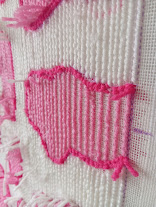
Tufting is the technique of pushing yarn through a backing cloth stretched on a frame so that it leaves loops on the surface. Unlike a woven rug, the resulting surface is not woven at all; the yarn is stitched into the cloth and fixed from behind.
That definition covers both the tonnes of carpet produced in a factory and weeks of work by one person in a studio. The difference between them is not the technique but the scale and the intent. This article is about the second: what tufting is as an art practice.
How it works#
The process rests on four elements:
- Backing cloth: usually monk cloth, whose tight weave accepts the needle
- Frame: a wooden stretcher. The cloth is tensioned onto it evenly at every point
- Tufting gun: the powered tool that pushes yarn through the cloth. There are two types, below
- Yarn: acrylic, wool or a blend
While working you look at the reverse of the cloth; the loops form on the other side. In other words, the artist cannot see the surface being made while making it. This is the most demanding aspect of tufting and the one that takes the most practice. It is also why lettering and asymmetric forms have to be transferred mirrored.
When tufting finishes the loops are not attached to anything; pull one and it comes out. The surface only becomes permanent once adhesive and a backing cloth are applied. We described all the production steps separately.
Cut pile and loop pile#
There are two basic surface types, and the difference comes from the gun.
Loop pile leaves the yarn as a loop. The surface is tighter, flatter and more durable, and pattern edges come out crisp. It is preferred for heavily used floor rugs and graphic designs.
Cut pile cuts the loops. The surface is velvety and soft and absorbs light differently, with far gentler colour transitions. We use it on wall panels and portrait work.
The two can be combined in one piece. Leaving one area looped and another cut creates depth even within a single colour, a layer that does not show in a photograph but is obvious the moment you touch it.
How it differs from punch needle#
The two are often confused. Both push yarn through cloth, but:
- Punch needle is worked by hand, a tufting gun by motor
- Punch needle is far slower and suits small pieces
- A tufting gun can cover large surfaces in reasonable time
- Punch needle allows finer detail; tufting is stronger on large forms
So the larger the scale, the more tufting makes sense; the smaller, the more punch needle does.
Handmade versus industrial tufting#
The same word, two very different jobs.
Industrial tufting machines run hundreds of needles at once. Metres of carpet emerge in hours. The pattern is programmed in advance, repeated, standard. It is what you see in hotel corridors, offices and wall-to-wall installations.
In handmade tufting there is one needle and one person. Filling a square metre takes one to three days depending on density. In exchange, colour transitions, loop direction and pile height are entirely free, which is what a machine cannot do.
That is also where the price difference comes from: by hand, cost rises linearly with area. We explained how price is calculated per square metre in detail.
Where it is used#
There are three main uses.
Floor rugs are the best known, under a seating group, beside a bed, or to define an area. Because they will be walked on, they need tighter loops and stronger backing.
Wall panels have spread quickly in recent years. Hanging a textured surface instead of a framed print improves a room's acoustics and softens it by absorbing light. In heavily glazed, hard-floored rooms that feel a little cold, it restores the balance.
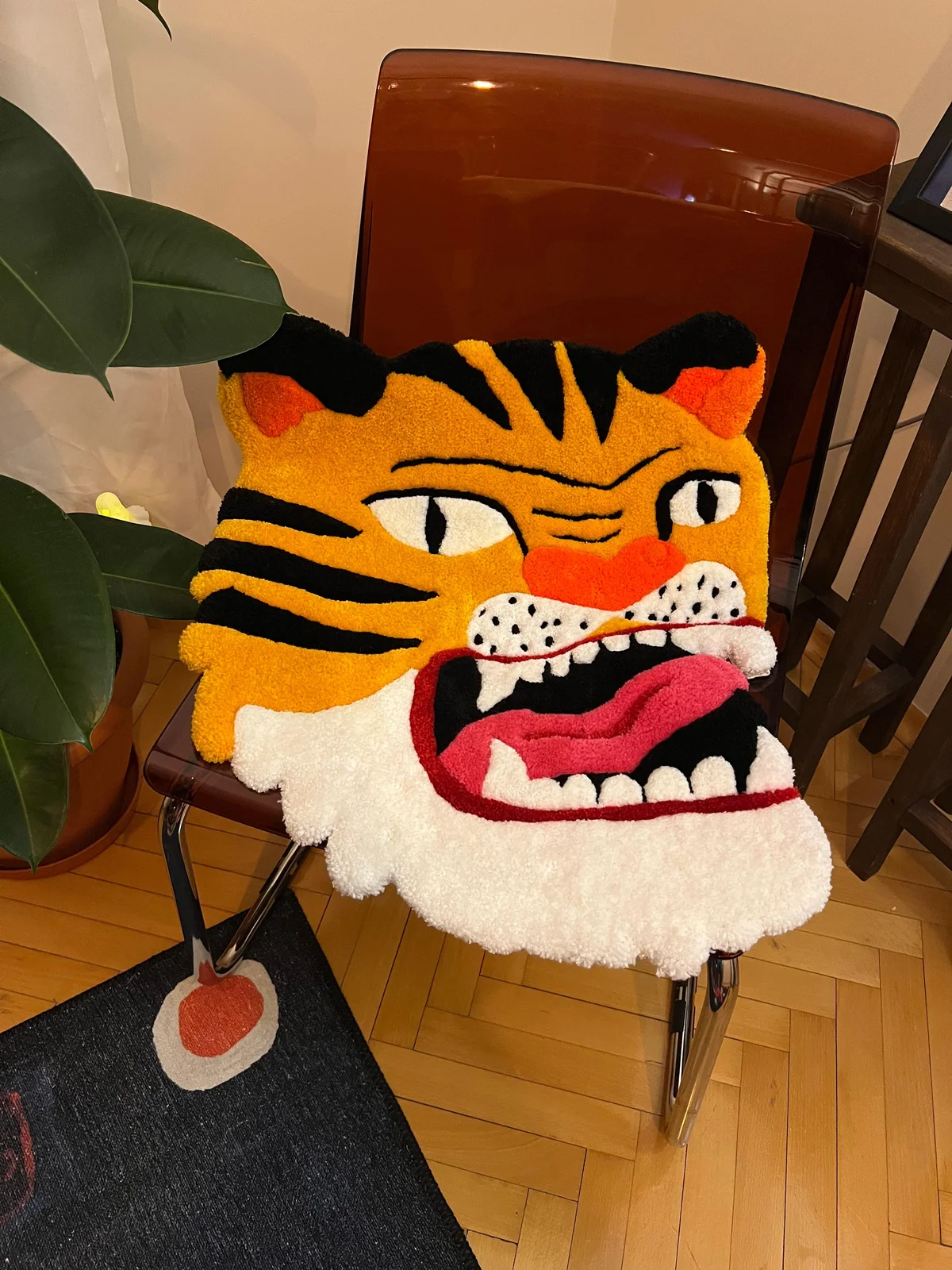
Custom work is the third: portraits, pets, logos, names. Tufting works well for these because simplified, strong forms suit the nature of the technique.
Materials: which yarn#
Yarn determines both the look and the lifespan of the surface.
- Acrylic: wide colour range, fade-resistant, affordable. Used on most pieces
- Wool: more matte, heavier, natural; ages beautifully underfoot. More expensive
- Blends: a balance of the two
- Metallic and speciality yarns: for accents in small areas, never across a whole surface
The backing cloth and adhesive matter as much as the yarn. Weak backing will ruin a well-tufted surface within a few years.
Is it durable, is it hard to look after#
Both answers are better than people expect.
A properly backed tufted rug lasts decades. Care comes down to three things: regular dusting, dealing with spills promptly, and keeping it out of direct sun, we gathered the full routine separately.
For pieces on a wall it is simpler still: never walked on, they stay as they were for years.
Tufting or painting#
If you are choosing between the two at the same budget, the difference is this: yarn absorbs light, paint reflects it. Tufting brings warmth and softness to a room; a painting reads sharper and more graphic.
We opened up that comparison in a separate article. If paint interests you, there is also the difference between oil and acrylic.
Acquiring a tufted piece#
At Peck Art Studio the tufted work is made one at a time by Nazife Ünal Tekin. Finished pieces are in the gallery; if you want something from your own design or photograph, you can start on the custom order page.
We gathered the process, sizing and pricing decisions end to end in the commission guide.
Frequently Asked Questions
What is tufting?
Tufting is the technique of pushing yarn through a backing cloth stretched on a frame so it leaves loops on the surface. It is not weaving: the yarn is stitched into the cloth and made permanent with adhesive and a backing.
What is the difference between cut pile and loop pile?
Loop pile leaves the yarn looped: the surface is tighter, more durable and pattern edges are crisp. Cut pile cuts the loops: the surface is velvety and soft with far gentler colour transitions. The two can be combined in one piece.
Are tufting and punch needle the same?
No. Both push yarn through cloth, but punch needle is worked by hand and a tufting gun by motor. Punch needle is slower and allows finer detail; tufting can cover large surfaces in reasonable time.
How does handmade tufting differ from factory carpet?
Industrial machines run hundreds of needles at once with a programmed, repeating pattern. Handmade tufting uses one needle and one person; a square metre takes one to three days. In exchange, colour transitions, loop direction and pile height are entirely free.
Is a tufted rug durable?
Properly backed, it lasts decades. Care comes down to regular dusting, dealing with spills promptly and keeping it out of direct sun. For pieces on a wall it is simpler still, since they are never walked on.