Inspiration
Painting Brush Guide: What Is Each Brush Used For?
The shape, size, and bristle type of a painting brush can greatly affect how paint looks on the surface. Discover which brushes are best for details, broad areas, soft transitions, textures, sharp edges, and expressive brushstrokes.
Painting Brush Guide: What Is Each Brush Used For?
The brush you use when painting can have a bigger effect on the final result than you might think. Even when you use the same paint, switching to a different brush can change the marks left on the surface, the way the paint spreads, and the overall effect you achieve.
This is why one of the most common questions beginners have is, “Which brush should I use?” There is no single answer to this question. The right brush depends on what you are painting and, more importantly, the effect you want to create.
Let’s take a look at the most commonly used brushes and what each one is best for.
Round Brush
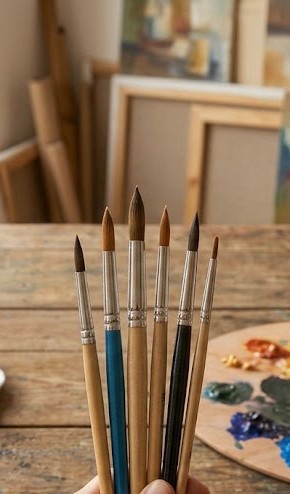
Round brushes are one of the most useful brushes, especially when working on details. A pointed round brush can be used for thin lines and small details. By applying a little more pressure, you can also create thicker marks.
What is it used for?
Fine lines Small details Flowers and leaves Thin branches and stems Figure and portrait details Outlining
Having a few round brushes in different sizes can be especially useful for adding small finishing touches toward the end of a painting.
Flat Brush
Flat brushes create broad and more controlled strokes. They are particularly useful for painting large areas. You can also use the edge of the brush to create thinner lines.
What is it used for?
Painting large areas Creating backgrounds Creating sharp edges Geometric shapes Broad and visible brushstrokes
Especially when working on a large canvas, using a flat brush in a suitable size can make the process much easier and faster than trying to cover the entire surface with a small brush.
Cat Tongue Brush
The cat tongue brush has a flat shape with a rounded tip. Because of this shape, it combines some of the control of a flat brush with the softer effect of a round brush.
It is especially useful when you want to create soft transitions and natural forms.
What is it used for?
Portraits and facial features Skin tone transitions Flowers and leaves Rounded and natural forms Blending colors Creating soft edges
It can be particularly useful in portrait painting when you want to build form without creating overly harsh lines.
Fan Brush
The bristles of a fan brush spread out to the sides, as the name suggests. This shape allows the brush to create thin, separated, and irregular marks on the surface.
When used correctly, it can create some very interesting textures.
What is it used for?
Trees and bushes Grass Hair texture Clouds Leaves and plant textures Loose and natural brush marks
You can gently tap the fan brush onto the surface to create different textures. It is especially useful in landscape painting.
Angled Brush
An angled brush has a slanted tip, which makes it easier to work in corners and create more controlled lines.
What is it used for?
Sharp corners Fine lines Small areas Leaf and plant details Defining edges
You can use the pointed tip for thin lines and the wider part of the brush for fuller paint marks.
Soft Brush
Soft-bristled brushes apply paint to the surface more gently. They are particularly useful when you do not want strong or visible brush marks.
They can be a good choice when you want to blend colors and create smooth transitions.
What is it used for?
Color transitions Skies Portraits Soft surfaces Gently spreading paint Reducing harsh brush marks
Rather than pressing too hard, it is usually better to work with light and gentle movements.
Stiff Bristle Brush
Stiff-bristled brushes leave more noticeable marks on the surface. They are a good choice when you want the brushstrokes themselves to remain visible.
What is it used for?
Visible brushstrokes Textured surfaces Textures such as trees and rocks Applying thicker paint Dynamic and expressive surfaces
Especially when working with oil or acrylic paint, stiff brushes can be useful when you want to show the texture of the paint itself.
Detail Brush
Thin and small brushes are used to complete the smallest details of a painting. Rather than trying to paint large areas with these brushes, it is better to save them for the detail stage.
What is it used for?
Eye and facial details Small patterns Fine lines Tiny highlights and shadows Small objects
Especially during the final stages of a painting, a few small touches can make a noticeable difference to the overall appearance.
Pay Attention to the Bristle Type
The shape of a brush is not the only thing that matters. The softness or stiffness of the bristles also has a major effect on the result.
A soft-bristled brush spreads paint more gently and smoothly, while a stiff-bristled brush leaves stronger and more textured marks.
This means that even two brushes with the same shape can produce completely different results depending on their bristles.
The size of the brush should also match the task. Large brushes make it easier to work on broad areas, while small brushes give you more control when working on details.
When choosing a brush, it actually helps to ask yourself one simple question:
“How do I want the paint to look on the surface?”
If you want a soft transition, choose a soft-bristled brush. If you want a visible brushstroke, try a stiff-bristled brush. If you want to create a fine detail, choose a small brush with a pointed tip.
Over time, experimenting with different brushes will help you discover which ones suit your hand and your painting style best. Eventually, instead of looking at a brush and wondering what you can do with it, you start thinking about the effect you want and instinctively reaching for the right brush.