Tufting
The Difference Between a Hand-Woven Rug and a Tufted Rug
A woven rug and a tufted rug are not the same thing. We compare the two on production method, durability, lifespan, design freedom and price.
Updated:
In Turkey, "rug" means weaving, and with good reason, since carpet weaving here is a tradition centuries old. Tufting is a comparatively recent and different technique.
Both are sold under the heading "handmade rug", but they are not the same thing. This article sets out the difference technically. It does not answer which is "better" but what each is good for.
The core difference: woven or stitched#
Everything follows from this.
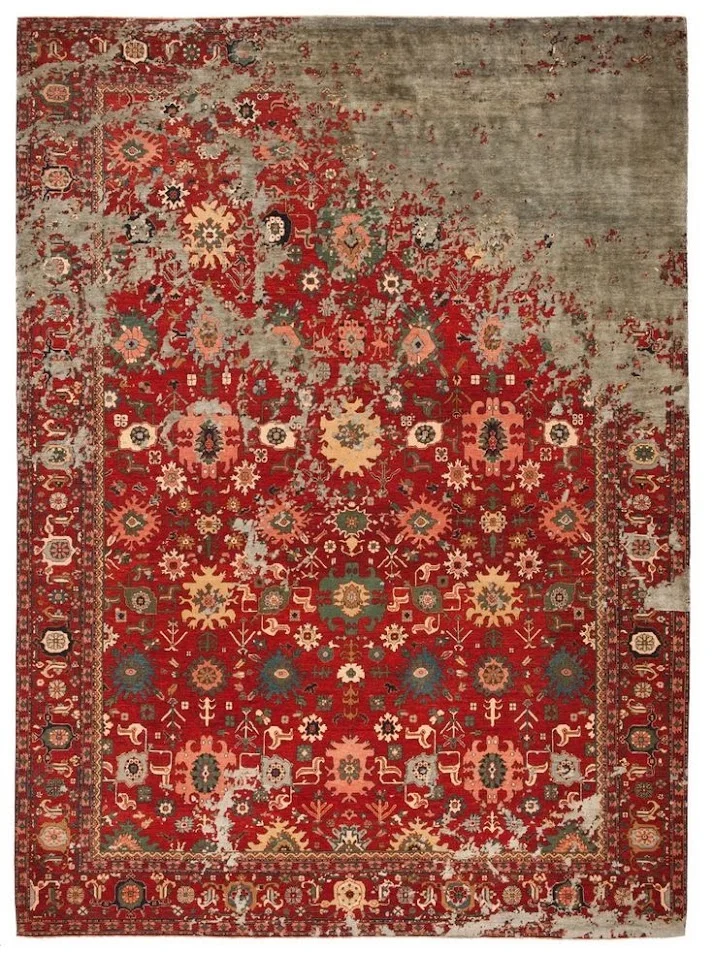
In a woven rug, yarn is knotted or passed between warp threads stretched on a loom. The rug builds its own structure; nothing but the yarn holds it together. Back and face are two sides of one fabric.
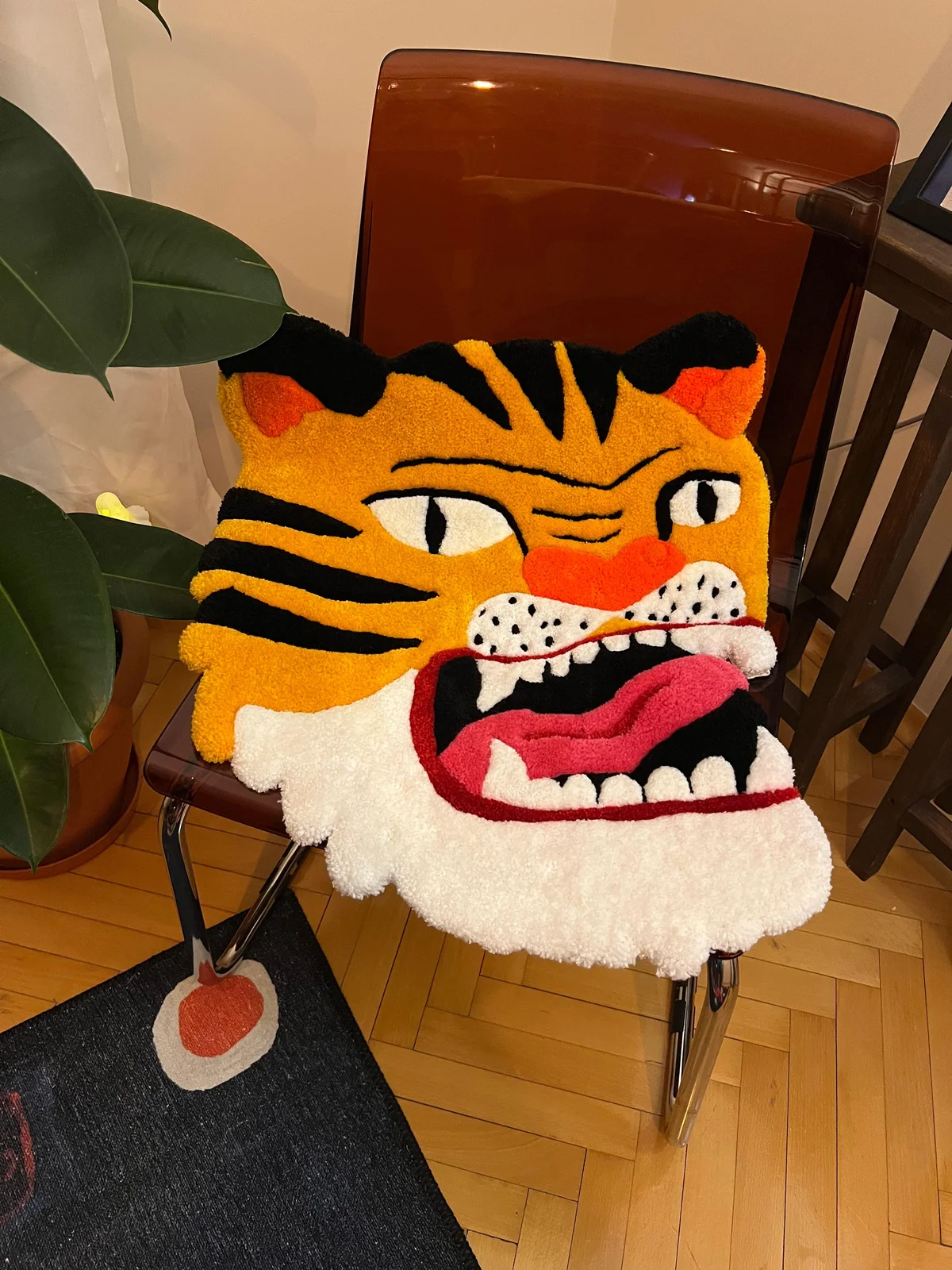
In tufting, yarn is stitched into a ready-made backing cloth. What holds the loops is the adhesive and backing applied from behind. So a tufted rug is a two-layer structure: the surface and the back that holds it.
That single difference determines everything below.
Production time and price#
The most striking difference.
A hand-knotted rug is knotted loop by loop. A square metre can take weeks or even months depending on knot density. That is why traditional Turkish rugs cost what they do, largely, what is bought is time.
In tufting the gun drives the yarn by motor. A square metre takes one to three days depending on the design. It is still guided entirely by hand, but the speed is incomparable.
The result: for a piece of the same size, tufting is noticeably more affordable than hand-knotting. Our rates start at 11,000 TL per square metre for a floor rug and 9,000 for a wall panel. I opened up the full calculation separately.
Durability and lifespan#
Here weaving leads, to be honest about it.
A well-woven, tightly knotted rug can last generations. Because the yarn builds the structure itself, its integrity survives even as it wears. That is why a category called "antique rug" exists at all.
A tufted rug's lifespan depends largely on its backing. Well backed, it lasts decades; poorly backed, it starts shedding loops within a few years. So it varies, there is no guarantee arising from the structure itself as there is in weaving.
In practice this is rarely decisive for domestic use. Decades is already a sufficient lifespan. But if "for generations" is the goal, weaving is the right answer.
Design freedom#
Here tufting leads decisively.
In weaving the design is bound to the grid of warp and weft. Curved lines come out stepped and free forms are difficult. There is a technical reason traditional rug patterns are geometric.
In tufting the gun moves freely across the cloth. Curves, organic forms and colour transitions are all possible. Working a portrait from a photograph is only possible with that freedom, which is why tufting from a photograph exists as a thing at all.
Tufting also allows surface height and loop type to change area by area, creating relief and textural contrast. In weaving that is far more limited.
Appearance and texture#
The two separate instantly by hand.
A woven rug is thinner and tighter. The surface is flat, the pattern crisp, and the rug bends and folds easily. Rows of knots show on the back, a pattern is legible from the reverse too.
A tufted rug is thicker, softer and more voluminous, and noticeably fuller underfoot. No pattern shows on its back, only a plain backing cloth. That is the fastest way to tell them apart: turn the rug over.
Which suits which need#
A practical pairing:
- A piece to last generations, with investment character: woven
- A piece carrying a specific image, portrait or logo: tufted
- An area needing an exact size: tufted, since dimensions are free
- A traditional pattern in a classical interior: woven
- A contemporary interior with strong colour and organic form: tufted
- An artistic surface to hang: tufted, for its volume and texture
- Large dimensions on a limited budget: tufted
Where kilims fit#
A frequent question. A kilim is also woven but flat: the yarn is not knotted, the weft passes between the warp. The result is a thin, flat surface usable on both sides.
So there are three separate things: knotted woven rugs (piled), kilims (flat woven), and tufting (stitched pile). All three differ in texture, lifespan and price.
Do not confuse it with machine-made#
A warning: the vast majority of products sold as "tufted rugs" are industrially machine-made. Hundreds of needles run at once, the pattern is programmed, metres emerge in hours.
The technique is the same but the work is not. In handmade tufting there is one needle and one person, and every square centimetre is worked individually. I explained the difference separately.
How to tell: in machine production the pattern repeats perfectly and the same item exists in multiples. Handmade, every piece is singular.
Care#
Both are similar: dust regularly, deal with spills promptly, keep out of direct sun.
One difference: the backing on a tufted rug is sensitive to water. Wet cleaning should stay at the surface and the rug should never be submerged. A woven rug is more tolerant here.
I gathered the full tufted rug care routine separately.
Deciding#
The question is not "which is better" but "what do I want".
If you want a traditional pattern, a lifespan of generations and a classical presence, choose woven. If you want a piece carrying your own image, fitting a specific size, contemporary and strong in texture, choose tufted.
If you are looking at the tufted side, there are finished pieces in the gallery; for something in your own size or from your own image, start on the custom order page. I wrote out the whole process in the complete guide.
Frequently Asked Questions
What is the difference between a hand-woven and a tufted rug?
In a woven rug the yarn is knotted between warp threads on a loom and the rug builds its own structure. In tufting the yarn is stitched into a ready-made backing cloth, with the loops held by adhesive and a backing. So tufting is a two-layer structure.
How can I tell whether a rug is woven or tufted?
The fastest way is to turn it over. A woven rug shows rows of knots on the back and a pattern legible from the reverse. A tufted rug shows no pattern on the back, only a plain backing cloth. Tufting is also thicker, softer and fuller underfoot.
Which is more durable?
Woven. A well-woven, tightly knotted rug can last generations because the yarn builds the structure itself. A tufted rug's lifespan depends on its backing: well backed it lasts decades, poorly backed it starts shedding loops within a few years.
Why is a tufted rug more affordable than a woven one?
Production time. On a hand-knotted rug a square metre can take weeks or months depending on knot density. In tufting the gun drives the yarn by motor, so the same area takes one to three days. The work is still guided entirely by hand, but the speed is incomparable.
Does a kilim count as a woven rug?
A kilim belongs to the woven family but is flat: the yarn is not knotted, the weft passes between the warp. The result is a thin, flat surface usable on both sides. So there are three separate things: knotted woven rugs, kilims, and tufting.