Tufting
What to Consider When Buying a Rug? A Complete Rug Buying Guide
What to Consider When Buying a Rug? Choosing the right rug is about more than just its appearance. The space it will be used in, its size, color, pattern, material, texture, and care requirements should all be considered together. It is important to choose a rug that fits the room properly, works well with the existing furniture and colors, and is made from a material suited to your lifestyle. If you have children or pets, cleaning and maintenance should also be taken into account. Handmade and machine-made rugs serve different needs. When buying a tufted rug, it is worth paying attention to the quality of the yarn, backing, adhesive, surface finishing, and care requirements. Ultimately, the best rug isn't necessarily the most expensive or the trendiest one. It is the one that best suits your home, lifestyle, and personal taste.
What to Consider When Buying a Rug? A Complete Rug Buying Guide
Buying a new rug may seem quite simple at first. You find a design you like, choose the color, and make your purchase. But once the rug arrives at home, things do not always turn out as expected.
The rug may be too small, it may not work well with your furniture, or the material you chose may not be practical for your everyday lifestyle.
Choosing the right rug is actually about more than simply asking, “Does this rug look good?” You also need to think about where it will be used, its size, color, texture, material, and care requirements.
So, what should you consider when buying a rug?
First, Consider Where the Rug Will Be Used
Before choosing a rug, ask yourself:
“Where am I going to use this rug?”
A rug for a living room does not necessarily need to have the same features as one for a bedroom, dining room, hallway, or children's room. Each space has different needs and levels of use.
For example, you may want a more decorative and eye-catching rug in the living room, while a rug in a busy hallway may need to be easier to clean and more practical for everyday use.
Rather than choosing a rug based solely on its appearance, considering the needs of the space where it will be used will help you make a better long-term choice.
Choose the Right Rug Size
One of the most common mistakes when buying a rug is choosing one that is too small for the space.
For example, in a living room, a rug that extends beyond just the coffee table and reaches at least the front legs of the sofas can create a more cohesive look.
In a dining room, the rug should ideally be large enough for the chairs to remain on it even when they are pulled away from the table.
In a bedroom, having enough rug visible around the sides and foot of the bed can make the room feel more balanced.
A Small Tip
Before buying a rug, you can mark its dimensions on the floor using masking tape.
This allows you to get an idea of how the rug will look in the room before making a purchase.
It can be especially useful when buying a rug online.
Don't Choose the Rug Color in Isolation
A rug that looks beautiful in a store or on a screen may not look exactly the same in your home.
Natural light, artificial lighting, wall colors, furniture, and other textiles in the room can all affect how the rug's color is perceived.
That's why it's important to consider the existing colors in your space when choosing a rug.
For example:
A colorful rug can create a strong focal point in a neutral room. A calmer rug can balance a room with colorful furniture. A light-colored rug can make a small space feel more open. Darker colors can give a room a stronger and more dramatic character.
But there are no strict rules here.
Sometimes a rug that contrasts with the rest of the room, rather than matching everything perfectly, can become the most striking piece in the space.
Consider the Overall Room When Choosing a Pattern
A patterned rug can look beautiful on its own. However, if the room already contains many patterns, adding another highly detailed pattern to the floor may make the space feel visually busy.
For example, if you already have a patterned sofa, patterned curtains, and many decorative objects, a simpler rug may create a better balance.
The opposite can also be true.
In a room with simple furniture and neutral colors, a bold, colorful, or patterned rug can completely change the character of the space.
Rather than looking at the rug on its own, consider how its pattern works with everything else in the room.
Pay Attention to the Rug's Material and Yarn
The material used to make a rug affects more than just its appearance. It can also influence how the rug feels, how it should be maintained, and how suitable it is for everyday use.
Wool, cotton, synthetic fibers, and natural fibers all have different characteristics.
That's why there isn't one simple answer to the question:
“What is the best rug material?”
A better question is:
“Which material is best suited to the way I will use the rug?”
Consider the Texture and Pile Height
Don't evaluate a rug based only on its color and pattern.
Its texture can also change the overall feeling of a room.
A soft, high-pile rug can create a warm and comfortable atmosphere, while a shorter-pile or flatter surface may be more practical in areas with heavier foot traffic.
This is particularly worth considering in spaces such as dining rooms, hallways, and entryways.
Because even if a rug looks beautiful, constantly having to deal with difficult cleaning or maintenance can make it less enjoyable over time.
If You Have Children or Pets, Think About Maintenance
Your lifestyle is also an important part of choosing the right rug.
If you have children or pets at home, there is naturally a greater chance of spills, stains, and more frequent cleaning.
Before buying, ask yourself:
Is it easy to clean?
How should stains be treated?
Is it washable?
Does the manufacturer provide specific care instructions?
Knowing the answers to these questions before purchasing can make things much easier in the long run.
Handmade or Machine-Made?
Another important consideration when buying a rug is how it was produced.
Machine-made rugs allow large quantities of identical products to be produced quickly and consistently.
With handmade rugs, human craftsmanship plays a much larger role in the production process. The design, color selection, application, and finishing stages are carried out by the maker.
It wouldn't be accurate to say that one production method is automatically better than the other.
What matters is knowing what you are looking for.
Are you looking for a standard-sized rug that is readily available?
Or are you looking for something more unique, with a specific design and the character of handmade craftsmanship?
The answer depends entirely on your needs.
What Should You Consider When Buying a Tufted Rug?
Tufted rugs have become increasingly popular, especially in interior design and textile art.
However, when buying a tufted rug, it's important to look beyond the design.
Pay attention to the quality of the yarn, the materials used on the backing, the adhesive, the finish of the surface, and how the rug is intended to be used.
If you're buying a handmade tufted rug, don't hesitate to ask the maker about the materials used and the recommended care instructions.
Two tufted rugs may look similar from the outside while differing significantly in terms of materials and production quality.
Learn About the Rug's Care Before You Buy
I think this is something that is often overlooked when purchasing a rug.
Before buying a rug, don't only think about how it looks. Think about what it will be like to live with it over the years.
Can it be vacuumed?
What should you do if something spills on it?
Is it washable?
Does it require professional cleaning?
Can it be placed in direct sunlight?
The answers to these questions can have a direct impact on your experience with the rug.
For handmade pieces especially, following the care instructions provided by the maker is the safest approach.
Don't Just Look at the Price — Understand What Determines It
Two rugs may look similar at first glance but have very different prices.
The difference isn't necessarily just the brand.
The yarn, production method, size, level of design detail, craftsmanship, and production time can all affect the price.
Especially when buying a handmade product, instead of simply asking:
“How much does it cost?”
it can be more useful to ask:
“What am I getting for this price?”
Don't Choose a Rug Based Only on Trends
A color or pattern that is extremely popular one year may look dated a few years later.
If you're choosing a rug that you plan to keep for a long time, think about your own taste rather than following trends alone.
A rug is a larger piece that isn't necessarily as easy to replace as smaller decorative objects.
Especially when choosing an original design, it's much more valuable to choose something you'll still enjoy looking at years from now.
Choosing a Rug at Peck Art Studio
At Peck Art Studio, we don't think of rugs simply as objects that cover the floor.
We believe that the combination of color, pattern, and texture can change the character of a space.
When creating our tufted pieces, we pay attention not only to how the design looks but also to how it will interact with the space where it will be used.
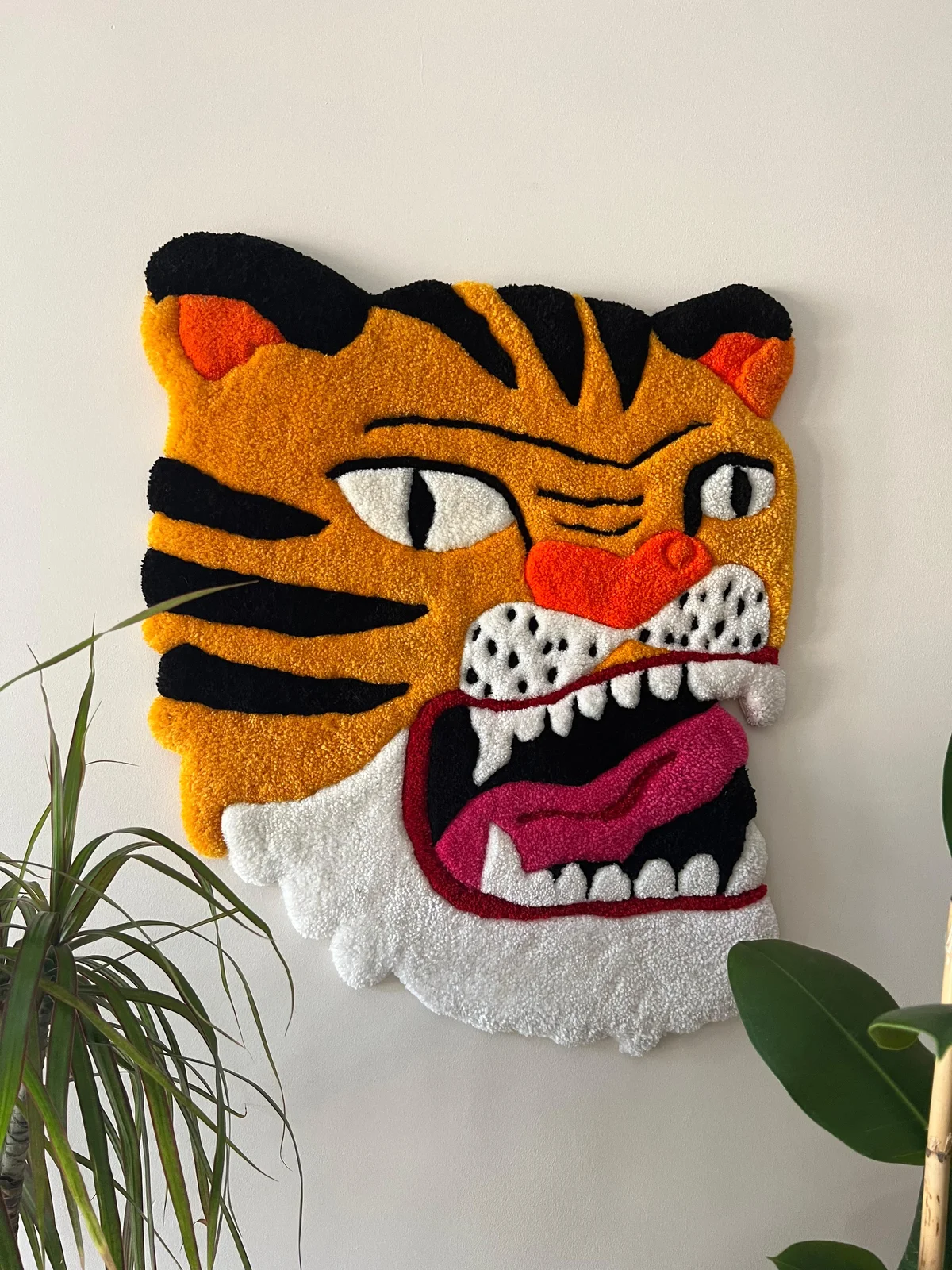
Some pieces are designed to be used as floor rugs, while others are created as textile artworks that can be displayed on the wall.
We also use antibacterial adhesive, which helps make our rugs washable under appropriate conditions. For us, this is an important part of creating a piece that is designed not only to look beautiful but also to be considered for everyday use.
Questions to Ask Yourself Before Buying a Rug
If you're feeling overwhelmed by the options, start with these questions:
Which room will I use the rug in? What is the right size for my space? What are the existing colors and furniture like? How much use will the rug get? Is the cleaning and maintenance suitable for me? Do I prefer handmade or machine-made? Will I still love this rug a few years from now?
Once you have answered these questions, your options will become much clearer.
Conclusion
Choosing the right rug isn't simply about finding a beautiful design.
Size, color, pattern, material, texture, placement, maintenance, and production method should all be considered together.
Sometimes the right rug isn't the most expensive one. And it isn't necessarily the trendiest one either.
It's the rug that best fits your lifestyle, your home, and your personal taste.
So, when choosing your next rug, don't just look at the photograph. Think about where you'll use it, how you'll care for it, and what living with it will be like for years to come.
Because the right rug doesn't simply complete a room; it can completely transform the atmosphere of a space.