Decor
Tufting or Painting? Choosing the Right Piece for Your Space
With the same budget, a textured tufted piece or a painting? We put the two techniques side by side on space, light, acoustics, upkeep and cost.
Updated:
For anyone who has decided to buy something for their wall, this is the first real question: a textured surface or a painted one? Both hang on the same wall and can meet at similar budgets, yet they behave entirely differently in a room.
This article puts them side by side. There is no answer to "which is better"; there is an answer to "which suits your room".
The core difference: light#
The whole distinction comes down to one sentence: yarn absorbs light, paint reflects it.
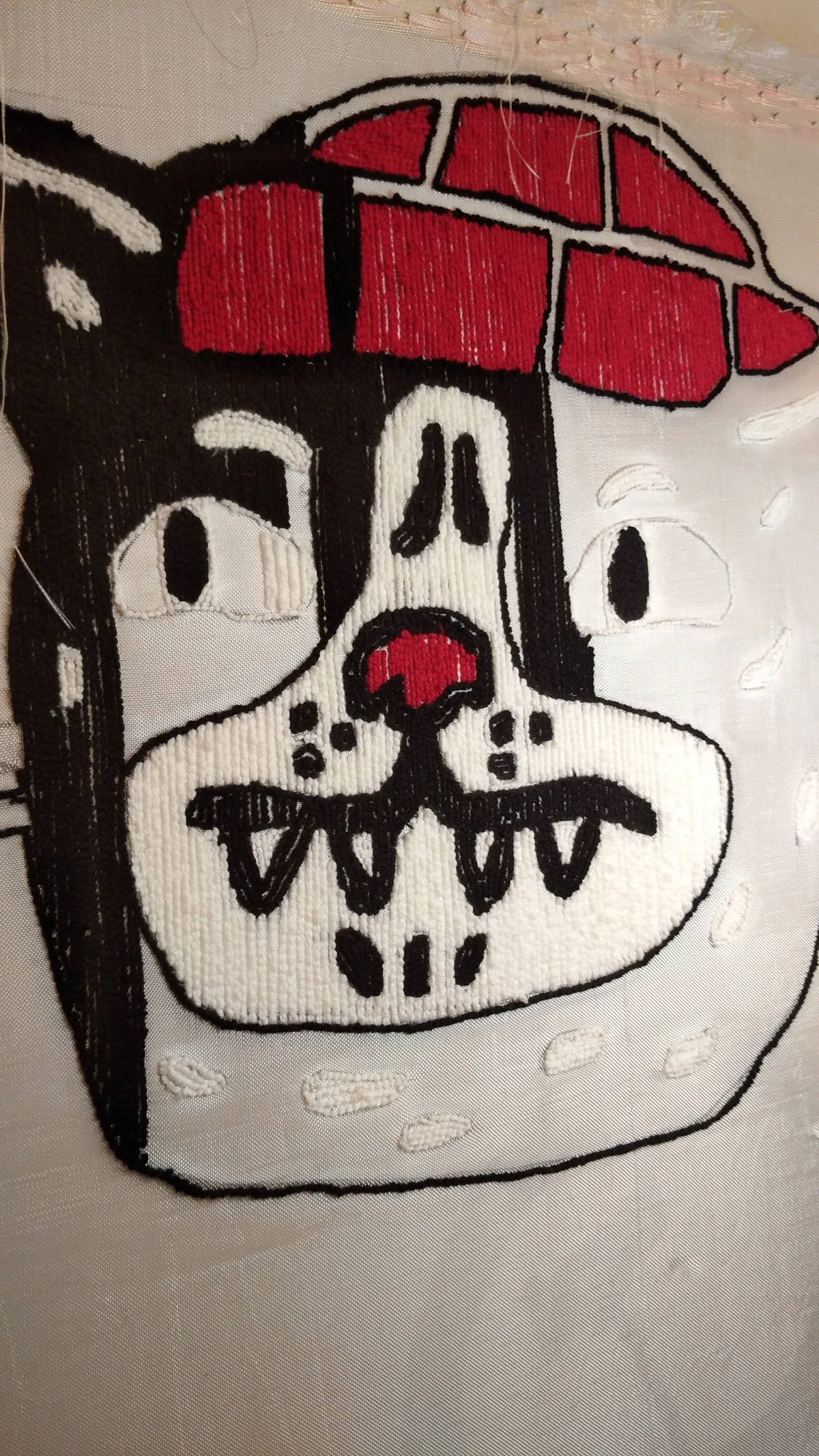
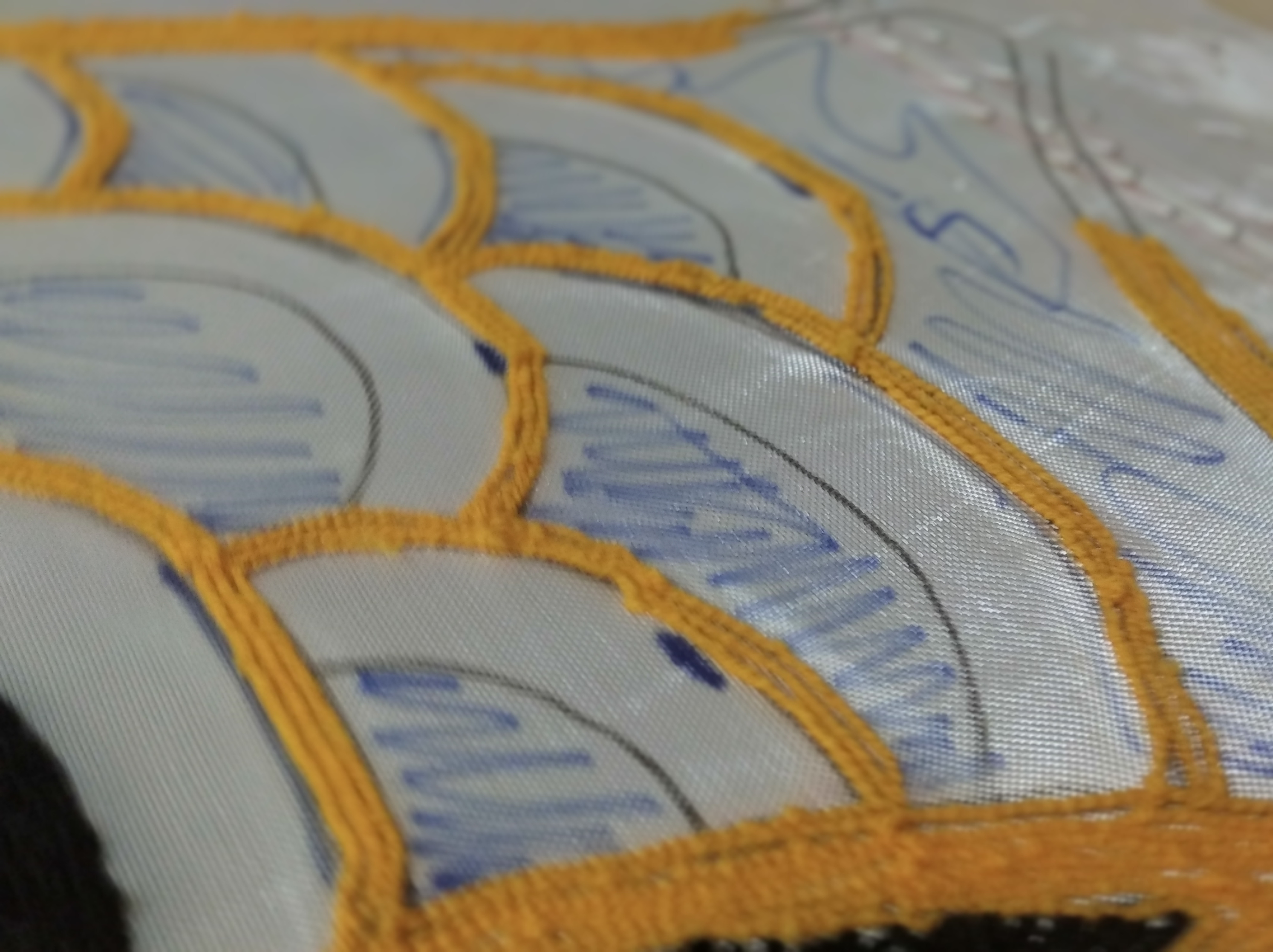
The consequences are larger than they sound. A textured surface scatters light; it looks the same from any angle, casts shadow, and shifts gently through the day. It brings warmth and depth to a room.
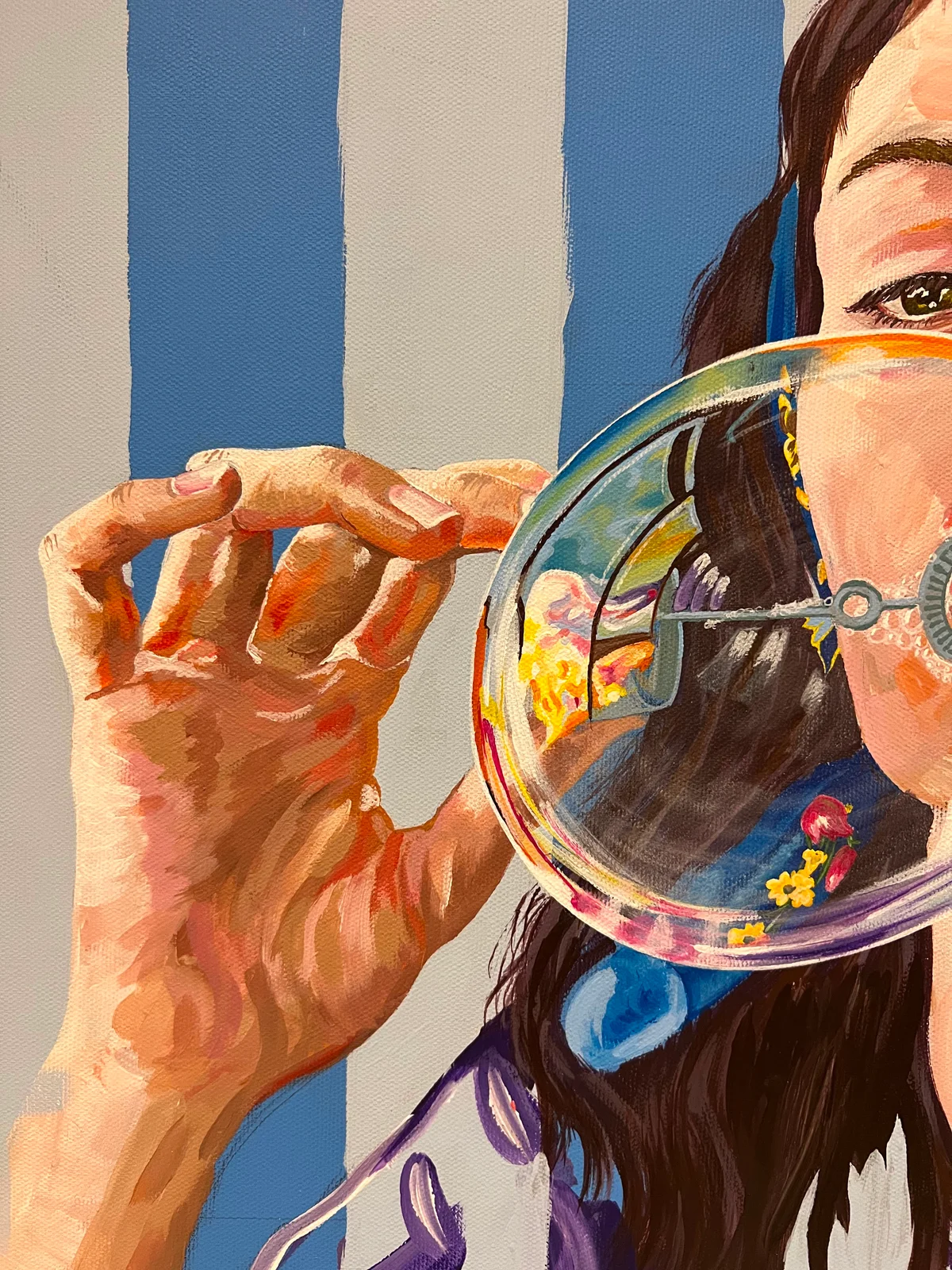
A painted surface gives light back. Colours read brighter and sharper, forms are crisp. Framed under glass, it reflects from certain angles.
In practice: in a heavily glazed, white, slightly cold room, tufting restores the balance. In a room that is already warm, timber-heavy and full, a painting makes a cleaner focal point.
By room#
A practical pairing:
- High-ceilinged, hard-floored living room: tufting. It reduces echo
- Small, busy room: painting. A textured surface takes up visual space
- Above a bed: tufting. No glass, light, soft, and acoustically useful
- Hallways and narrow passages: painting. Thin, no projection
- Study or open-plan office: tufting. It cuts sound reflection
- Dining area: painting. Easier to clean, holds no odour or grease
Acoustics is the factor most people leave out and the most concrete difference. A few square metres of textured surface visibly reduce the ring in a hard-surfaced room. I covered decorating with wall textiles separately.
Budget#
The rates differ, and that directly affects the size you can get for the same money.
Our starting rates:
- Acrylic painting on canvas: 7,000 TL per square metre
- Tufted wall panel: 9,000 TL per square metre
- Tufted floor rug: 11,000 TL per square metre
So the same budget goes further in size with a painting. A 70x100 acrylic and a 60x60 tufted panel land in similar brackets.
I set out how the price is calculated, the detail multipliers and worked examples in the pricing article.
One note: the price difference is not a quality difference but a difference in production economy. Paint covers a surface faster and with less material than yarn.
Upkeep#
Neither is difficult, but they ask for different things.
A tufted wall panel needs almost nothing: never walked on, occasional dusting is enough. A floor rug needs regular vacuuming, prompt attention to spills and protection from damp. I gathered the care routine separately.
On painted work the surface is never touched. Varnish forms the protective layer; dusting is done with a soft dry brush and no chemicals. Oil painting care is a separate article.
What they share: both must stay away from direct sun and damp walls.
Detail and subject#
There is a technical limit, and it shapes the choice.
In tufting the smallest unit is the thickness of the yarn. Fine detail (the expression on a face, small lettering, a distant object) cannot be carried. So tufted work is beautiful in simplified, strong forms that read from a distance.
In paint you can go as fine as the tip of a brush. Portraits, fine lettering and complex composition are paint's territory.
The practical consequence: if the subject demands detail, choose painting; if it is built on form and colour, choose tufting. If you are working from a photograph, this distinction matters especially.
Scale#
At large sizes the two behave differently.
Tufting gets heavier as it grows and the hanging system starts to matter; it cannot go on a single nail. In exchange, a large textured surface establishes a very strong presence in a room.
Paintings stay light and are easy to hang, but large canvases on thin stretchers can bow, above 100 cm they need a cross brace. I covered types of canvas separately.
As a gift#
For gifts tufting has an edge, and the reason is psychological rather than technical: texture-led work raises the "will they like the subject" question far less than figurative work.
With a painting the recipient has to like the subject; with a textured panel what leads is the surface itself. For someone whose taste you do not fully know, that difference lowers the risk.
I gathered the general rules of giving art as a gift separately.
Using both#
You do not have to choose; the best walls are usually mixed.
On a gallery wall of glass and frames, adding one textured piece brings depth to the composition and rests the eye. The only thing to watch is not making the textured piece the largest or dead centre, it overwhelms the rest.
I gathered different layout approaches in the empty wall article.
A summary for deciding#
Your answers to three questions are usually enough:
- Does your room feel cold and echoey? If yes, tufting
- Does the subject involve fine detail (a portrait, lettering, a complex scene)? If yes, painting
- Do you want to go as large as possible on the same budget? If yes, painting
If you are still undecided, send a photo of the space. Seeing the room makes it much easier to say which will sit well.
You can see finished pieces in the gallery, or start something in your own size and image on the custom order page.
Frequently Asked Questions
Which is better, tufting or painting?
Each is better in different situations. The core difference is light: yarn absorbs it, paint reflects it. In a heavily glazed, white, cold-feeling room tufting restores balance; in a room already warm and full, a painting makes a cleaner focal point.
Which lets you go larger on the same budget?
Painting. Acrylic canvas starts at 7,000 TL per square metre, a tufted wall panel at 9,000 and a tufted floor rug at 11,000. A 70x100 acrylic and a 60x60 tufted panel land in similar brackets. This reflects production economy, not quality.
Does tufting really affect a room's acoustics?
Yes, and it is the most concrete difference most people overlook. A few square metres of textured surface visibly reduce the ring in a high-ceilinged, hard-floored room. The effect is clearest in open-plan offices and studio flats.
Which suits a portrait?
It depends on the detail. In tufting the smallest unit is the yarn's thickness, so fine expression cannot be carried; a portrait needs to go large (at least 60x60). If fine facial expression, whiskers or catchlights lead, paint is the better fit.
Can both be used on the same wall?
Yes — the best walls are usually mixed. On a gallery wall of glass and frames, one textured piece adds depth and rests the eye. The only thing to watch is not making the textured piece the largest or dead centre.