Tufting
Custom Logo Tufted Rugs for Offices, Cafes and Workplaces
Before turning a logo into a tufted rug or wall panel, learn how size, letter weight, colours, placement and the quote process shape the result.
A logo tufted rug does not have to be a mat at the door. It can hang behind reception, mark a cafe's photo corner or bring a textile surface into a meeting room. The first decision is not the logo itself but where the piece will live. A floor and a wall do not have the same requirements for detail, cleaning or construction.
Before requesting a business quote, prepare the intended location, approximate dimensions and a vector logo file. If the mark contains intricate detail, the draft stage determines which lines can be preserved.
Wall panel or floor rug#
A wall-mounted tufted piece receives little abrasion. Fine details and an irregular outline are easier to retain there. Behind a counter, reception desk or content area, a panel with breathing room around the mark can make the logo visible without behaving like a hard sign. Its hanging method must suit the wall.
Priorities change on the floor. Door clearance, chair wheels and foot traffic put pressure on the design. Hairline extensions or several detached shapes may be impractical. Simplifying the mark and keeping its outer shape connected usually allows a cleaner edge finish. State clearly in the order form that the piece will be used on the floor. A wall-panel draft should not automatically be treated as a floor rug.
If a cafe entrance is exposed to rain, wet shoes and constant dirt, a commercial entrance mat may be a better tool. Handmade tufting works best in a controlled indoor setting where the brand mark becomes part of the interior. Being candid about the use prevents the wrong purchase.
Translating a logo into yarn#
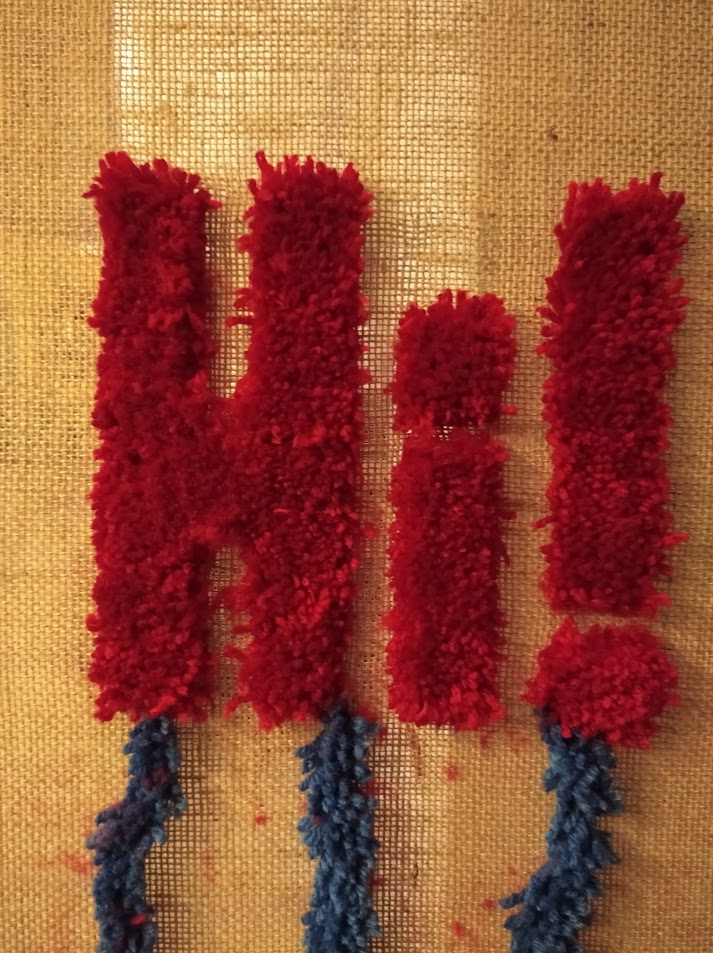
A logo on a screen can look sharp at a tiny size. Yarn has physical width and pile height. A millimetre line, small tagline or two very close colours may not remain legible unless enlarged. The draft therefore checks several practical points:
- Will the counters inside the letters close up?
- Can thin lines be made at the chosen overall size?
- Will neighbouring colours separate in yarn?
- Does the outer contour form a balanced, connected piece?
- Is there a suitable yarn match for the brand colour?
A vector PDF or SVG is the best starting point, followed by a high-resolution PNG. A small screenshot from a messaging app introduces blurred edges and loses colour information. If a brand guide exists, send the colour codes and any prohibited logo versions. Yarn under room light will not look identical to an illuminated screen. The draft and yarn selection expose that difference before production.
Choosing dimensions#
Logo width alone is not enough. Measure the full surface and consider the space that should remain around the piece. A 180 cm-wide wall behind reception rarely needs to be filled edge to edge. Depending on the logo's proportions, a smaller panel with space on both sides may read more clearly.
For a floor position, check which way the door opens and the clearance below it. Move the placement if a chair or table leg will constantly press an edge. For a wall, include sockets, switches and existing hanging points in the measurements. A straight-on photograph with a tape measure visible gives useful scale for the quote.
Tufting prices are not calculated by area alone. Dimensions matter, but colour changes, small lettering, tight turns, an irregular outline and carved surface levels all alter the labour. The calculator on the custom order page offers an initial budget guide. A final quote follows once the actual logo and intended use have been reviewed.
Placement in a cafe or office#
Behind a cafe counter or on a wall where customers take photographs, a logo panel has a clear job. Keep it away from food preparation, grease vapour and splashing water. Pale yarn will also show dirt sooner where people touch it frequently.
Reception and meeting rooms are more controlled. A textile logo can soften the hard surfaces of office signage and serve as a background for video calls. Think about colour change on a wall exposed to direct sun throughout the day. Indirect light is safer than mounting the piece opposite a bright window.
For floor use, mention robot vacuums, chair wheels and any expectation of frequent washing. Tufted work does not go into a washing machine. Routine care relies on low-power vacuuming without a rotating brush and prompt attention to spills. If a commercial floor requires daily machine washing, say so before ordering.
Information needed for a useful quote#
Five pieces of information make the first reply far more specific:
- The logo file and brand colour codes, if available
- Wall or floor use
- Target width and height in centimetres
- A straight-on photograph of the intended location
- Any fixed opening, event or shoot date
Mention multiple branches or quantities at the start as well. Each handmade piece requires scheduling and review; production capacity and a delivery promise cannot be confirmed before the files and scope are known. The approved draft, price, payment steps and estimated delivery date are recorded in the order summary before work begins.
Ordering and payment#
Upload the logo through the custom order form, then add dimensions, placement and the relevant date. The first review checks whether the image suits tufting and where it needs simplification. A draft follows. Production begins only after your approval.
A custom order may require an advance payment. Its rate and amount are shown in the order summary. The balance is collected when the work is ready, before dispatch. Withdrawal rules for personalised goods differ from those for ready products. Read the delivery and returns terms for damage in transit, defects and cancellation before production begins.
To inspect the surfaces and scale of completed work before requesting a quote, browse the tufted collection. Pointing to a finish you like helps explain the texture you expect without asking for your logo to imitate another design.
Frequently Asked Questions
Can every logo be made as a tufted rug?
Most logos can be adapted, but small text, hairline details and dense colour transitions may need simplification depending on size. Feasibility is checked in the draft.
Which logo file format should I send?
A vector PDF or SVG is preferred. If neither exists, send a sharp, high-resolution PNG and include the brand colour codes.
Can a logo tufted piece be used on the floor?
Intended placement must be stated before ordering. A controlled indoor floor may be suitable, while a wet, heavily trafficked entrance requiring daily machine washing may not be.
How is a business tufting commission priced?
Dimensions, colour changes, letter weight, detail, outline and intended use are assessed together. The calculator provides an initial estimate; the final quote follows review of the logo.
Does production begin before draft approval?
No. The adapted logo, dimensions and colours are shown in a draft, and production begins only after customer approval.