Inspiration
Gouache vs Acrylic: What Is the Actual Difference?
Both thin with water, both are opaque, both dry matt. The one real difference is what happens after they dry, and it changes everything.
Updated:
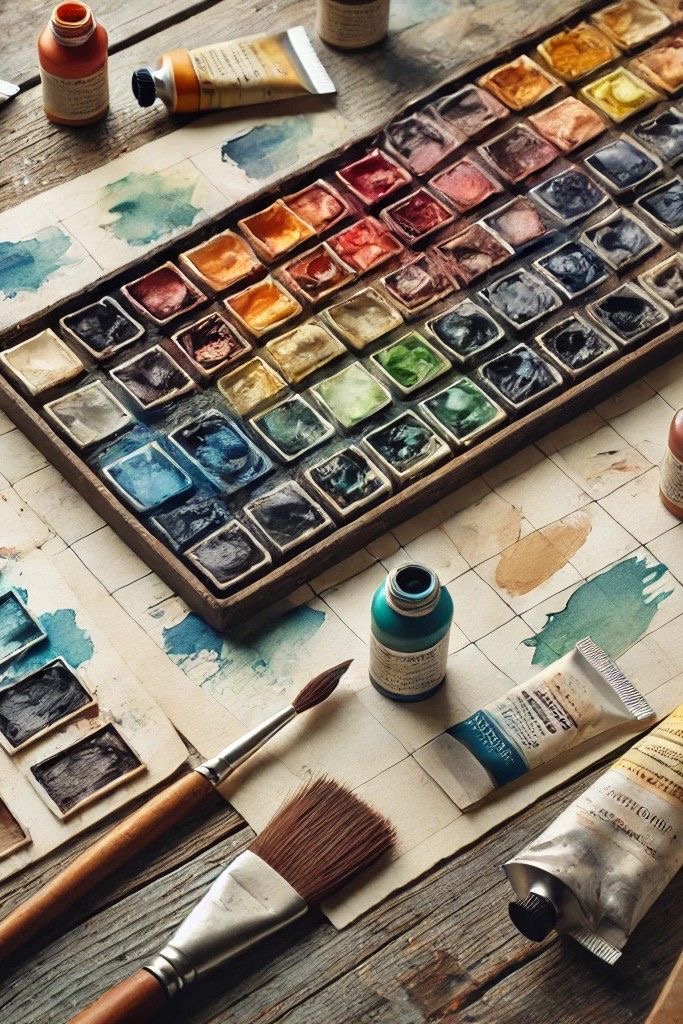
Side by side on the bench these two look almost identical. Both thin with water, both are opaque, both leave a matt surface on paper. Which is why so many people cannot decide between them.
The difference fits in one sentence: gouache re-dissolves in water after it dries, acrylic does not. Every other difference follows from that.
It comes down to the binder#
In gouache, pigment is bound with gum arabic. Gum arabic is water soluble and stays soluble after drying. Touch a wet brush to a dried gouache passage and the paint softens again.
In acrylic the binder is an acrylic polymer emulsion. As the water evaporates the polymer particles lock together into a flexible, almost plastic film. Once that film has formed there is no going back. Water, soap and scrubbing will not lift it.
What that means in practice#
Gouache re-wetting is not a flaw, it is a way of working. You can soften an area you left days ago, reopen an edge, correct a tone. Dried paint on the palette comes back with a drop of water, so nothing is wasted.
None of that is possible with acrylic. Paint that dries on the palette is gone. In exchange, layers never move once down, so you can build up dozens of them. A wet palette keeps this habit of acrylic somewhat in check.
Which surfaces they suit#
Gouache is a paper medium. It wants heavy paper, 300 gsm or more; thin sheets buckle. It can go on canvas, but with nothing to anchor it there it will not last.
Acrylic grips almost anything. Canvas, wood, paper, walls, fabric. Among canvas types, stretched cotton is the usual choice.
Does the colour shift as it dries#
In both, but in opposite directions. Gouache dries lighter, so the tone you see wet comes out a step paler. Hitting an exact tone in gouache takes practice.
Acrylic dries darker, because the binder is milky white when wet and clear when dry. Painting a small patch and letting it dry is the quickest way to match a tone.
Durability and storage#
An acrylic work needs no glass once dry. You dust it and, if needed, wipe it with a damp cloth. That is why caring for an acrylic painting is straightforward.
A gouache work belongs behind glass. The surface is open to moisture and touch, and even a fingertip can mark it. When framing, use a mount so the paint never contacts the glass.
Brushes and tools#
Gouache wants a soft brush that holds water. Sable or a good synthetic round will do. You do not press the paint onto the paper; the water the brush carries is enough.
Acrylic eats brushes. You need stiff synthetic bristle, and a brush is never left to dry between sessions; acrylic hardens at the base of the hairs and the brush never recovers. Keeping a jar of water beside you has to become a habit. The brush guide covers what each shape is for.
For palettes, plain plastic is fine for gouache, since dried paint comes back with water. With acrylic a wet palette is close to essential.
Mixing and colour behaviour#
Gouache starts drying on the palette, which makes tones harder to hold. Mix small amounts and refresh often. White both lightens and flattens the colour, so pale tones come easily in gouache.
White behaves differently in acrylic: it lightens while making the mix opaque, and the colour dries darker than expected. If you want transparency, use water or a clear medium instead of white.
One rule holds for both: going from dark to light is easier than going from light to dark.
Where each one is used#
Gouache is common in illustration, poster design, sketching and small works on paper. Its matt finish reproduces colour faithfully in photographs and print, which made it a standard in design for decades.
Acrylic turns up everywhere, from murals to large canvases, decorative objects to mixed media. Fast drying and durability make it better suited to work that will be sold, because a piece going to a buyer has to survive transit and years on a wall.
So which one#
Three questions decide it.
- Do you like reworking what you have done? Gouache.
- Do you build layer on layer? Acrylic.
- Will it hang unglazed on a wall? Acrylic.
There is a third option, acrylic gouache: the matt finish of gouache, drying permanently like acrylic. A fair middle ground if you are torn.
Both are used in the studio. Gouache for works on paper, acrylic once it moves to canvas. Each work in the painting collection states its technique on its own page.
Frequently Asked Questions
Does gouache become permanent like acrylic once dry?
No. Gouache is bound with gum arabic, which stays water soluble after drying. A wet brush on a dried passage will soften it again. Acrylic binder forms an irreversible film as it dries.
Can I use gouache and acrylic in the same painting?
Yes, if you respect the order. Acrylic underneath, gouache on top. The other way round, the acrylic layer lifts the soluble gouache beneath it as you brush and the colours muddy. A work finished in gouache must go behind glass.
Which is better for a beginner?
If you are afraid of mistakes, gouache is more forgiving; you can wet a dried area and fix it. If you want a permanent piece, to work on canvas and to skip framing, acrylic is more practical. Material costs are similar.
What is acrylic gouache and how does it differ?
Acrylic gouache gives the matt, opaque look of gouache but uses an acrylic binder. It does not re-dissolve once dry, so upper layers will not lift lower ones. It exists for people who want the look of gouache without giving up permanence.