
Buying Art
How to Choose a Painting for the Living Room
The room you spend most time in is also the hardest place to choose a painting for. A practical order of decisions: size, colour, subject and light.
Updated:
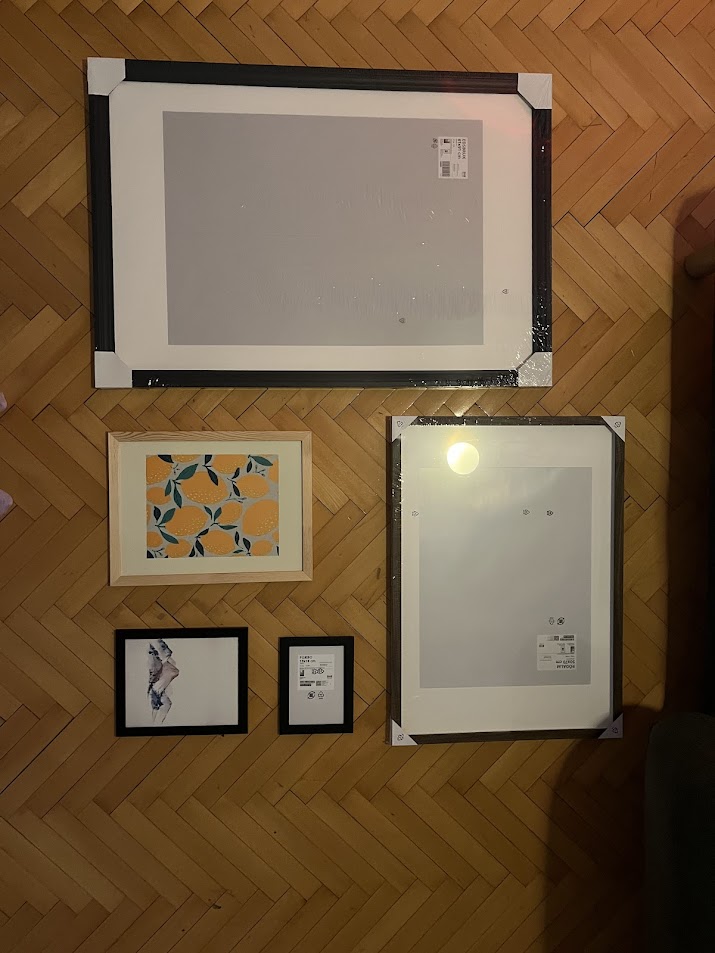
The living room is where the work you look at longest will hang. That makes the choice both important and difficult, because there is already a lot going on in the room.
The order of decisions matters. The one below starts with what constrains you most and moves to what is most flexible.
Choose the wall first#
A room has several walls that could take a painting, but they are not equal.
The best candidate is the wall you face from where you sit. The wall with the television is usually a poor choice; two focal points end up competing.
Narrow walls beside a door are weak too; work hung there is only ever seen in passing.
Then set the size#
Once the wall is decided the size almost follows on its own.
Above furniture, the work should be 60 to 75 per cent of the furniture's width. On an empty wall it should not exceed half the wall's width.
Mark the size you are unsure about on the wall with masking tape and leave it a day. It is the best check money cannot buy, and it moves most people one size up. More in the piece on choosing a size.
Set the colour against the room#
There are two approaches and both are right.
For harmony, choose a work carrying tones neighbouring the room's dominant colour. It blends in and the whole stays calm.
For accent, choose one carrying tones opposite the dominant colour. It steps forward and lifts the room. The colour wheel shows those pairings.
A small tip: take the smallest colour accent in the room, a cushion or a vase, and choose against that. It gives better results than matching the large surfaces.
Think about subject in terms of living#
A living room is for resting and talking. What you will look at for years there can differ from what strikes you on the first day.
Very busy, highly detailed, high-contrast works can become tiring in this room over time. Quiet abstract surfaces or natural subjects tend to last longer.
Not a rule, of course. What you want to look at every day is what it is.
Account for the light#
Look at how the room lights through the day. Do not hang work on a wall in direct sun; pigments fade, and works on paper suffer quickly.
If light is scarce, think about lighting. Lighting a painting is a subject of its own, but briefly: soft light striking the work at about 30 degrees gives the most natural result.
A glossy varnished or glazed work will reflect if there is a window opposite. In that case choose a matt surface or non-reflective glass.
One work or a group#
On a broad wall a single large work reads more strongly than several small ones and pulls the room together.
If you hang more than one, treat them as a single large piece: the rectangle they make should obey the rules a single work would. Keep the gaps constant, 5 to 8 cm.
The last check#
Before buying, ask yourself: do I want to look at this every day, for years?
Matching the decor comes second. Furniture changes, wall colour changes, the work stays.
Every painting in the collection lists its size, technique and price, so once you have measured your wall the list narrows quickly.
Frequently Asked Questions
Which wall should a painting go on in a living room?
The wall you face from where you sit is the best candidate. Avoid the wall with the television, where two focal points compete. Narrow walls beside a door are weak too; work there is only seen in passing.
Should a painting match the furniture?
Not necessarily. For harmony pick tones neighbouring the room's dominant colour; for accent pick the opposite. A practical tip: choose against the smallest colour accent in the room, a cushion say, rather than the large surfaces.
Can a painting hang on a sunlit wall?
Not in direct sun. Pigments fade and the damage is irreversible. Works on paper, watercolour and gouache suffer fastest. If there is no alternative, UV-filtering glass slows it down.
One large painting or several small ones on a big wall?
On a broad wall one large work usually reads more strongly and pulls the room together. If you hang several, treat them as one piece; the rectangle they form should follow the rules for a single work, with constant 5 to 8 cm gaps.