Tufting
What Is a Handmade Rug? Why Are Handmade Rugs Special and Valuable?
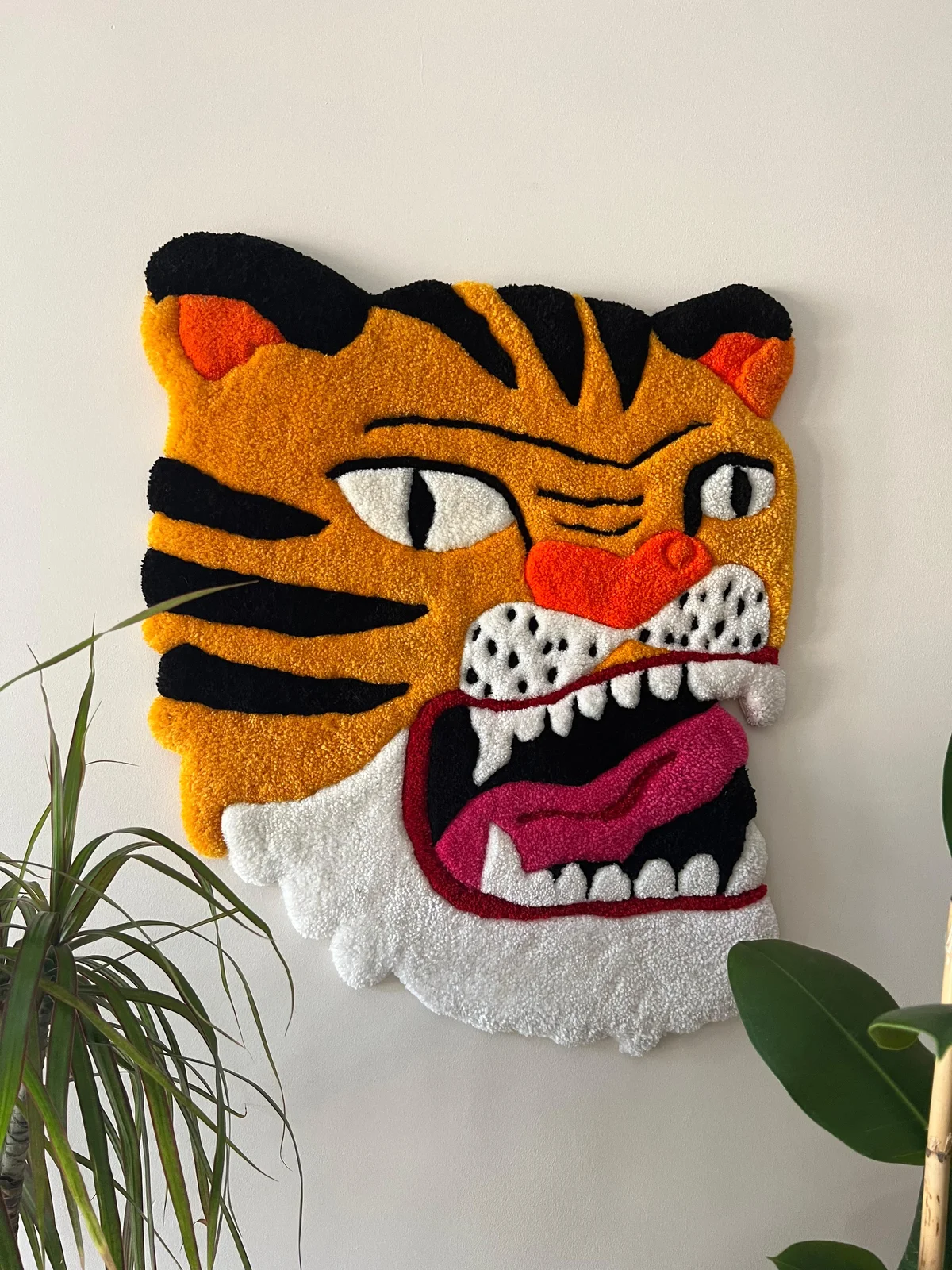
Handmade rugs gain their value not only from the materials used, but also from the design process, time, technical knowledge, and human effort behind them. Each handmade piece carries its own unique character through subtle differences and distinctive textures. Tufting is also one of the contemporary techniques used in handmade rug production. Although an electric tufting gun is used, the design, color selection, production, backing process, and final shaping are all carried out by hand. Handmade tufted rugs can be used not only on the floor but also as textile art and decorative objects on walls. At Peck Art Studio, every tufted piece is the result of a unique creative process where color, pattern, texture, and craftsmanship come together.
What Is a Handmade Rug? Why Are Handmade Rugs Special and Valuable?
When we think of a rug, most of us first imagine something that covers the floor and is used in everyday life. However, some rugs are created for more than just practical purposes. Sometimes a color, a pattern, an idea, or a story is transformed into a tangible object through yarn.
And that is one of the things that makes handmade rugs so special.
Unlike thousands of identical products produced by machines, a handmade rug has a process, time, and human effort behind it. Each strand of yarn is carefully worked, colors are selected, and the design gradually takes shape.
So, what exactly is a handmade rug, and why is it so special?
What Is a Handmade Rug?
A handmade rug is a rug that is produced entirely, or largely, through human skill and labor.
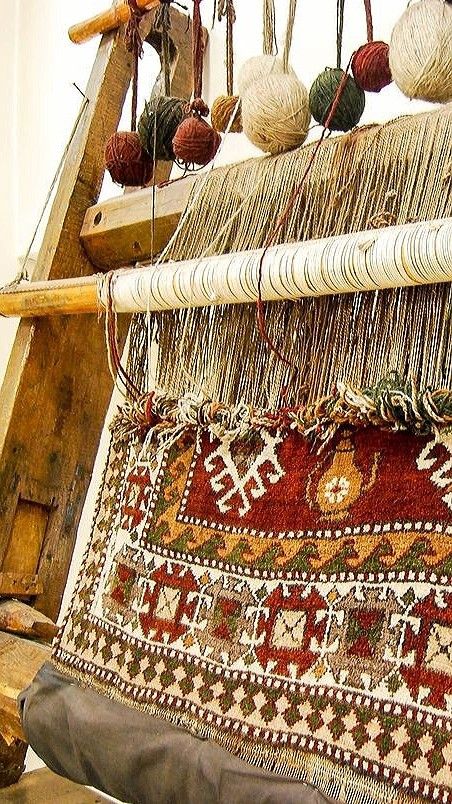
The production process can vary depending on the technique used. Rugs can be made through weaving, knotting, punch needle, tufting, or other textile techniques.
Some handmade rugs are created using traditional methods that can take a long time to complete, while others are produced using more contemporary techniques. However, regardless of the method, human decisions and involvement remain an important part of handmade production.
For this reason, even two handmade rugs created from the same design may not be completely identical.
Why Are Handmade Rugs Different From One Another?
The goal of mass production is to reproduce the same result as consistently as possible.
In handmade production, however, small differences are a natural part of the process.
The direction of the yarn on the surface, the density of the texture, the placement of colors, or small details resulting from handcraft can give each piece its own unique character.
For this reason, small differences in a handmade product should not always be considered imperfections.
Sometimes, on the contrary, these details are traces that show the piece was genuinely created by human hands.
The Process of Making a Handmade Rug
Creating a handmade rug usually involves much more than simply “making the rug.”
The process often begins with an idea.
First, the design is developed. The colors, patterns, and dimensions are considered. Then, the materials are selected and the production process begins.
In tufting, the design is transferred onto the fabric, and the yarn is worked into the surface using a specialized tufting gun.
But the production process does not end there.
Securing the backing, applying adhesive, adding a secondary backing when necessary, and trimming and shaping the surface are also important parts of the process.
Especially in patterned tufted rugs, the final trimming stage can make the design appear much more defined and refined.
For this reason, the creation of a handmade rug involves much more than a few hours of production. It is a process made up of many stages, from the initial design to the final finishing touches.
Are Tufted Rugs Considered Handmade Rugs?
Yes. Tufting is one of the contemporary techniques used in handmade rug production.
Using an electric tool such as a tufting gun does not automatically mean that the finished piece is machine-made.
The design, color selection, application of the yarn, finishing of the backing, and final shaping are all carried out by the maker.
Especially when produced in small studios, tufted rugs follow a process that is very different from fully automated factory production.
Human hands and decisions play a direct role throughout the creation of each design.
How Are Handmade Rugs Different From Mass-Produced Rugs?
It would not be accurate to make a simple comparison such as “one is good and the other is bad.” Handmade and mass-produced rugs are created for different purposes and needs.
One of the main advantages of a mass-produced rug is that the same design can be produced quickly and in large quantities.
With handmade rugs, the production process takes longer, and each piece involves more individual labor.
Handmade production also allows for greater customization in terms of colors, dimensions, and design.
For example, with a handmade tufted rug, it may be possible to choose a specific color palette, adjust the dimensions, or create a completely custom design.
This transforms a handmade rug from a purely functional object into a more personal design piece.
Why Are Handmade Rugs More Valuable?
The value of a handmade piece is not determined solely by the materials used.
The design process, the time dedicated to production, technical knowledge, experience, and human labor all contribute to its value.
There is naturally a difference between working on a single design for several hours or days and producing thousands of identical pieces at the same time.
Handmade rugs also have their own production story.
The colors that were chosen, the way the design was developed, the techniques that were used, and the decisions made throughout the process all directly influence the final result.
For this reason, when you purchase a handmade rug, you are not only buying the finished object—you are also investing in the process that transformed it into what it is.
Are Handmade Rugs Only Used on the Floor?
No.
Especially in contemporary textile design, rugs are no longer created exclusively for the floor. They can also be used on walls as decorative and artistic objects.
A tufted wall hanging can bring both color and texture into a space.
For this reason, handmade rugs can:
Be used on the floor. Be hung on the wall. Create a focal point in a room. Be displayed as textile art. Be used as decorative objects.
Smaller and more distinctive designs, in particular, can be displayed on a wall much like a painting.
This allows the rug to move beyond its traditional function.
Are the Small Imperfections in Handmade Rugs Really Imperfections?
This is one of the most interesting aspects of handmade products.
We are used to seeing perfectly symmetrical, uniform, and flawless surfaces in mass-produced products. Because of this, when we notice a small difference in a handmade piece, we may sometimes immediately interpret it as a mistake.
However, small variations can simply be a natural result of handmade production.
The direction of a strand of yarn may vary slightly. One area of the surface may look subtly different from another. Colors may also appear differently in person than they do on a screen.
These differences do not necessarily indicate a quality problem.
Of course, handmade products should still meet a certain standard of quality. However, it is not realistic to expect an object created through human labor to look exactly the same as thousands of copies produced in a factory.
This is where part of the beauty of handmade products lies: no two are ever exactly the same.
Handmade Tufting at Peck Art Studio
At Peck Art Studio, we do not think of our tufted pieces simply as products made for the floor.
For us, tufting is another way of working with color, pattern, and texture.
Each design is carefully considered before production begins. Colors are brought together, and yarn becomes an essential part of the design itself.
Some pieces are created to be displayed on walls, while others are designed as decorative rugs that can be used within a space.
For this reason, every piece that emerges is more than just a “product.” It is the result of a creative process where textiles, design, and art intersect.
And this is one of the things we love most about handmade production: even when we recreate the same design, each piece can develop its own unique character through its subtle differences and texture.