Inspiration
How to Start with Acrylics: What You Actually Need
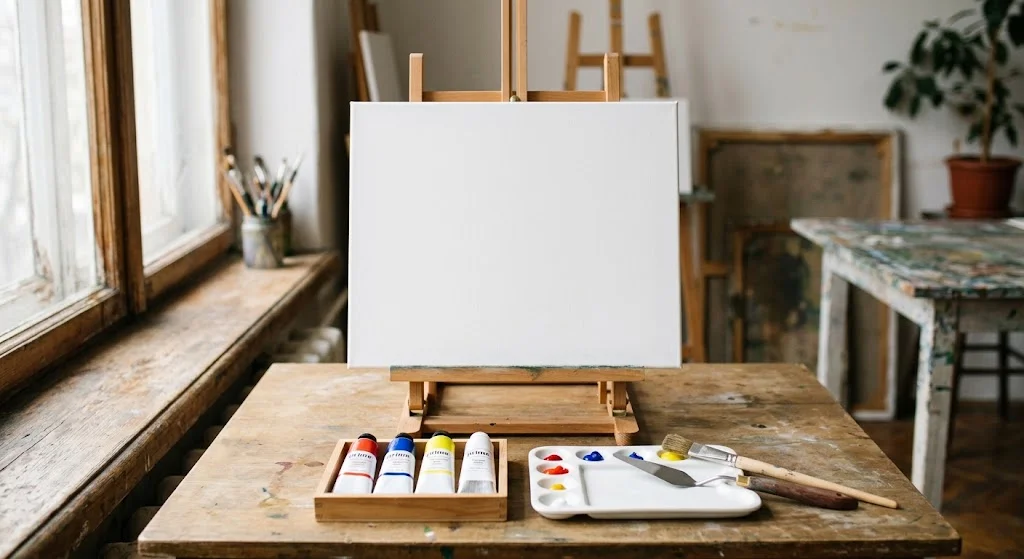
You do not need thirty tubes to start with acrylics. Five colours, three brushes and one canvas will do. A list that skips the pointless shopping.
Updated:
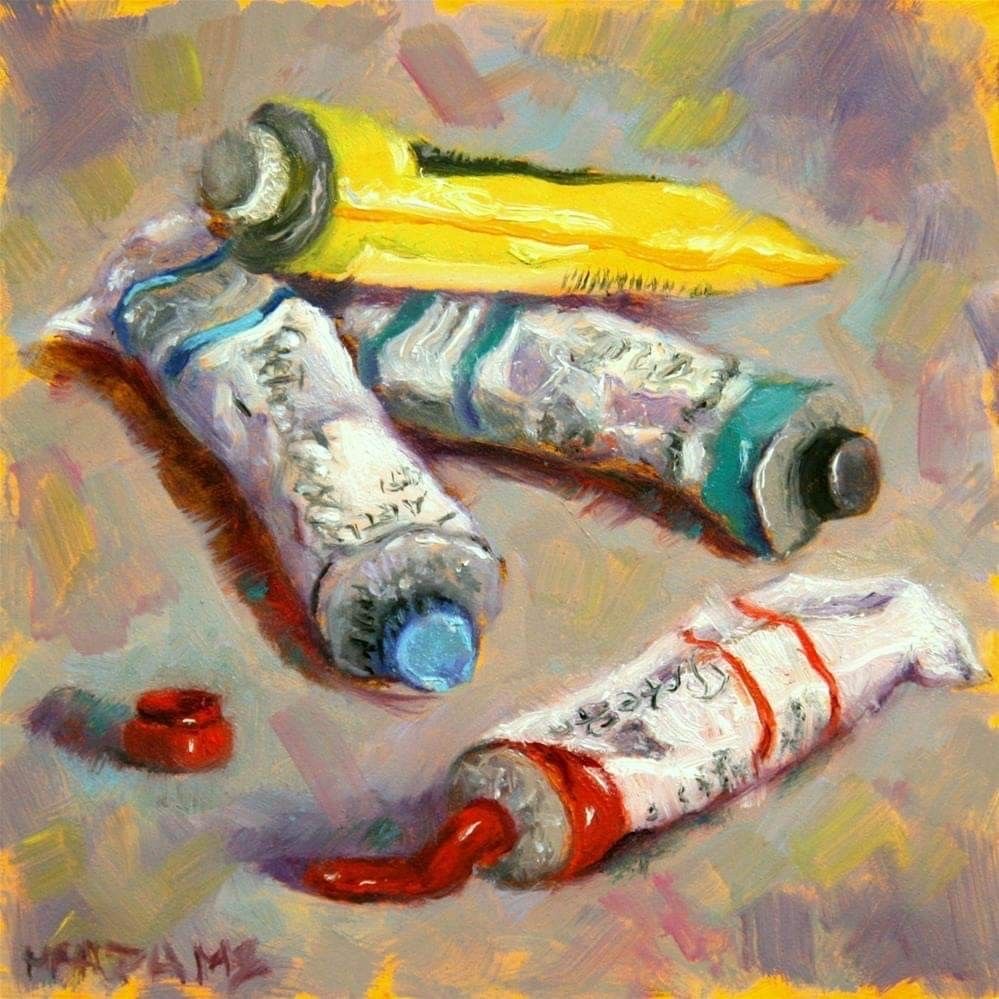
Acrylic is the most practical paint to start with. It thins with water, dries fast, goes on almost any surface and is durable once dry. The real problem when starting is not too few materials but too many.
Paint: five colours is enough#
You do not need a thirty-colour set. Learning to mix is far more useful than reaching for a ready-made colour.
- Titanium white, the one you will use most, buy the big tube
- Ultramarine blue, a blue on the warm side
- Primary or cadmium yellow
- Alizarin crimson or cadmium red
- Burnt umber, for darkening and earth tones
Those five cover a wide range. Black is deliberately absent; darks mixed with complementary colours come out far livelier than anything with black in it.
Student-grade paint is fine to begin with. The pigment load is lower, but the price gap is large and you will get through a lot of paint in the first months.
Brushes: three of them#
Since acrylic wears brushes out, there is no point starting with expensive ones. Stiff synthetic bristle will do.
- A wide flat, for grounds and large areas
- A medium flat, which will do most of the work
- A fine round, for detail and line
Add a palette knife and texture work opens up too.
Surface#
Canvas is not essential at the start. Acrylic paper or heavy board is cheap and sufficient. Paying for canvas while experimenting only adds pressure.
Move to stretched cotton canvas when you decide to finish a piece. The canvas types guide covers the differences; the cheapest stretched canvas is fine to begin.
Palette and water#
A plain plastic palette or a flat ceramic plate is enough. But with acrylic the real issue is paint drying on the palette.
The fix is a wet palette, and you can make one at home: wet kitchen paper in a container, baking paper over it, paint on top. Details in the wet palette piece.
Keep two jars of water, one for washing brushes and one clean. Working with a single jar turns every colour grey.
Purchases to skip#
The thirty-colour set. You will never touch half of it.
Expensive sable brushes. Acrylic destroys them; buy synthetic.
An easel. Working on a table is fine at the start, and often more comfortable.
A shelf of mediums. A retarder perhaps, the rest later.
What to do first#
To avoid freezing in front of a blank surface, set your first session up as an exercise.
Pick one object, a glass for instance. Paint it with three colours and white. The aim is not likeness but getting the light and dark relationship right.
For the next session keep the same colours and change the object. With a fixed palette you learn mixing much faster.
Two habits to know about#
Acrylic dries fast. For soft transitions you either work quickly or use ways of slowing the drying.
Acrylic dries darker. The binder is milky white when wet and clear when dry. To match a tone, paint a small patch and let it dry.
Never leave a brush loaded. Acrylic hardens at the base of the hairs and the brush never recovers. Wash it the moment you stop.
To protect a finished piece, apply varnish; acrylic surfaces attract dust.
Frequently Asked Questions
Which colours should I buy to start with acrylics?
Five will do: titanium white, ultramarine blue, a yellow, a red and burnt umber. You do not need black; darks mixed from complements are livelier. Half of any thirty-colour set never gets used.
Which brushes do I need for acrylic?
Three stiff synthetic brushes: a wide flat, a medium flat and a fine round. Since acrylic wears brushes out there is no point starting with sable. Never leave a brush loaded; dried acrylic hardens at the base of the hairs.
Why does acrylic dry darker?
The acrylic polymer binder is milky white when wet and turns clear as it dries, so the tone you see wet comes out a step darker. The practical way to match a tone is to paint a small patch and wait for it to dry.
Should I work on canvas from the start?
Not necessarily. Acrylic paper or heavy board is cheap and sufficient, and paying for canvas while experimenting only adds pressure. Move to stretched cotton canvas when you decide to finish a piece.