Inspiration
How to Paint an Abstract: A Practical Way to Start
The hard part of abstract painting is not technique, it is knowing where to begin. A sequence that keeps you moving in front of a blank canvas.
Updated:
The most misunderstood thing about abstract painting is that it looks easy. Because it need not resemble anything, people assume it has no rules. But once likeness is gone, all that is left is composition, and there is no reference to lean on.
The sequence below is a way through that.
Pick a constraint#
Unlimited choice paralyses. Before you start, set yourself a limit.
- Three colours and white, nothing more
- Palette knife only, no brushes
- Horizontal marks only
- The colours of a single photograph
A constraint does not shrink invention, it sharpens it. With fewer decisions, the remaining ones get clearer.
Kill the white#
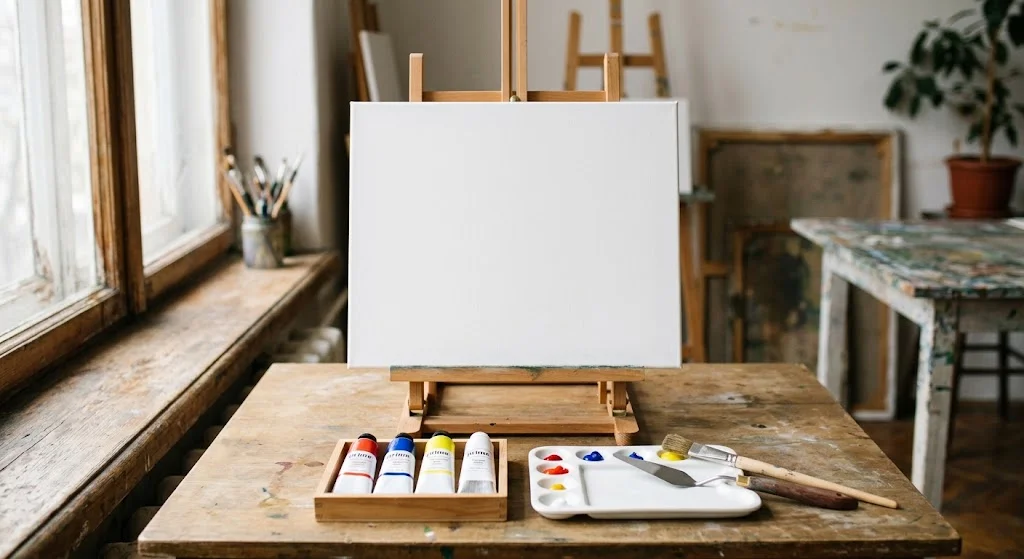
A white canvas makes every mark on it look too important. The first job is to cover the whole surface with one thin colour, a diluted earth tone for instance.
Let that layer dry. Now there is no white left to ruin and you can work freely on top.
Start with large masses#
The first three or four moves should be big. Cover large areas with a wide brush or a palette knife. Do not think about detail.
At this stage the painting looks ugly, and that is normal. The point is to build the skeleton of the composition: where the weight sits and where the space is.
Check the balance#
Step back and squint. The detail disappears and you are left with masses of light and dark.
Are the darks bunched in one corner? Does the eye get stuck at one point, or does it travel across the surface? In abstract work composition is the whole job, so this check repeats at every stage.
Add contrast#
A good abstract usually holds a tension, and you build it with contrast:
- A small mark beside a large field
- A rough texture next to a smooth surface
- A warm accent inside a cool area
- A hard edge among soft transitions
A surface where everything is equal reads as dull. The colour wheel helps here.
Building texture#
In abstract work the surface itself carries meaning. A few practical methods:
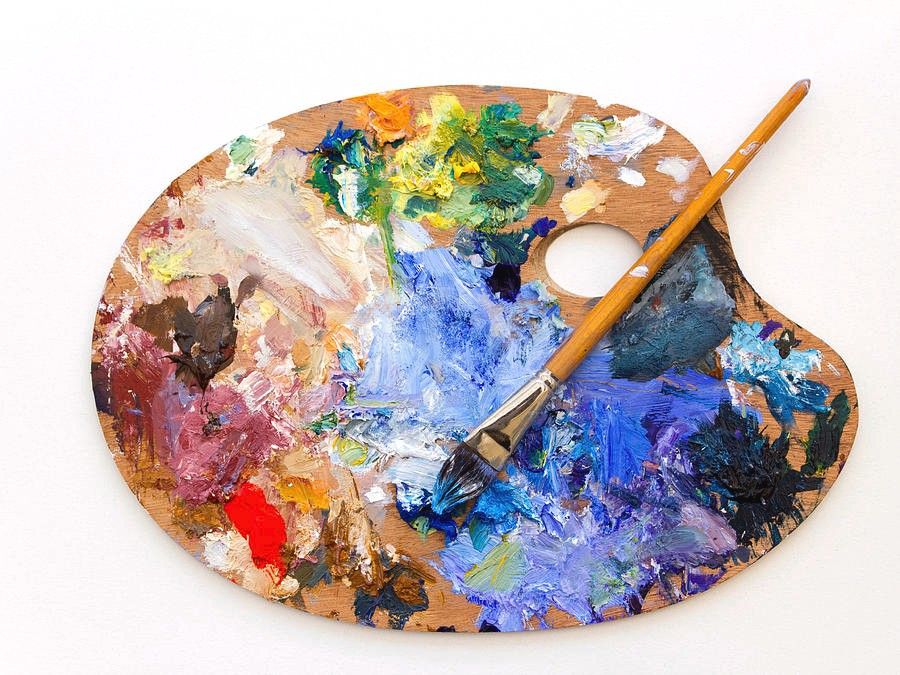
- Laying thick paint with a palette knife gives a hard relief that catches light
- Dragging an almost dry brush leaves a broken texture that half reveals the layer beneath
- Thinning the paint and tilting the canvas leaves runs you do not control
- Sanding a dried layer brings the colours underneath through in patches
- Gluing down paper, fabric or fine mesh joins collage and paint on one surface
Using all of these in one work scatters it. Pick two, at most three, and stay with them.
Common mistakes#
Centring. Putting the main mass dead centre makes the composition static; shifting it off centre gives the surface movement.
Filling the whole surface evenly. Empty space is not a gap, it is breathing room. An area left bare strengthens the mark beside it.
Over-mixing on the canvas. Blending acrylic too much while wet turns colours grey; separate marks already mix at a distance.
Going to detail too early. Reaching for a small brush before the composition holds means repainting all of it later.
Know when to stop#
Overworking is the most common mistake. A painting comes alive at some point, then starts to die back as you add.
A practical trick: turn the work upside down, or photograph it on your phone. The image your eye has got used to breaks and the excess shows immediately. If you are unsure, wait a day; by morning the answer is clear.
Materials#
Acrylic is the most practical paint for this; it dries fast and takes layer on layer. If you want to work slowly there are ways to slow the drying.
Stretched cotton canvas is enough. The piece on canvas types covers the differences.
When it is finished the work needs varnishing; an acrylic surface attracts dust, and varnish both protects it and pulls the tones together.
If you want to see how finished abstracts sit, have a look at the painting collection.
Frequently Asked Questions
How do you start an abstract painting?
Set a constraint first: three colours, one tool, or one kind of mark. Then cover the white of the canvas with a thin colour so the first marks do not intimidate you. Work in large masses and leave detail to the end.
How do you check composition in an abstract?
Step back and squint. Detail disappears and only masses of light and dark remain. If the darks bunch in one corner the balance is off. If the eye travels across the surface, the composition is working.
How do I know when it is finished?
Turn it upside down or photograph it on your phone. Once the image your eye has adapted to is broken, the excess shows. If you are still unsure, wait a day. The urge to keep adding usually deadens the painting.
Which paint suits abstract work best?
Acrylic is the most practical: it dries fast, takes layer on layer and goes on almost any surface. If you want to work slowly and soften transitions, oil suits better, but drying is measured in days.