Inspiration
Watercolour or Gouache? Which One for Works on Paper
Both water based, both for paper, both bound with gum arabic. The only difference is opacity, and it changes the whole way you work.
Updated:
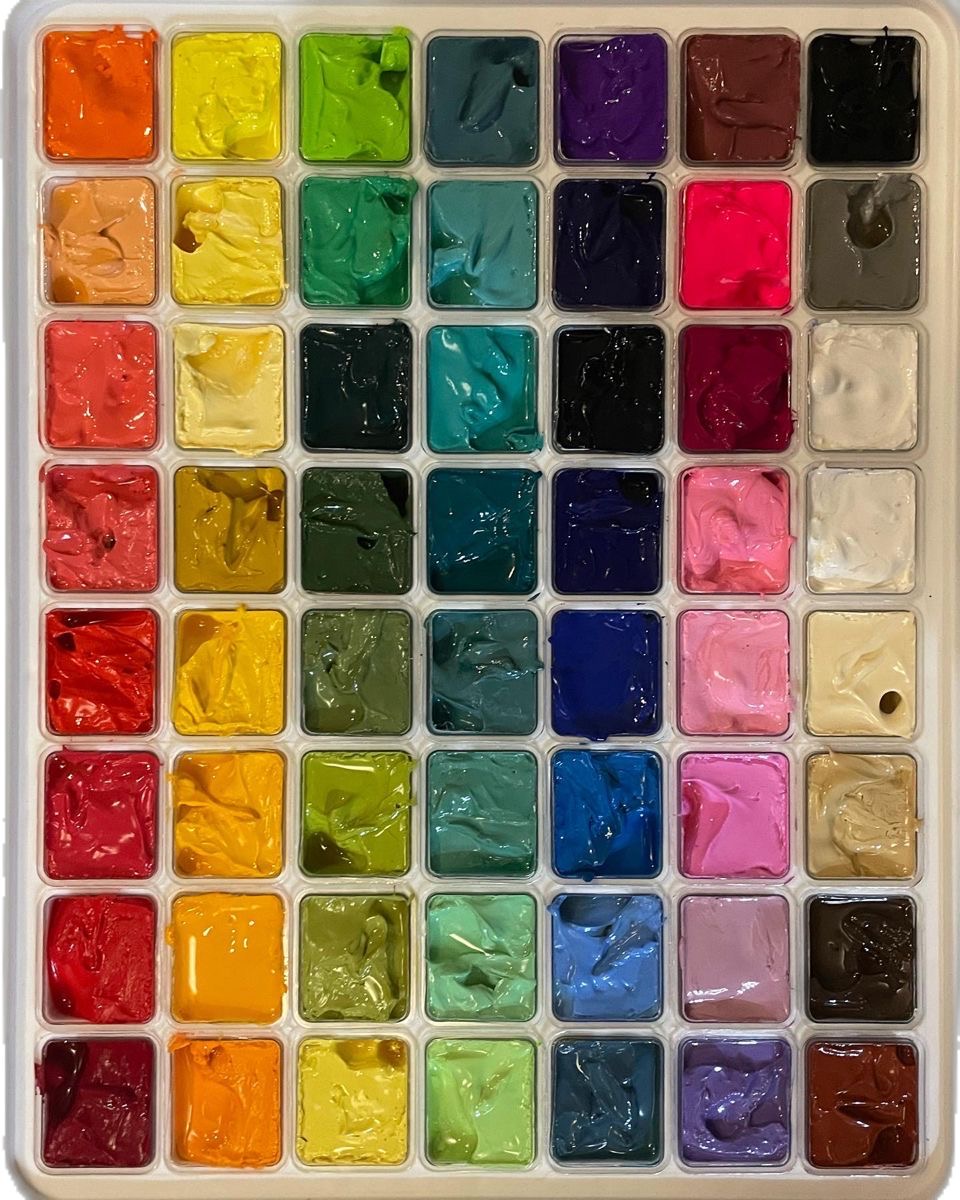
These two paints are from the same family. Pigment bound with gum arabic, thinned with water, laid on paper. The one structural difference is the white filler added to gouache, and everything follows from that.
Transparency and opacity#
Watercolour is transparent. The paint sits on the paper like a filter; light passes through it, reaches the paper and comes back. The brightness of the picture comes not from the paint but from the white of the sheet.
Gouache is opaque. The chalk-like filler in it stops light reaching the paper. The paint covers the sheet.
How that changes the way you work#
Watercolour goes from light to dark and has no such thing as white. Areas meant to stay white are left bare, and once painted there is no going back. So watercolour demands planning; you decide what to leave alone before you start.
In gouache the order is free. You can lay a light tone over a dark ground. You can cover a mistake and do it again. White exists as a tube and is in constant use.
In short: watercolour works forwards, gouache works in every direction.
How the surface looks#
Dried watercolour leaves the paper's texture visible and the surface looks alive, slightly rippled. Colours run into each other and edges are soft.
Gouache leaves a completely matt, velvety, flat surface. Colours do not bleed and areas separate cleanly. That crispness is why it is favoured in graphic work and illustration.
Drying and tonal shift#
Both dry lighter, but it is more pronounced in gouache, which can drop a full step. Hitting an exact tone takes practice.
Watercolour shifts less but is harder to control, because the paint keeps spreading on the sheet while wet.
What they share: both re-dissolve#
Touch a wet brush to either once dry and the paint softens. That is both an advantage and a risk.
The advantage: corrections are possible and dried paint on the palette comes back with water, so nothing is wasted.
The risk: laying an upper layer can lift the one below. If you are layering in gouache, keep the brush light and do not go over the same spot.
Choosing paper#
Both want heavy paper, 300 gsm or more. Thin sheets buckle once wet and never flatten again.
Textured paper suits watercolour, since the tooth enriches how the water behaves. Gouache takes a smoother sheet, because opaque paint closes the texture anyway.
Storing and displaying#
Both must go behind glass. The surface is open to moisture and touch, and even a fingerprint marks it.
A mount is essential when framing; if paint contacts the glass the work is permanently damaged. Never hang either in direct sun, as the pigments fade.
Which to choose#
Watercolour if you like planning ahead, transparent layers and the glow of the paper. Gouache if you want to be able to correct, to lay clean areas of colour and to end on a matt surface.
There is a third route: use both. Laying a watercolour ground and putting opaque gouache accents over it is a common method. The order matters; the reverse does not work.
To see how works on paper sit on a wall, have a look at the collection.
Frequently Asked Questions
What is the difference between watercolour and gouache?
Both are water-based paints with pigment bound in gum arabic. Gouache has a chalk-like white filler that makes it opaque; watercolour is transparent. So light tones come from bare paper in watercolour and are painted over darks in gouache.
Can you correct a mistake in watercolour?
Only to a point. A dried area can be wetted and lightened somewhat, but the paint will not fully lift and the paper can suffer. Watercolour therefore needs planning: whites are left bare, because white cannot be added later.
Can both be used in one painting?
Yes, and it is a common method. Lay a transparent watercolour ground first, then opaque gouache accents on top. That order matters; watercolour over gouache lifts the opaque layer and muddies the colours.
How should works on paper be displayed?
Behind glass and with a mount. The mount keeps the paint off the glass; contact causes permanent damage. Do not hang them where they get direct sun, as pigments fade over time.